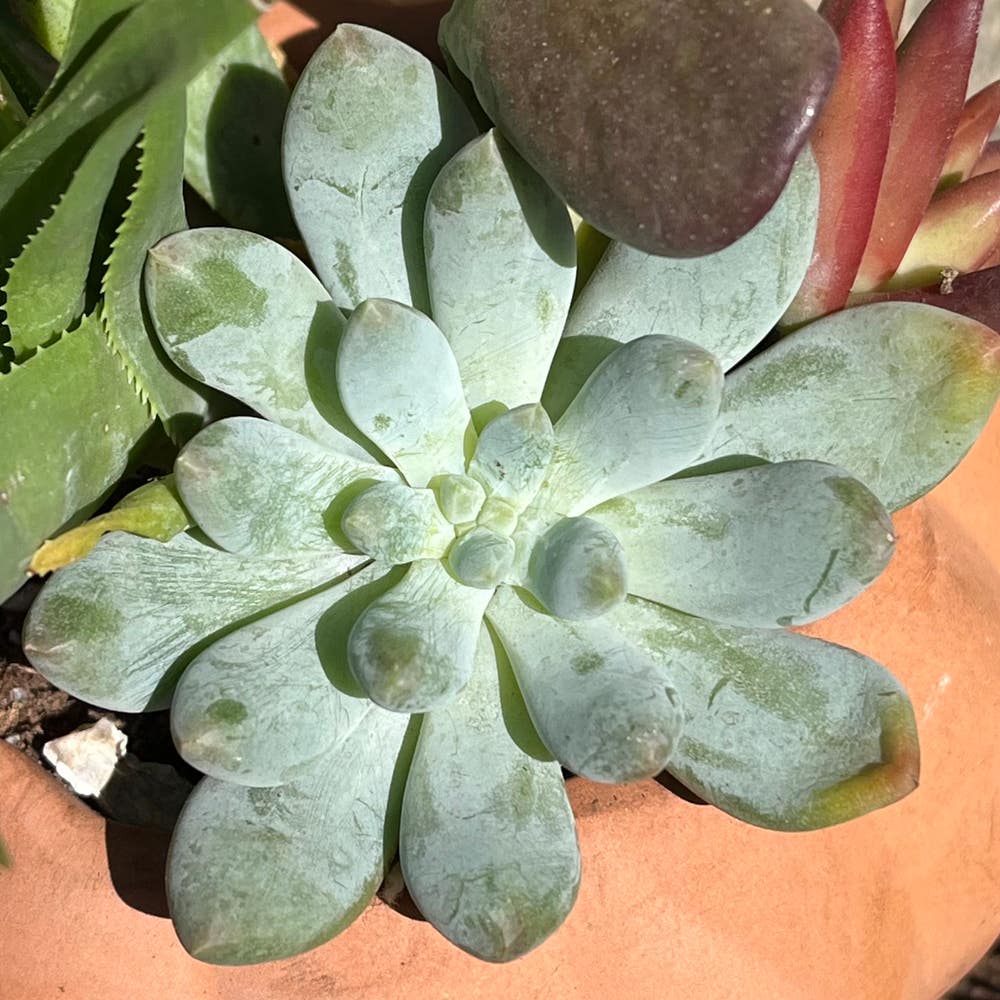
Why Are My Pachyphytum 'Starburst' Leaves Falling Over?
Pachyphytum 'Starburst'
By the Greg Editorial Team
Jun 18, 2024•5 min read
This article was created with the help of AI so we can cover more plants for you. May contain errors. See one? Report it here.
Stop your 'Starburst' succulent's slump and ensure its vibrant stance with expert tips! 🌟🌱
- Overwatering and underwatering can both cause 'Starburst' leaves to fall over.
- 🐛 Combat pests and diseases with neem oil and proper pruning.
- Consistent care routine ensures a healthy, upright Pachyphytum 'Starburst'.
When Water Works Against You
💧 The Perils of Overwatering
Soggy soil spells trouble for your Pachyphytum 'Starburst'. Leaves may turn a sickly yellow or develop black spots; roots can get as mushy as overcooked pasta. If the soil clings like a wet sponge, it's time to act.
Immediate rescue involves halting all watering. Check if drainage holes are clear—think of them as the plant's lifeline. If they're clogged, it's crisis time. Consider repotting into fresh, dry soil to give your 'Starburst' a fighting chance.
🏜️ The Dilemma of Underwatering
Neglect can turn your 'Starburst' into a botanical raisin. Wilting leaves, dry to the touch, and browning tips are the plant's SOS. When the top inch of soil is drier than a comedian's wit, it's hydration time.
Finding the watering sweet spot is key. It's not just about the quantity of water but the timing too. Your 'Starburst' doesn't need a desert trek without a canteen, nor a perpetual bath. Aim for consistent moisture, but let the soil dry out slightly between waterings.

Unwanted Guests: Pests and Diseases
🐛 Common Culprits: Identifying Pests
Mealybugs and spider mites are the usual suspects when Pachyphytum 'Starburst' leaves start to droop. These pests are sap-sucking freeloaders that can cause serious damage if left unchecked. Mealybugs leave a telltale cottony residue, while spider mites create fine webs on your plant.
To evict these pests, start with a gentle wipe-down of the leaves or a spray of water to disrupt their habitat. For a more targeted approach, neem oil or insecticidal soap can be effective. It's crucial to treat the infestation promptly to prevent a full-blown invasion.
🍄 Fungal Foes and Diseases
Fungal infections are stealthy attackers that can be identified by black spots or a powdery residue on leaves. If you catch a whiff of something rotten, that's a red flag for a potential bacterial infection.
Immediate action is required to prevent these diseases from escalating. Prune affected areas and ensure your 'Starburst' has good drainage to discourage fungal growth. Regularly sanitize your tools and remove plant debris to keep your plant's environment clean and less inviting to pathogens.

The Right Foundation: Soil and Repotting
💧 Checking In on Your Soil
Proper drainage and aeration are non-negotiable for your Pachyphytum 'Starburst'. Without them, you're basically asking the roots to breathe underwater. Ensure your soil mix is loose and gritty; think pumice or perlite party. This isn't just about avoiding wet feet; it's about giving those roots the VIP treatment they deserve.
🌱 To Repot or Not to Repot
Repotting is like a plant's version of moving day. It's a hassle, but sometimes necessary. If your 'Starburst' is pushing against the walls of its pot or you're seeing more roots than soil, it's time to upgrade. Choose a new pot that's a size bigger—no McMansions, please—and fresh, well-draining soil.
When you repot, be as gentle as a bomb defusal expert. Tease out the roots and give them a new home, ensuring you're not burying the plant's base like a pirate's treasure. Water it just enough to settle the soil, but don't throw a pool party in the pot. Remember, the goal is to avoid root rot, not encourage it.
Keep an eye on your 'Starburst' post-move. If it starts acting up, adjust your care routine. Too much water? Dial it back. Not enough? Time to step up. It's all about finding that sweet spot where your plant can kick back, relax, and grow.

Keeping Your 'Starburst' Standing Tall
🌞 Tailored Care Routine
Rotate your Pachyphytum 'Starburst' to prevent favoritism—each side needs its sunbath. Light is crucial, but like a good tan, it's all about moderation. Don't fry your succulent; find that sweet spot where the light kisses but doesn't scorch.
🛡️ Proactive Soil Checks
Check your soil like you check your email—regularly and with intent. If it's compacted, fluff it up. Think of fertilization as a spice; a little goes a long way. Overdo it, and you'll overwhelm the palate—or in this case, your plant.
💇 Pruning and Grooming
Dead or overgrown sections need to go. Pruning is like decluttering; it's refreshing and gives your plant a new lease on life. Snip with purpose and watch your 'Starburst' thank you with robust growth.
👀 Vigilance and Regular Checks
Routine inspections are non-negotiable. Like checking your teeth for spinach, it's about catching issues before they escalate. Adjust your care routine with the precision of a fine-tuned instrument—your plant's health depends on it.
📊 Monitoring and Assessment
Keep a log; it's not for show, it's your plant's biography. Changes in the log mean it's time to switch up the care. Stay alert to your 'Starburst's' needs; it's a living thing, not a static decoration.
🍂 Seasonal Adjustments
Adapt your care with the seasons. Less water in winter, more shade in summer—it's like dressing appropriately for the weather. Your 'Starburst' doesn't have the luxury of putting on a sweater, so it's on you to keep it comfortable.
🔄 Consistent Care
Consistency is the secret sauce. Watering, feeding, pruning—get into a rhythm. Your plant craves routine like you crave that morning coffee. Make it a ritual, and your 'Starburst' will stand tall and proud.
⚠️ Safety First
This content is for general information and may contain errors, omissions, or outdated details. It is not medical, veterinary advice, or an endorsement of therapeutic claims.
Always consult a qualified healthcare professional before using any plant as food, medicine, or supplement.
Never eat any plant (or feed one to pets) without confirming its identity with at least two trusted sources.
If you suspect poisoning, call Poison Control (800) 222-1222, the Pet Poison Helpline (800) 213-6680, or your local emergency service immediately.
Spotted an error? Please report it here.
Ensure your Pachyphytum 'Starburst' thrives with Greg's 🌟 custom care plan, balancing moisture, light, and pest management for you.