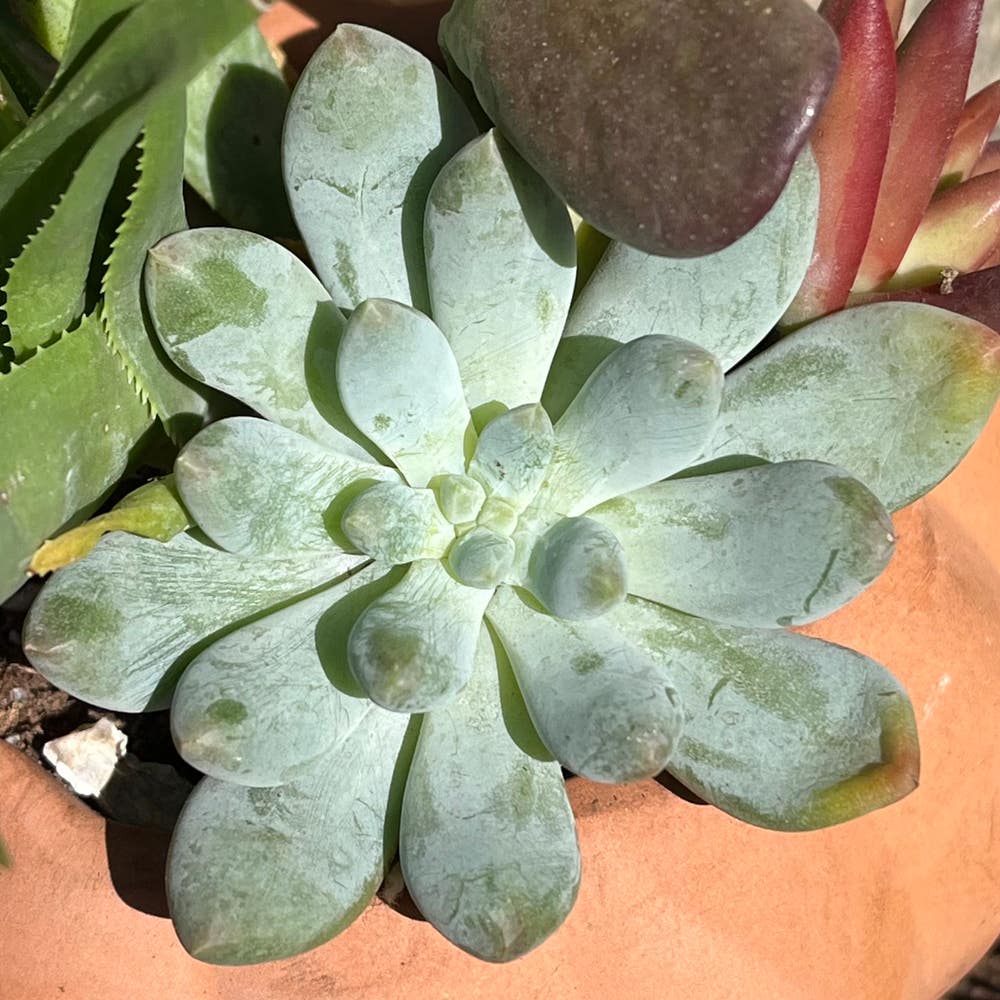
Why Is My Pachyphytum 'Starburst' Not Doing Well?
Pachyphytum 'Starburst'
By the Greg Editorial Team
Jun 18, 2024•4 min read
This article was created with the help of AI so we can cover more plants for you. May contain errors. See one? Report it here.
Revive your wilting 'Starburst' 🌟 with these crucial care tips to combat common succulent setbacks!
- 🚫 Over-watering? Yellow, mushy leaves signal too much water.
- 🌞 Too much sun leads to leaf scorching; seek indirect light.
- 🌡️ Stable temperatures (18-24ºC) are crucial for 'Starburst' health.
When Water Works Against You
🌊 Over-Watering Woes
Yellowing, mushy leaves are the tell-tale signs of an over-watered Pachyphytum 'Starburst'. It's like the plant's way of waving a white flag. To rescue your succulent, ease up on the watering and give it a chance to dry out. If the soil feels like a wet sponge, it's time to back off and let it breathe.
💧 Under-Watering Symptoms
On the flip side, wrinkled, shriveled leaves scream dehydration. They're your 'Starburst's' way of begging for a drink. Finding the right watering balance means giving it just enough to quench its thirst without drowning it. When the topsoil feels as dry as a comedian's wit, it's time to water, but don't go flood-happy.

Light and Temperature: Finding the Sweet Spot
🌞 Too Much Sun, Too Little Shade
Leaf scorching is a red flag for too much sun. Discoloration means your 'Starburst' is begging for shade.
Adjust the rays by positioning your plant in bright, indirect light. This is the sweet spot where 'Starburst' thrives without the threat of a sunburn.
🌡️ Temperature Tantrums
Inconsistent temperatures make 'Starburst' throw a fit. Wilted leaves or stunted growth? That's your cue the temperature is off.
Stable environment is key. Keep your 'Starburst' between 18-24ºC (64-75ºF) to avoid those temperature-induced mood swings. Avoid drafts and direct heat sources like the plague.

Pesky Pests and How to Send Them Packing
🐜 Spotting Unwanted Guests
Your Pachyphytum 'Starburst' might be a magnet for mealybugs and spider mites. These pests are notorious for turning succulent leaves into their personal diners.
Mealybugs appear as tiny cotton-like clumps, sucking the life out of your plant. Spider mites, on the other hand, are microscopic troublemakers, but they give themselves away with fine, silky webs and speckled leaves.
🌿 Natural Defenses
Before reaching for chemicals, consider natural predators. Ladybugs and lacewings aren't just pretty faces; they're voracious eaters of pests like aphids and mealybugs.
Physical removal can be surprisingly effective. A cotton swab dipped in alcohol can wipe out mealybugs, while a strong spray of water can dislodge spider mites.
💥 When Chemicals Are Necessary
Sometimes, you've got to fight fire with fire. If natural methods don't cut it, it's time for insecticidal soap or neem oil. These are the SWAT teams of pest control—potent but plant-friendly.
Apply with precision, like a sniper rather than a shotgun. Always read the label—think of it as the rulebook to pest annihilation. And remember, over-fertilizing is like throwing a pest party with free drinks; it's an open invitation for trouble.

Fungus Among Us: Mold and Root Rot
🍄 Mold and Mildew Markers
Mold and mildew are unwelcome tenants in your Pachyphytum 'Starburst's' pot. Discoloration or a powdery residue on the leaves screams fungus. It's crucial to act fast—mold spreads like a bad rumor.
🌬️ Clearing the Air
First, isolate the affected plant to prevent a full-blown epidemic. Remove visible mold from the soil with a spoon—think of it as scooping out trouble. Boost airflow around your plant; it's like giving it a breath of fresh air. Swap in a well-draining potting mix to keep moisture levels in check. If you're in deep, a preventative fungicide might be your Hail Mary—use it as directed, like a plant's life depends on it (because it does).
🚱 Root Rot: The Silent Killer
Root rot is the plant equivalent of a heart attack—silent and deadly. Wilting and discolored leaves are the plant waving a white flag. If the roots are soft, dark, and mushy, you're in the danger zone.
🏥 Recovery Roadmap
To tackle root rot, think of yourself as a plant surgeon. Remove the plant from its pot and cut away any rotten roots—be ruthless. Repot in fresh soil that's as draining as a sieve. If the situation's dire, consider soil fumigants, but leave that to the pros. Prevention is key: water judiciously and ensure excellent drainage. Remember, standing water is a party invitation for fungi.
⚠️ Safety First
This content is for general information and may contain errors, omissions, or outdated details. It is not medical, veterinary advice, or an endorsement of therapeutic claims.
Always consult a qualified healthcare professional before using any plant as food, medicine, or supplement.
Never eat any plant (or feed one to pets) without confirming its identity with at least two trusted sources.
If you suspect poisoning, call Poison Control (800) 222-1222, the Pet Poison Helpline (800) 213-6680, or your local emergency service immediately.
Spotted an error? Please report it here.
Revive your Pachyphytum 'Starburst' from common woes and let Greg's tailored care plan keep it flourishing 🌱 with just the right amount of TLC.