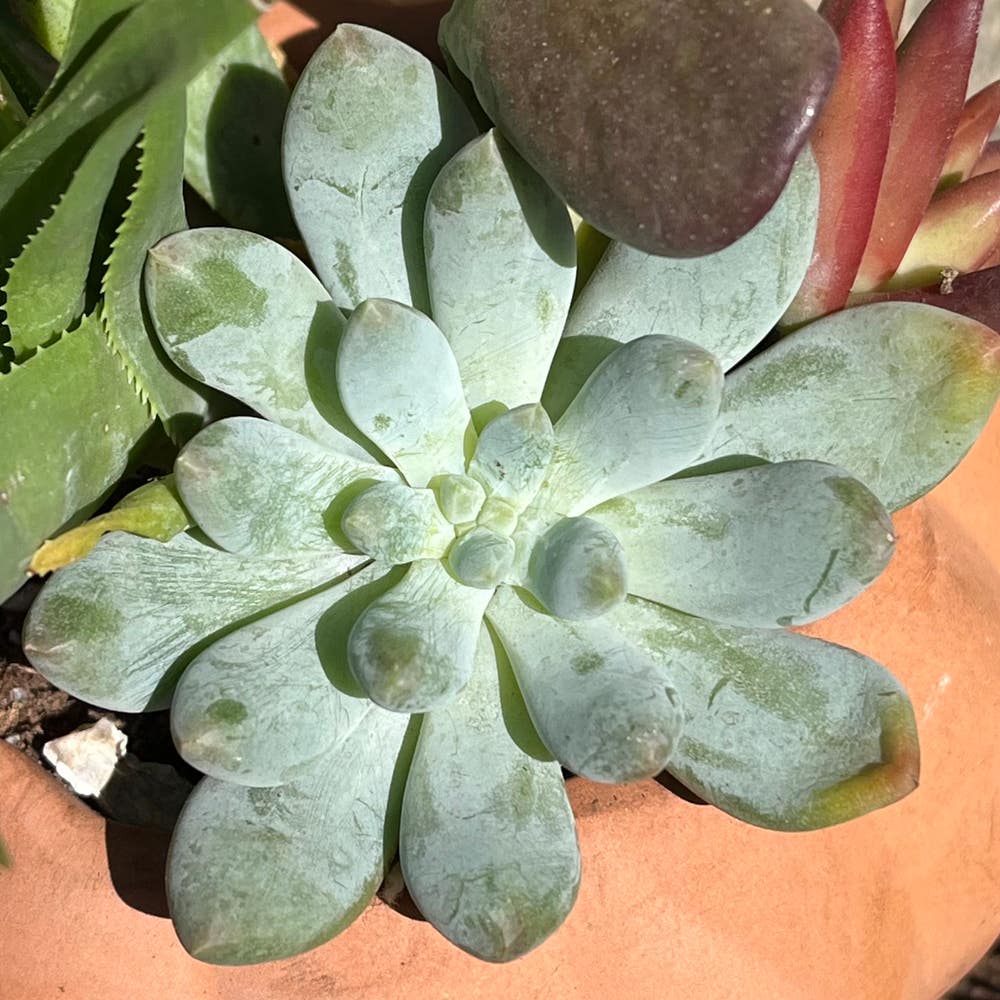
🌟 3 Tips for Caring for Your Pachyphytum 'Starburst' in Winter
Pachyphytum 'Starburst'
By the Greg Editorial Team
Sep 30, 2024•4 min read
This article was created with the help of AI so we can cover more plants for you. May contain errors. See one? Report it here.
Ensure your Pachyphytum 'Starburst' 🌱 thrives this winter for a vibrant spring bloom! 🌼
- 💧 Water every 3-4 weeks in winter; let soil dry completely between waterings.
- ❄️ Protect from frost by using blankets and bringing potted plants indoors.
- 🌞 Provide bright, indirect sunlight to prevent weak growth during winter dormancy.
Winter Care Requirements
🌊 Adjusting watering schedules
Caring for your Pachyphytum 'Starburst' during winter means adjusting your watering routine. Aim to water every 3-4 weeks, allowing the soil to dry out completely between waterings.
Watch for signs of overwatering, like yellowing leaves or a mushy texture. These indicators can signal that your plant is not thriving, so it's crucial to get the watering balance right.
❄️ Fertilizing needs in winter
During winter dormancy, it's generally best to avoid fertilization. This helps conserve nutrients, allowing your plant to rest and prepare for spring.
However, if you notice unexpected growth, you can use a diluted, balanced fertilizer. Just remember, moderation is key during this dormant phase.
💡 Importance of light exposure during winter months
Light is vital for your Pachyphytum 'Starburst' in winter. Ideally, provide bright, indirect sunlight to keep it healthy.
Insufficient light can lead to etiolation, causing weak growth and stretching. If natural light is lacking, consider using supplemental lighting to ensure your plant thrives through the colder months.
With these winter care requirements in mind, your Pachyphytum will be well-prepared to face the chill. Next, let’s explore effective frost protection strategies to keep your plant safe from the cold.
Frost Protection Strategies
🌨️ Methods to Protect from Frost
Protecting your Pachyphytum 'Starburst' from frost is crucial for its health. One effective method is using frost cloths or blankets to cover outdoor plants during cold nights.
If temperatures drop significantly, consider bringing potted plants indoors. This simple move can save them from frost damage.
Placement is key; avoid drafty windows and cold floors. Position your plants in a cozy spot where they can stay warm and safe.
❄️ Signs of Frost Damage and How to Address Them
Recognizing frost damage early can make a big difference. Look for symptoms like discoloration, wilting, and leaf drop.
If you notice these signs, trim any damaged leaves to encourage new growth. Adjust your care routine to help your plant recover.
Keep an eye on the temperature, ensuring it stays above 32°F (0°C). This vigilance will help your 'Starburst' thrive through the winter months.
As you protect your plant from frost, remember that the right care will set it up for a vibrant spring.
Indoor Winter Care
Best Practices for Indoor Placement 🌟
Finding the right spot for your Pachyphytum 'Starburst' indoors is crucial. Aim for south-facing windows or other well-lit areas to ensure your plant gets the light it craves.
Keep your plant away from heat sources like radiators and heaters. These can dry out the soil too quickly, leading to stress for your succulent.
Rotating your plants regularly helps them receive even light exposure. This simple practice encourages balanced growth and prevents leaning.
Humidity and Temperature Considerations 🌡️
The ideal indoor temperature for your 'Starburst' ranges from 60°F to 75°F (15°C to 24°C). Staying within this range keeps your plant happy and thriving.
Moderate humidity levels are best for your succulent. If your home is particularly dry, consider using a humidity tray to maintain moisture.
Monitoring indoor conditions is essential for optimal care. A hygrometer can help you keep track of humidity and temperature, ensuring your plant remains in its comfort zone.
With these indoor care tips, your Pachyphytum 'Starburst' will be well-prepared to weather the winter months. Next, let’s explore how to protect your plant from frost damage.
Spring Preparation and Recovery
Signs of Recovery from Winter Damage 🌱
As winter fades, look for signs of new growth on your Pachyphytum 'Starburst.' Fresh leaves and restored color are great indicators that your plant is bouncing back.
Keep an eye out for pests that may emerge during this recovery phase. Regular monitoring will help you catch any issues early, ensuring your plant thrives as it transitions out of dormancy.
Preparing for Spring Growth After Winter Dormancy 🌼
With rising temperatures, it's time to gradually increase your watering frequency. Start by checking the soil moisture every couple of weeks and adjust accordingly.
Reintroducing fertilization is also crucial. Timing is key; wait until you see new growth before applying a diluted, balanced fertilizer to give your plant the nutrients it craves.
Finally, acclimate your plant to increased light exposure slowly. This gradual transition helps prevent shock and supports robust growth as spring unfolds.
By following these steps, you'll set your Pachyphytum 'Starburst' up for a vibrant and healthy growing season. Now, let’s explore how to ensure your plant thrives indoors during the winter months.
⚠️ Safety First
This content is for general information and may contain errors, omissions, or outdated details. It is not medical, veterinary advice, or an endorsement of therapeutic claims.
Always consult a qualified healthcare professional before using any plant as food, medicine, or supplement.
Never eat any plant (or feed one to pets) without confirming its identity with at least two trusted sources.
If you suspect poisoning, call Poison Control (800) 222-1222, the Pet Poison Helpline (800) 213-6680, or your local emergency service immediately.
Spotted an error? Please report it here.
Keep your Pachyphytum 'Starburst' thriving this winter ❄️ with Greg's tailored watering reminders and care tips, ensuring it's ready for a vibrant spring!