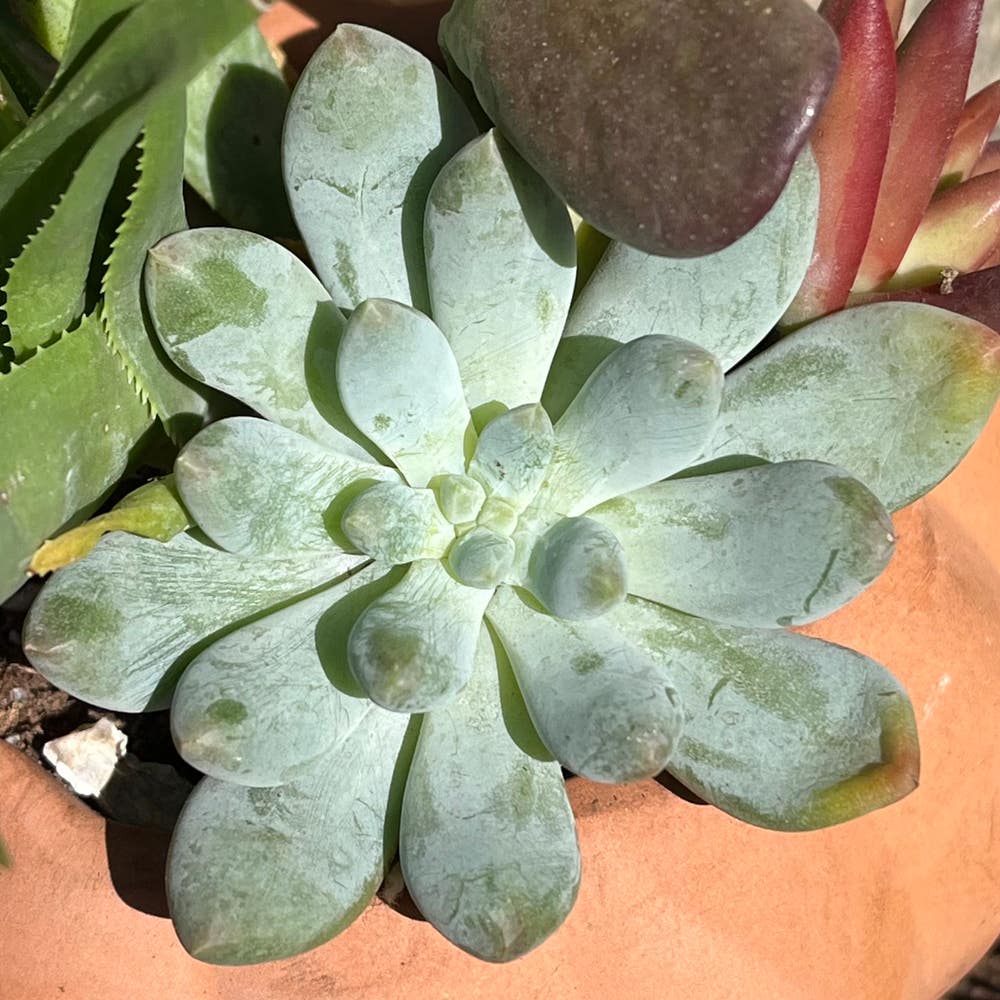
Black Spots on My Pachyphytum 'Starburst' Leaves
Pachyphytum 'Starburst'
By the Greg Editorial Team
Jun 18, 2024•5 min read
This article was created with the help of AI so we can cover more plants for you. May contain errors. See one? Report it here.
Banish black spots 🌑 from your 'Starburst' and keep it shining with top-notch care tips! 🌟
- Fungal infections, overwatering, or damage cause black spots on 'Starburst' leaves.
- 🌱 Treat with fungicide, adjust watering, and improve air circulation.
- Prevent with proper light, temperature, and proactive plant hygiene.
Spotting the Culprits: What Black Spots Look Like
🕵️ Visual Cues: Recognizing the Black Spots on Your 'Starburst'
Dark invaders on your Pachyphytum 'Starburst' can be a real buzzkill. These spots are tiny specks, often less than ⅛ inch in diameter, lurking on the leaves. They may start small, but without intervention, they can expand into unsightly blotches. Keep an eye out for dark margins or concentric rings, the tell-tale signs of a fungal fiesta.
🌿 Location, Location, Location: Where on the Leaves to Look
Flip those leaves; the undersides can be a covert camp for these spots. It's like they've got a secret hideout under there. Regular leaf check-ups are your best defense—think of them as routine health screenings for your plant. And don't overlook the texture; if the spots feel slimy or look water-soaked, you might be dealing with a bacterial gatecrasher.

The Usual Suspects: Common Causes of Black Spots
🍄 Fungal Foes: Signs of fungal infections
Fungi are the masterminds behind many black spot cases. These organisms kick off their invasion with seemingly innocent spots that can quickly turn your 'Starburst' leaves into a blackened canvas. Anthracnose and Glomerella are the usual suspects, notorious for their appetite for succulent leaves. If the spots on your plant have a crusty texture, it's a telltale sign of a fungal takeover.
💧 Too Much Love: How overwatering leads to black spots
Overwatering is like giving your 'Starburst' an unwanted bath. It's the equivalent of a soggy handshake—unpleasant and often leading to trouble. Excess moisture is a fungal fiesta, inviting unwanted guests like Cercospora to take root. If the black spots on your plant are accompanied by a soft, mushy feel, it's time to dial back the affection and let the soil dry out.
💥 Oops, Did I Do That?: Physical damage and its aftermath
Not all black spots are a sign of disease; sometimes, they're just battle scars. A bump, a scrape, or an accidental elbow drop can bruise your plant's leaves, leading to discolored spots. Unlike their fungal and bacterial counterparts, these spots are localized and won't spread. The key to preventing physical damage is a gentle touch and a safe location for your plant, away from high-traffic areas.

First Aid for Your 'Starburst': Treating Black Spots
🍄 Fungus Among Us: Choosing and Applying Antifungal Treatments
Act fast when you spot the first signs of fungal betrayal on your Pachyphytum 'Starburst'. Isolate the infected plant to prevent the contagion from spreading its treachery. Snip off the affected leaves with sterilized shears—think surgical precision. Choose a fungicide that's friendly to succulents; systemic options are your heavy hitters for severe cases. For the organic crowd, neem oil or a baking soda mixture can be your eco-warrior alternatives. Apply diligently, coating all leaves to ensure the fungus doesn't get a second wind.
💧 Watering Wisely: Adjusting Your Watering Routine
Overwatering is like throwing a pool party for fungi—don't be that host. Check the soil's moisture level before even glancing at your watering can. If it's dry an inch down, give it a drink, but only at the base to avoid wetting the leaves. Morning watering is your ally, letting the sun dry out any accidental splashes. Ensure your pot has drainage holes; think of them as emergency exits for excess water. Adjust your watering habits with the seasons—less is more as temperatures drop.
🌿 Tender Touch: Caring for Damaged Leaves
After removing the black spot-ridden leaves, it's time to reassess your 'Starburst's' living conditions. Too much sun can lead to a sunburnt succulent, and nobody wants that. Ensure your plant gets bright, indirect light—like a shaded spot on a sunny day. Improve air circulation around the plant; stagnant air is a fungus's best friend. Keep a close eye on your plant after treatment. Recovery isn't just about the immediate fix; it's about ensuring the black spots don't stage an encore.

Keeping Your 'Starburst' Spotless: Prevention Strategies
💡 Perfecting the Environment: Light, Temperature, and Humidity Tweaks
Light is crucial for your Pachyphytum 'Starburst'. Aim for bright, indirect sunlight. Too much direct sun can scorch leaves, while too little can weaken your plant. Temperature should be stable; avoid placing your 'Starburst' near drafty windows or heat sources. For humidity, think desert vibes. These succulents prefer it dry, so skip the misting. Use a hygrometer to keep tabs on moisture levels in the air.
🚰 The Art of Watering: Tools and Techniques for Just-Right Moisture
Watering is a balancing act. Your 'Starburst' doesn't need a swamp. Let the soil dry out between waterings to prevent root rot. Early morning is the best time to water, allowing leaves to dry throughout the day. Consider using a water meter to check soil moisture levels before giving your plant a drink. And remember, quality matters—use filtered or rainwater to avoid mineral build-up.
🌞 Environmental Adjustments
Seasons change, and so should your care routine. Water less in the cooler, dormant months and stay vigilant during the hot season. Keep your 'Starburst' away from heating vents in winter and provide extra shade during the peak summer sun.
🛡️ Proactive Plant Hygiene
Keep it clean. Regularly remove fallen debris around your plant and sanitize your tools before and after pruning. This isn't just about tidiness; it's about preventing the spread of disease.
💨 Airflow is Your Ally
Stagnant air is a fungus's best friend. Ensure good air circulation around your 'Starburst' to keep those pesky spores at bay. A gentle fan can do the trick, just don't create a mini tornado.
👩🌾 Consistency is Key
Routine checks and consistent care are your best defense against black spots. Adjust your care as needed, but avoid drastic changes that can stress your plant. Your 'Starburst' will thrive with a steady hand.
⚠️ Safety First
This content is for general information and may contain errors, omissions, or outdated details. It is not medical, veterinary advice, or an endorsement of therapeutic claims.
Always consult a qualified healthcare professional before using any plant as food, medicine, or supplement.
Never eat any plant (or feed one to pets) without confirming its identity with at least two trusted sources.
If you suspect poisoning, call Poison Control (800) 222-1222, the Pet Poison Helpline (800) 213-6680, or your local emergency service immediately.
Spotted an error? Please report it here.