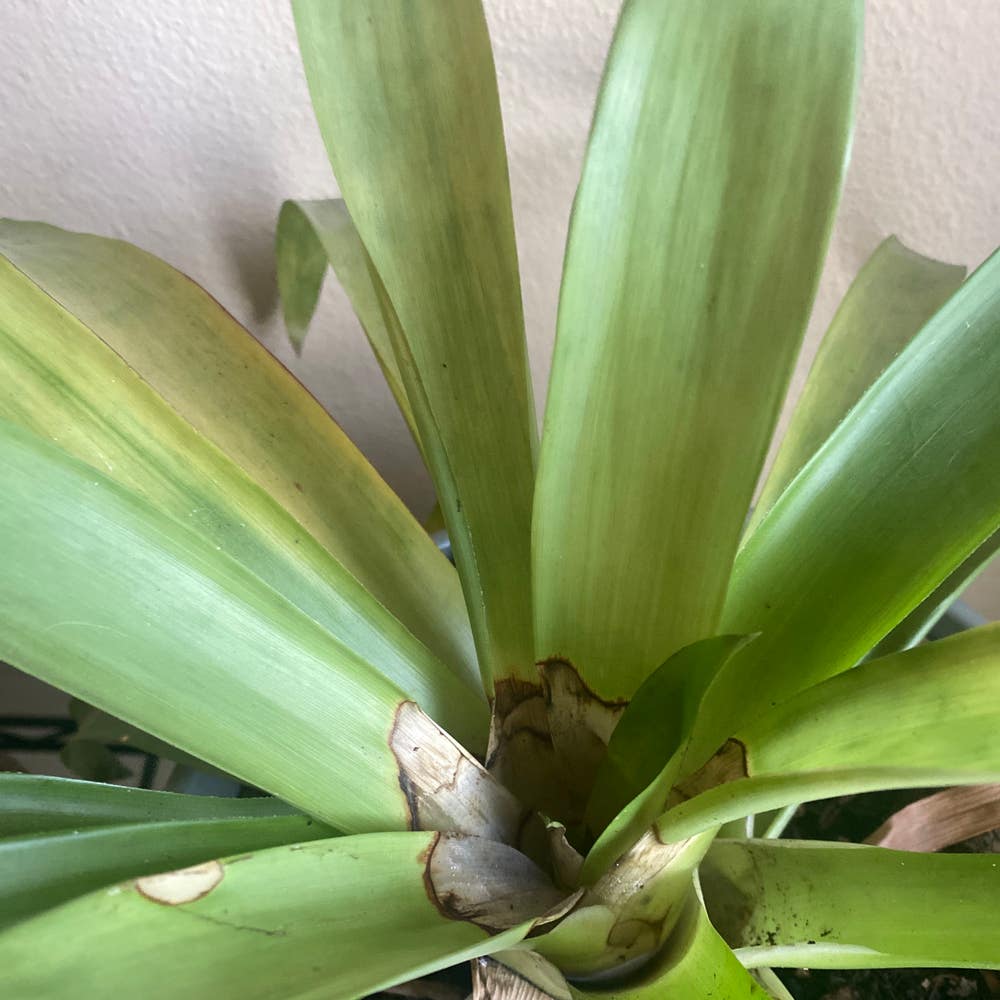
🔥 Why Is My Neoregelia 'Fireball' Not Doing Well?
Neoregelia 'Fireball'
By the Greg Editorial Team
Feb 15, 2024•5 min read
This article was created with the help of AI so we can cover more plants for you. May contain errors. See one? Report it here.
Revive your wilting Neoregelia 'Fireball' 🍂 and learn to prevent future distress with our essential care guide.
- 🍂 Wilting or yellowing leaves suggest hydration or nutrient issues.
- 🌡️ Keep within 70-85°F to avoid temperature-related stress.
- 🚿 Over/under-watering? Adjust watering schedule and check soil drainage.
Spotting Trouble in Paradise: Recognizing Distress Signals
🥀 Wilting, Browning, or Yellowing Leaves
Wilting leaves on your Neoregelia 'Fireball' are like a silent scream for attention. Browning edges? It's likely your plant is throwing a fit over its hydration levels. Yellowing can be a telltale sign of overwatering or a nutrient imbalance.
Quick fixes: Cut back on water and check for proper drainage. Assess your fertilizing routine—less can be more.
🌿 Faded or Discolored Leaves and Stunted Growth
If your 'Fireball' is sporting leaves that look washed out, it's probably begging for a sunnier spot. Discoloration often spells light deprivation. Stunted growth? That's a red flag for insufficient light or a chilly environment.
Adjusting suntan time: Move your plant to a brighter location, but avoid direct midday sun. Aim for a cozy spot with bright, indirect light.
🌡️ Slow Growth and Temperature Tantrums
Neoregelia 'Fireball' loves warmth but despises extremes. If growth is sluggish, it might be shivering or sweating more than you think.
Temperature control: Keep your 'Fireball' in a spot where the temperature is consistently between 70-85°F (21-29°C). Avoid drafts and direct heat sources.
Water Woes: Too Much or Too Little?
💦 Over-watering Havoc
Identifying soggy troubles is key to saving your 'Fireball'. If your plant's leaves are more yellow than the midday sun and the soil feels like a swamp, you've been too generous with the watering can. Immediate action is required to dry out the situation.
Drying Out: Steps to Rescue an Overwatered Plant
- Stop watering and let the soil surface dry.
- Check the pot for proper drainage; it should not be a mini pool.
- If roots are brown and mushy, trim the dead parts.
- Repot in fresh, well-draining soil to give your 'Fireball' a new lease on life.
The Thirsty 'Fireball'
When your 'Fireball' is parched, it's not shy about showing it. Droopy leaves and dry soil are your plant's way of crying out for a drink. To quench its thirst, you'll need to establish a consistent watering schedule.
Hydration Tips for Parched Plants
- Water deeply but not too frequently, allowing the soil to dry slightly between sessions.
- Use a moisture meter or the trusty finger test to check soil moisture before watering.
- Observe your plant's response after watering; a quick perk-up is a sign you've hit the mark.
Uninvited Guests: Tackling Pests
🐜 Common Critters that Love Your 'Fireball'
Your Neoregelia 'Fireball' can become a bug buffet if you're not vigilant. Here's how to spot and evict these pests.
Spotting the Pests
Sticky residue or webbing? You've likely got aphids, mealybugs, or spider mites. These sap-suckers can weaken your plant, leading to further distress.
Eviction Notice
Start by isolating your 'Fireball' to prevent a pest pandemic. A strong stream of water can dislodge the freeloaders, acting as a plant's first line of defense.
Home Remedies and Treatments
🌿 Gentle Interventions
Insecticidal soaps or neem oil can be effective yet gentle on your plant. They're like the polite bouncers of the pest world.
Bring in the Reinforcements
Introducing predators like ladybugs is a natural solution. They're the unpaid interns of pest control, hungry for work and effective.
When to Escalate
For a full-blown infestation, pyrethrum sprays may be necessary. Think of it as flipping the table when diplomacy fails.
Preventative Measures
Keep your 'Fireball' clean and trim away dead foliage. A tidy plant is less inviting to pests—like keeping your house clean to avoid uninvited guests.
Remember, regular inspections are crucial. Catching pests early is like catching a typo before hitting send—a small fix now saves big headaches later.
When the 'Fireball' Gets Burned: Leaf Scorch and Fungal Foes
🔥 Scorched Leaves: Too Hot to Handle
Neoregelia 'Fireball' leaves turning crispy? That's leaf scorch. It's a sunburn for plants, and it's telling you your 'Fireball' needs a break from the intense light. Move it to a shadier spot or create some shade to protect it. Pruning the damaged leaves can help, as it redirects the plant's energy to the healthy growth.
🍄 Mold and Fungus Among Us
Spotted or discolored leaves? You might be hosting a fungus party. These uninvited guests love moisture and poor air circulation. To crash their bash, improve airflow around your 'Fireball'. Keep the leaves dry—water at the base to avoid inviting more fungal friends. If mold has moved in, consider a baking soda and soap spray or a fungicide, but always follow the label instructions. Remember, prevention is key, so keep your plant's environment clean and well-ventilated.
Root of the Problem: Root Rot
👃 Sniffing Out Root Rot
Root rot in your Neoregelia 'Fireball' can be as stealthy as a cat burglar, but your nose knows. Foul odors emanating from the soil are a dead giveaway. Healthy roots are firm and white, but if they're brown and mushy, it's time to spring into action.
Steps to Rescue the Roots and Restore Health
First, sterilize your pruning tools; cleanliness is next to plant-godliness. Gently remove your 'Fireball' from its pot and brush away the soil to reveal the roots. Snip the rotten ones with precision—think of it as removing the bad apples to save the bunch.
After the amputation, consider a sprinkle of cinnamon on the roots. It's not just for toast; it's a natural fungicide. Alternatively, a hydrogen peroxide bath (one part peroxide to three parts water) can be like a detox for the roots.
Next, repot your 'Fireball' in fresh, well-draining soil. This is like giving it a new lease on life. Remember, overwatering is the root rot ringleader, so water only when the top inch of soil is dry.
Finally, keep an eye on your 'Fireball' as it recovers. With these steps, you're not just fixing a plant; you're restoring an ecosystem.
⚠️ Safety First
This content is for general information and may contain errors, omissions, or outdated details. It is not medical, veterinary advice, or an endorsement of therapeutic claims.
Always consult a qualified healthcare professional before using any plant as food, medicine, or supplement.
Never eat any plant (or feed one to pets) without confirming its identity with at least two trusted sources.
If you suspect poisoning, call Poison Control (800) 222-1222, the Pet Poison Helpline (800) 213-6680, or your local emergency service immediately.
Spotted an error? Please report it here.
Troubleshoot your Neoregelia 'Fireball's' issues with Greg's PlantVision 🔍, which crafts a custom care routine to keep your plant healthy and happy.