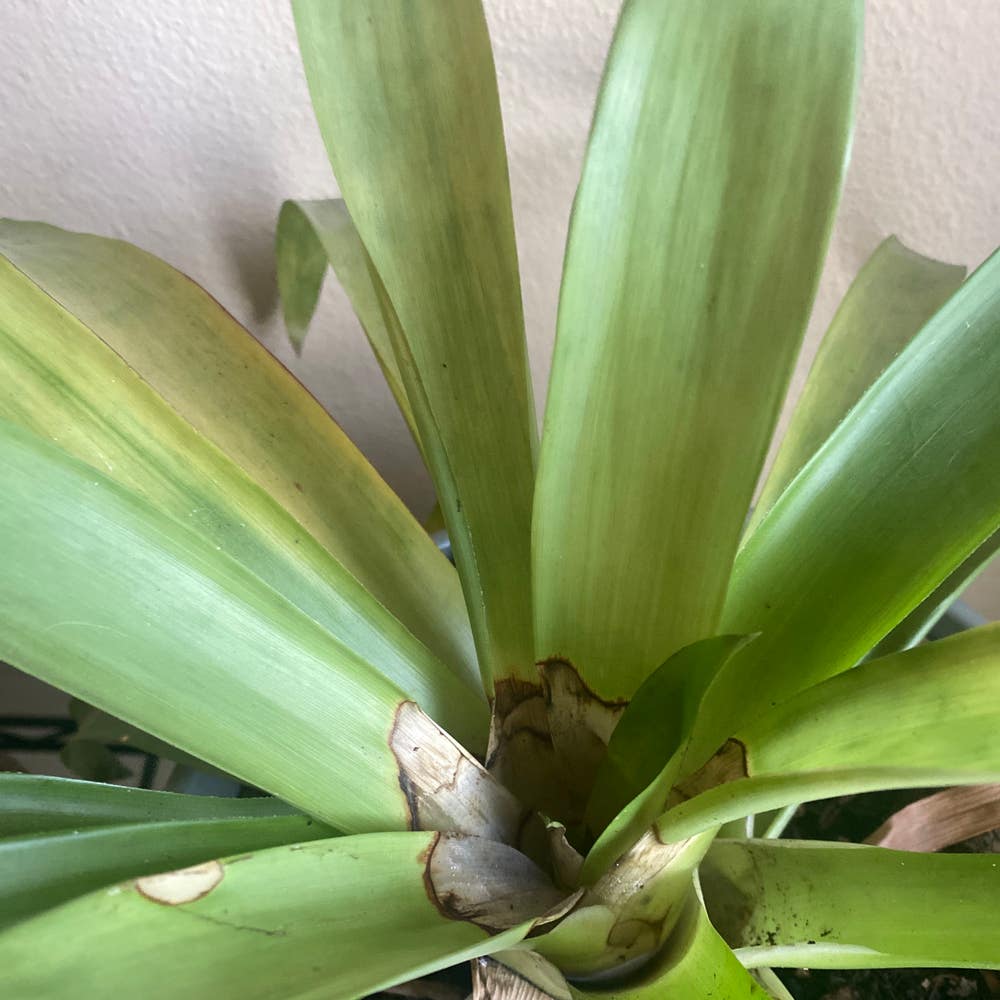
🔥 Why Are My Neoregelia 'Fireball' Leaves Falling Over?
Neoregelia 'Fireball'
By the Greg Editorial Team
Feb 15, 2024•4 min read
This article was created with the help of AI so we can cover more plants for you. May contain errors. See one? Report it here.
Revive your drooping Neoregelia 'Fireball' 🍁 and ensure a lush, upright flourish with these expert care tips!
- 🌧️ Overwatering? Yellow leaves, soggy soil. Underwatering? Wrinkled leaves, dry soil.
- 🌞 Bright, indirect light and 15-23ºC for happy 'Fireball' leaves.
- 🌱 Prune strategically and support structure for upright growth.
Spotting the Signs: When Leaves Droop Unnaturally
🚰 Identifying Overwatering Symptoms
Yellowing leaves and soggy soil are the plant's version of sending an SOS. If the base feels mushy, like a horror movie prop, you've overdone the watering. Root rot might be lurking below if there's a musty smell or if the roots are softer than a marshmallow at a campfire.
🏜️ Recognizing Underwatering Red Flags
When leaves start looking more wrinkled than a linen shirt in a suitcase, it's a sign of thirst. Dry, crispy tips are the plant's equivalent of a parched tongue. If the soil is as dry as a comedian's wit, it's time to give your 'Fireball' a drink.
🌞 Light and Temperature: Finding the Sweet Spot
Faded leaves might as well be holding up a sign for more light. If growth has stunted, check the thermometer; your plant could be reacting to a temperature more inconsistent than a teenager's mood. Leaf curling? It's like the plant is squeezing a stress ball, trying to cope with its environmental stressors.
The Watering Balancing Act
💧 Perfecting Your Watering Technique
Watering your Neoregelia 'Fireball' is like hitting the bullseye in darts; it requires precision. Overwatering is a common misstep, leading to a plant that's more swamp than splendor. On the flip side, underwatering turns your vibrant 'Fireball' into a parched tumbleweed. Aim to keep the soil moist, but not wet. A simple touch test about an inch deep can tell you if it's time to water. If it's dry, it's time to quench your plant's thirst.
💦 Using Soil Moisture as Your Guide
Forget the calendar; your 'Fireball' doesn't thirst on a schedule. Instead, monitor the soil moisture before each watering. When the top layer feels dry, it's time to water. Be thorough, allowing water to drain out completely, but don't let your plant sit in a puddle. That's a one-way ticket to root rot city.
🚰 The Role of Drainage
Proper drainage is the unsung hero of plant care. Ensure your pot has drainage holes and consider a well-draining potting mix. This dynamic duo will help you avoid the dreaded soggy soil syndrome. If your 'Fireball' is sitting in water, it's essentially wearing concrete shoes—not a good look for a plant that's meant to dazzle.
Light and Temperature Harmony
⛅️ Ensuring Adequate Light Without the Burn
Bright, indirect light is the sweet spot for Neoregelia 'Fireball'. Direct sunlight can lead to scorched leaves, while too little light causes weak, elongated growth. Position your plant in a spot where it can enjoy the light without feeling the burn.
Rotate your 'Fireball' periodically to ensure even exposure. This prevents one side from becoming the plant equivalent of a sun worshipper while the other pines in the shade.
🌡️ Keeping the Temperature Just Right
Consistency is your 'Fireball's' best friend when it comes to temperature. Aim to maintain a range between 15-23ºC to avoid the leaf droop that comes with temperature swings.
Avoid placing your plant near drafty windows or heating vents, as sudden changes are as welcome as a hiccup in a yoga class. Keep the environment stable to prevent your 'Fireball' from going limp.
Feeding for Strength: Nutrient Support
💡 Spotting Nutrient Deficiency
Yellowing leaves? Your 'Fireball' might be crying out for nitrogen. A plant that's all leaves and no bloom could be overdosing on nitrogen, skimping on phosphorus and potassium. Look for stunted growth—it's a red flag for nutrient imbalance.
🍽️ Crafting a Balanced Diet
Balance is key when feeding your 'Fireball'. Opt for a fertilizer rich in N-P-K and don't ignore micronutrients like iron and manganese. Moderation is crucial; follow the manufacturer's instructions to avoid nutrient burn. Watch for brighter green leaves and new growth; it's your plant's way of giving a green thumbs up.
Pruning and Support: Keeping Your 'Fireball' Upright
🌱 The Art of Selective Pruning
Pruning isn't just about snipping away at your Neoregelia 'Fireball'; it's a strategic game. You're the coach deciding which players need to sit out. Trim the damaged or droopy leaves to reroute energy to the healthier, more vibrant parts of the plant. This isn't about giving your plant a new hairstyle; it's about boosting its overall performance. Aim to prune during the active growth seasons, typically spring or summer, when the plant can recover quickly.
🌿 Providing Structural Support
Your 'Fireball' might need a little backup to stay upright. Stakes and trellises are not just tools; they're your plant's personal trainers, encouraging it to grow stronger and more resilient. When you tie the leaves, think of it as a gentle nudge rather than a tight leash. The goal is to provide support without stifling growth. And remember, it's not just about keeping the plant upright today; it's about training it to stand tall on its own tomorrow.
⚠️ Safety First
This content is for general information and may contain errors, omissions, or outdated details. It is not medical, veterinary advice, or an endorsement of therapeutic claims.
Always consult a qualified healthcare professional before using any plant as food, medicine, or supplement.
Never eat any plant (or feed one to pets) without confirming its identity with at least two trusted sources.
If you suspect poisoning, call Poison Control (800) 222-1222, the Pet Poison Helpline (800) 213-6680, or your local emergency service immediately.
Spotted an error? Please report it here.
Ensure your Neoregelia 'Fireball' remains upright and vibrant 🏋️♂️ by leveraging Greg's custom watering schedules and expert care advice, tailored to keep your plant's leaves from drooping.