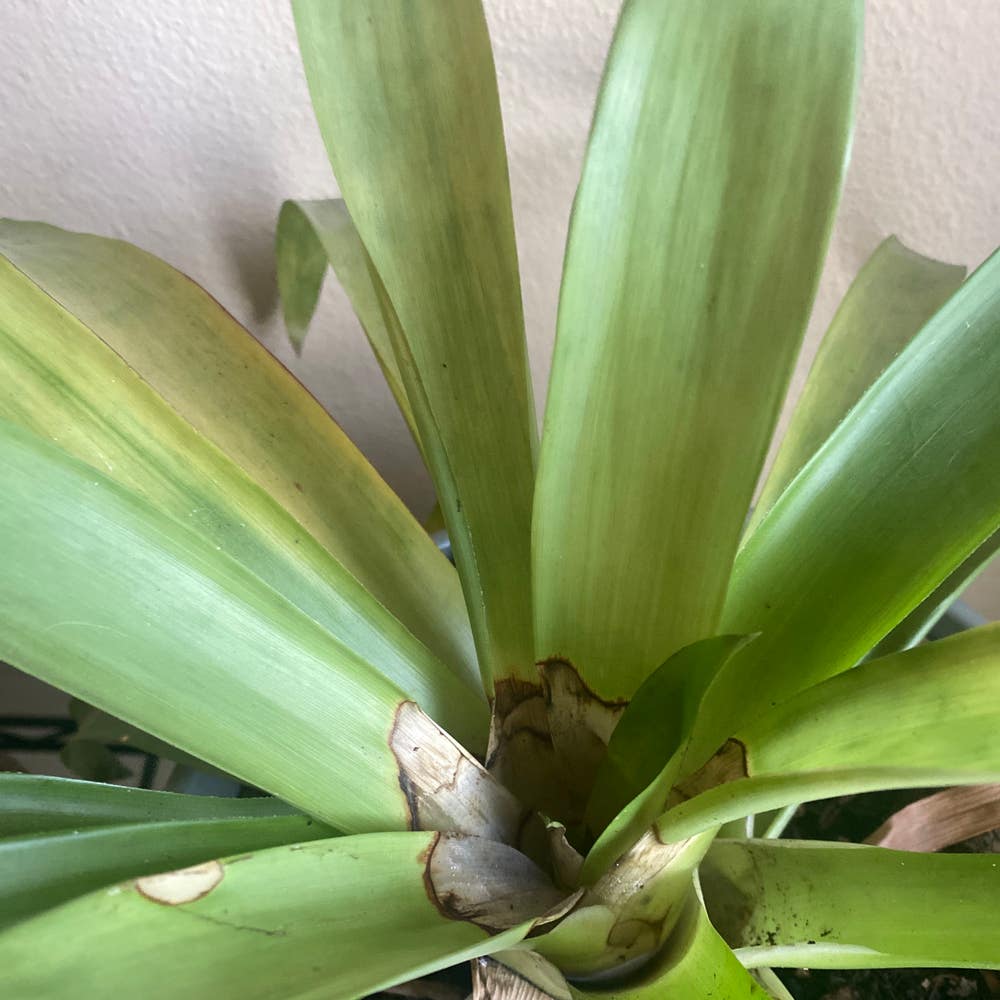
Why Are There Brown Spots on My Neoregelia 'Fireball'?
Neoregelia 'Fireball'
By the Greg Editorial Team
Feb 15, 2024•4 min read
This article was created with the help of AI so we can cover more plants for you. May contain errors. See one? Report it here.
Banish brown spots 🍂 from your Neoregelia 'Fireball' and keep its leaves lustrously spot-free!
- Sunburn and overwatering cause brown spots; adjust light and watering.
- Fungal vs. bacterial spots: look for yellow halos or tea-soaked patterns.
- 🛡️ Prevent and treat with proper light, water, and fungicides/bactericides.
Spotting the Trouble: Identifying Brown Spots
🚨 Recognizing Symptoms
Brown spots on your Neoregelia 'Fireball' can be alarm bells or harmless quirks. They might show up as dry patches or look like wet lesions, sometimes encircled by a telltale yellow halo. Check the leaf edges and centers, as these are hotspots for trouble.
🤔 Common Misconceptions
Don't mistake brown spots for the natural aging process of leaves. If you see a pattern of spreading or a cluster of spots, coupled with symptoms like leaf drop, it's not just old age. Overwatering leads to mushy roots, while sunburn results in bleached spots. Fungal infections are the ninjas of plant problems, often accompanied by a yellow halo.
Rooting Out the Causes
🌞 Sunburn: The Scorching Truth
Direct sunlight can be a frenemy to your Neoregelia 'Fireball'. Too much and you get the dreaded leaf scorch, where leaves sport brown, crispy patches. Prevention? Shield your plant from harsh rays, especially during peak sunshine hours.
💧 Water Woes: Too Much or Too Little
It's a delicate dance with water. Too little, and leaves dry out, inviting brown spots. Too much, and roots drown, leaves rot. The trick is consistent watering, letting the soil dry slightly between drinks. Pro tip: Use your finger to test soil moisture.
🦠 The Fungal and Bacterial Culprits
Fungi and bacteria love to crash the party, leaving brown spots as their calling cards. Fungal spots often have a yellow halo, while bacterial spots look like they've been soaked in tea. Action plan: Isolate infected plants and treat with appropriate fungicides or bactericides. Keep air moving around your plants to discourage these uninvited guests.
Healing Your Neoregelia 'Fireball'
🌞 Light and Shade: Finding the Balance
Adjusting your Neoregelia 'Fireball's' exposure to light is crucial for its recovery. Too much direct sunlight can lead to leaf scorch, while too little can cause the plant to lose its vibrant color. Rotate the plant regularly to ensure all sides receive equal amounts of light. If the light is too intense, use a sheer curtain to diffuse it. This will help prevent further brown spots from developing due to sunburn.
💧 Thirsty for Knowledge: Watering Correctly
Watering habits can make or break your Neoregelia 'Fireball'. Ensure the soil's top inch is dry before watering again. This prevents overzealous watering, which can lead to root rot and brown spots. Empty the central water cup of the plant frequently to avoid stagnant water, which is a breeding ground for bacteria and fungi. Aim for moist soil, not soggy, to keep your plant healthy and hydrated.
🦠 Battling the Microscopic Marauders
When it comes to fungal and bacterial infections, prompt action is key. Fungicides are your first line of defense—always follow the label instructions carefully. For a natural approach, consider using neem oil as a treatment. Ensure good air circulation and avoid high humidity around your plant to prevent these pathogens from taking hold. If you notice signs of infection, remove any affected leaves to stop the spread and allow for new growth.
Keeping Brown Spots at Bay
🛡️ Preventive Measures
Regular care is the backbone of plant health, especially for the vibrant Neoregelia 'Fireball'. To prevent those unsightly brown spots, consistency is your best friend. Ensure your plant gets the right amount of sunlight—indirect but bright—and water it just enough to keep the soil slightly moist. Overzealous watering is a no-go.
Cleanliness is next to godliness, even for plants. Wipe down those leaves with a damp cloth to keep them dust-free and breathing easy. It's not pampering; it's essential maintenance. And while you're at it, make sure the airflow around your plant isn't stifled. Good circulation keeps the fungal bogeyman at bay.
Monitoring and Maintenance
Think of yourself as a plant detective. Regular inspections are your stakeouts, catching brown spots in the act before they go on a spree. If you spot trouble, prune it out—clean, sharp cuts to remove affected areas. It's like cutting the wires on a ticking bomb.
Keep a care log; it's not just for nostalgia. This log is your playbook, revealing what tactics work and which ones fumble. If brown spots dare show their face, reassess your strategy. It’s like tweaking a recipe until it’s just right.
Adjust your care with the seasons. What works in summer might not fly in winter. It's about adapting, not sticking to a rigid game plan. And remember, if brown spots persist, it might be time to call in the cavalry—a local plant expert or horticulturist. They're the special agents in the world of plant health.
⚠️ Safety First
This content is for general information and may contain errors, omissions, or outdated details. It is not medical, veterinary advice, or an endorsement of therapeutic claims.
Always consult a qualified healthcare professional before using any plant as food, medicine, or supplement.
Never eat any plant (or feed one to pets) without confirming its identity with at least two trusted sources.
If you suspect poisoning, call Poison Control (800) 222-1222, the Pet Poison Helpline (800) 213-6680, or your local emergency service immediately.
Spotted an error? Please report it here.
Banish brown spots on your Neoregelia 'Fireball' with precision care 🎯 from Greg, guiding you on watering schedules and light adjustments for plant perfection!