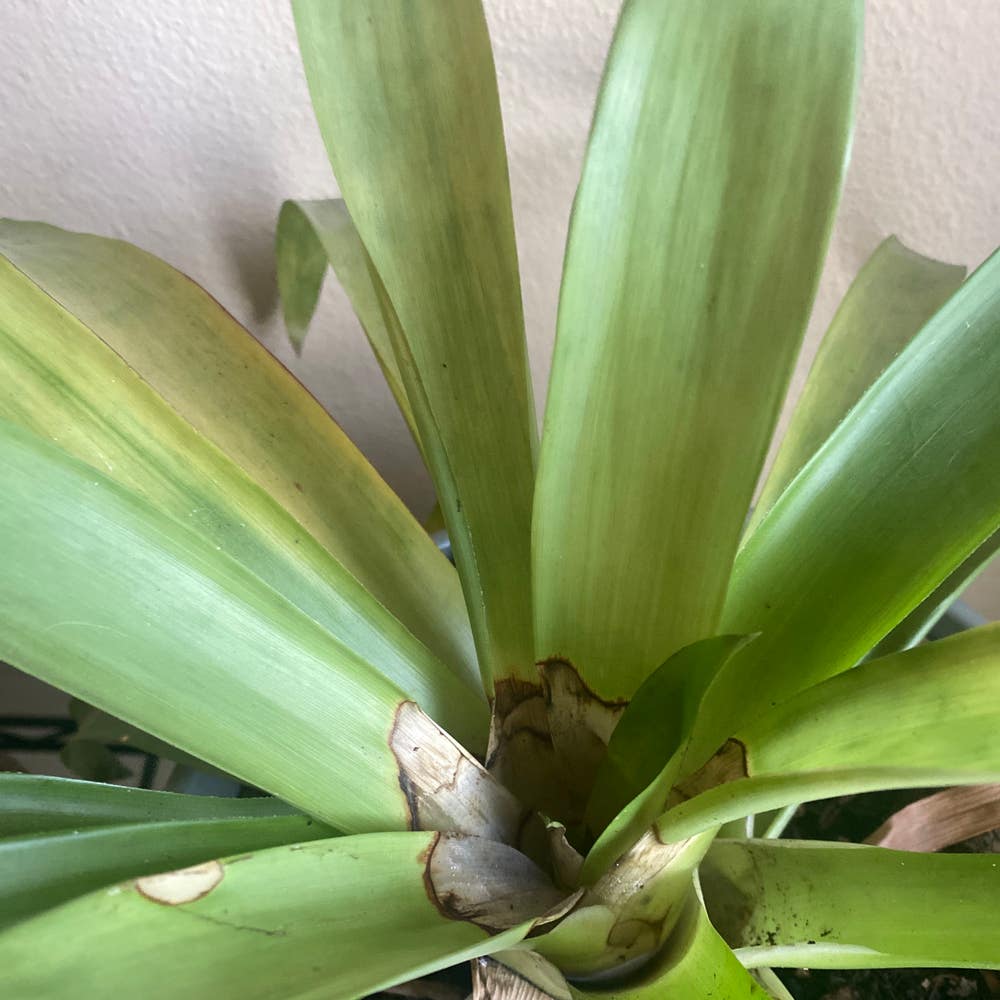
🔥 Why Are My Neoregelia 'Fireball' Leaves Mushy?
Neoregelia 'Fireball'
By the Greg Editorial Team
Feb 15, 2024•3 min read
This article was created with the help of AI so we can cover more plants for you. May contain errors. See one? Report it here.
Solve the mushy mystery 🕵️♂️ of your Neoregelia 'Fireball' and revive its lushness!
- Mushy leaves mean distress; look for discoloration and detachment.
- 🚿 Overwatering and poor drainage are common culprits. Adjust care routine.
- 🛡️ Fungal infections and pests can be fought with airflow and insecticidal soap.
Spotting Trouble: Signs Your Neoregelia 'Fireball' is Too Squishy
🍅 Telltale Symptoms of Mushiness
Mushy leaves on your Neoregelia 'Fireball' are a distress signal. If the leaves feel like they're melting under a gentle squeeze, it's a sign of trouble. Discoloration, such as yellow or brown leaves, often accompanies the squishiness. Leaves that detach too easily are also a red flag, indicating that your plant is more than just unhappy—it's in distress.
🚨 When to Worry
The severity of leaf mushiness can range from a minor issue to a full-blown crisis. If you notice a trend of spreading softness or a general decline in the firmness of the leaves, it's time to take action. A foul smell emanating from the soil or a mushy base may indicate root rot, a condition that can quickly spell doom for your plant. Keep in mind that while a single mushy leaf might be an anomaly, multiple affected leaves are a cry for help.
The Usual Suspects: What's Making Your Plant Leaves Mushy?
🌊 Too Much Love: The Perils of Overwatering
Overwatering is a classic mistake. It's easy to drown the roots of your Neoregelia 'Fireball' in too much H2O, leading to mushy leaves. If your pot feels like it's packed with wet cement, it's time to ease up on the watering can.
🚰 The Drain Game: Why Poor Drainage is a Problem
Drainage is crucial. Without it, water lingers like an unwanted house guest, causing root rot and mushy leaves. Check those drainage holes; if they're as dry as a desert, your 'Fireball' is in trouble.
🍄 Unwanted Guests: Fungal and Bacterial Party Crashers
Fungi and bacteria are the ultimate party crashers, turning your plant's leaves to mush. Dark, soggy spots with a colorful halo are their calling cards. If you spot these, it's time for some plant first aid.
🐜 Bug Battles: Pests That Turn Leaves to Mush
Pests can be sneaky, inflicting damage that leads to mushiness. They thrive in moist environments, creating a vicious cycle of sogginess and infestation. Keep an eye out for these tiny troublemakers.
Turning the Tide: Saving Your 'Fireball' from the Mush
💧 Water Wisdom: Finding the Right Watering Balance
Your Neoregelia 'Fireball' isn't a camel, nor is it a fish. Watering balance is key. Check the soil with your finger; if it's damp, put down the watering can. Aim for consistent moisture, but avoid drenching the plant. Remember, overwatering is a one-way ticket to mush city.
🚰 Drainage Do-Over: Fixing Your Plant's Water Escape Routes
Drainage holes are your plant's lifeline. No holes? Big problem. Make sure your pot isn't holding water hostage. Mix in some perlite or coarse sand to keep the soil from becoming a swamp. It's like unclogging a drain – a small effort prevents a big mess.
🦠 Infection Inspection: Treating and Preventing Plant Plagues
Fungal and bacterial infections are the party crashers you didn't invite. Increase airflow and consider a targeted fungicide if you spot trouble. Prevention is about creating a hostile environment for these uninvited guests—keep the leaves dry and the soil well-drained.
🐜 Pest Patrol: Keeping the Critters at Bay
Pests are the freeloaders of the plant world. Introduce beneficial insects like ladybugs, or use neem oil or insecticidal soap to show them the door. Be vigilant and act quickly at the first sign of an infestation to prevent your plant from turning into a pest buffet.
⚠️ Safety First
This content is for general information and may contain errors, omissions, or outdated details. It is not medical, veterinary advice, or an endorsement of therapeutic claims.
Always consult a qualified healthcare professional before using any plant as food, medicine, or supplement.
Never eat any plant (or feed one to pets) without confirming its identity with at least two trusted sources.
If you suspect poisoning, call Poison Control (800) 222-1222, the Pet Poison Helpline (800) 213-6680, or your local emergency service immediately.
Spotted an error? Please report it here.
Keep your Neoregelia 'Fireball' firm and fabulous 🌱 with Greg's custom watering schedules and health monitoring alerts to prevent mushiness and ensure plant vitality!