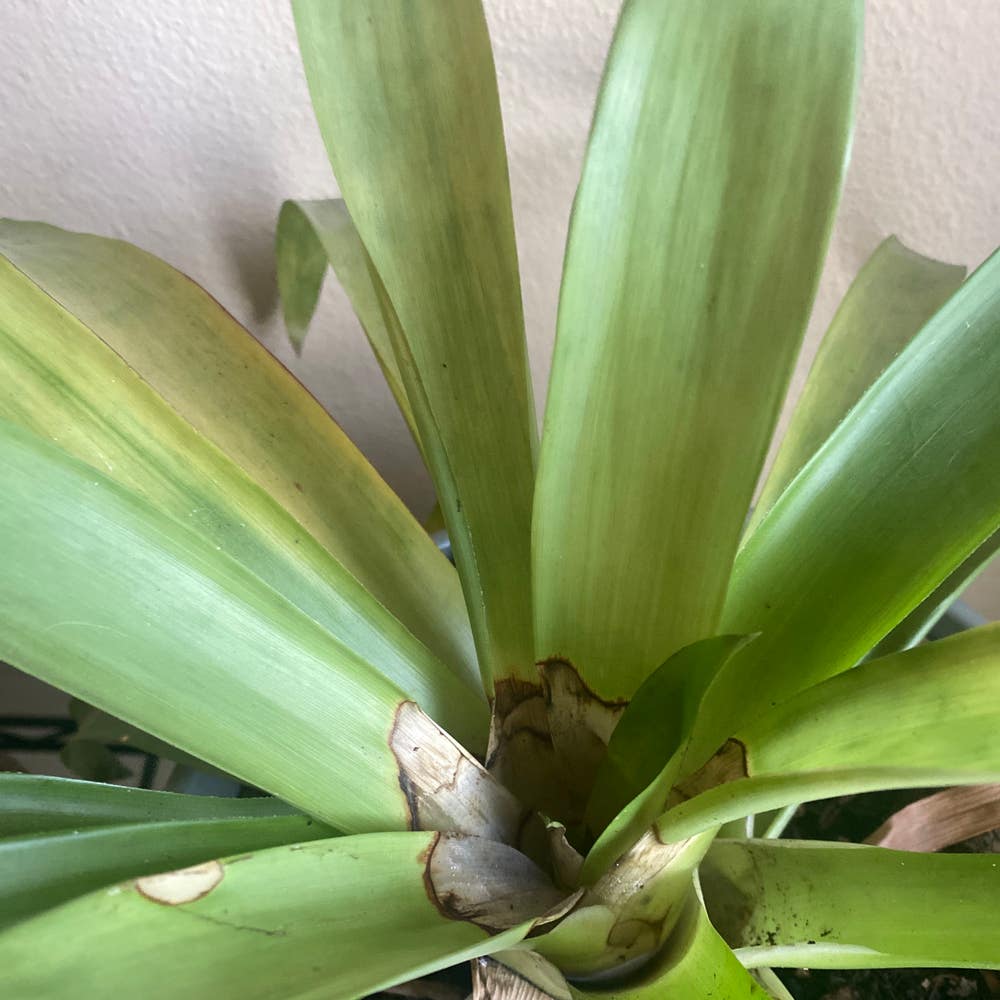
Why Are My Neoregelia 'Fireball' Leaves Droopy?
Neoregelia 'Fireball'
By the Greg Editorial Team
Feb 15, 2024•3 min read
This article was created with the help of AI so we can cover more plants for you. May contain errors. See one? Report it here.
Prevent your cherished 'Fireball' from wilting 🍂 with our life-saving care secrets! 🌟
- Droopy leaves signal distress, especially in older foliage.
- 🌞💧 Balance water and light to prevent over/underwatering and leaf scorch.
- Consistent care and inspection keep your 'Fireball' perky and healthy.
Spotting the Signs of Droopy Leaves
🌱 Recognizing Droopiness
Droopiness in Neoregelia 'Fireball' can be deceptive. Mature leaves hanging like a hammock? That's a distress signal. Young leaves might lean as they grow, but if your plant's older leaves are slumping, it's time to pay attention.
🚩 When to Worry
Variations in leaf posture aren't always bad news. Natural droop happens, but when leaves lose their vibrant color and start looking like overcooked spinach, it's a red flag. Discoloration, spots, or a general wilt that's more ghostly pale than fiery red means trouble is brewing.
Unearthing the Causes of Droopiness
💧 Water Woes
Overwatering can turn your Neoregelia 'Fireball' into an underwater scene, with roots that are more soggy than firm. Root rot might follow, turning the plant's base into a mushy mess. Conversely, underwatering leaves your plant as parched as a desert, with leaves drooping in a silent plea for hydration. The soil should feel like a wrung-out sponge—moist, not drenched.
🌞 Light and Heat: Finding the Sweet Spot
Too much sun can have your 'Fireball' leaves scorched, while insufficient light leaves them stretching out like they're trying to catch the last rays at sunset. Aim for bright, indirect light where your plant can luxuriate without the burn. Temperature fluctuations are a no-go; think stable and cozy, avoiding the drama of a midday sun showdown or a chilly draft.
🍽️ Feeding Your Fireball
Nutrients are the pep talk your 'Fireball' needs to keep its leaves perky. A balanced fertilizer during the growing season is like a plant power-up. Soil amendments can also replenish what time and water have washed away, ensuring your plant doesn't miss out on its essential mineral diet.
Reviving Your Droopy 'Fireball'
💧 Fine-Tuning Watering Habits
Watering your Neoregelia 'Fireball' is less about sticking to a schedule and more about understanding its needs. Start by checking the soil moisture; if the top inch is dry, it's time to water. But remember, overwatering is a sin in the plant world—root rot is a silent killer. Make sure your pot has adequate drainage to avoid soggy soil scenarios.
🌞 Light and Temperature Tweaks
Getting the lighting right for your 'Fireball' is crucial. Aim for bright, indirect light—too much sun and you're on a fast track to leaf burn, too little and you'll have a droopy, light-starved plant on your hands. Keep the temperature consistent; think of it as setting the right mood for growth. Sudden changes in temperature are like unexpected plot twists—no one's a fan.
🍽️ Nutritional Pick-Me-Ups
When it comes to fertilizer, less is often more. Use a balanced blend to avoid nutrient overload, which can be just as detrimental as neglect. Your 'Fireball' will show its appreciation for the right nutrients with firm, vibrant leaves. Keep an eye out for signs of improvement, and remember, patience is a virtue in the plant care game.
Keeping Your 'Fireball' Firm
📆 Consistent Care Schedule
Consistency is the secret sauce to keeping your Neoregelia 'Fireball' from going limp. It's not about slavishly following a calendar, but about syncing with your plant's life rhythm. Water when the soil feels dry, not just because it's Tuesday.
👀 Monitoring and Maintenance
Think of your 'Fireball' as a silent roommate that needs regular check-ins. Inspect leaves for early signs of sadness—browning tips or a wilted demeanor. It's like catching a cold early; you nip it in the bud before it turns into full-blown plant pneumonia. Regular pest patrols are a must too—these tiny terrors can turn your 'Fireball' droopy faster than you can say "aphid apocalypse."
⚠️ Safety First
This content is for general information and may contain errors, omissions, or outdated details. It is not medical, veterinary advice, or an endorsement of therapeutic claims.
Always consult a qualified healthcare professional before using any plant as food, medicine, or supplement.
Never eat any plant (or feed one to pets) without confirming its identity with at least two trusted sources.
If you suspect poisoning, call Poison Control (800) 222-1222, the Pet Poison Helpline (800) 213-6680, or your local emergency service immediately.
Spotted an error? Please report it here.
Revitalize your Neoregelia 'Fireball' by syncing with Greg's tailored reminders 🍃 that ensure perfect watering, lighting, and feeding schedules.