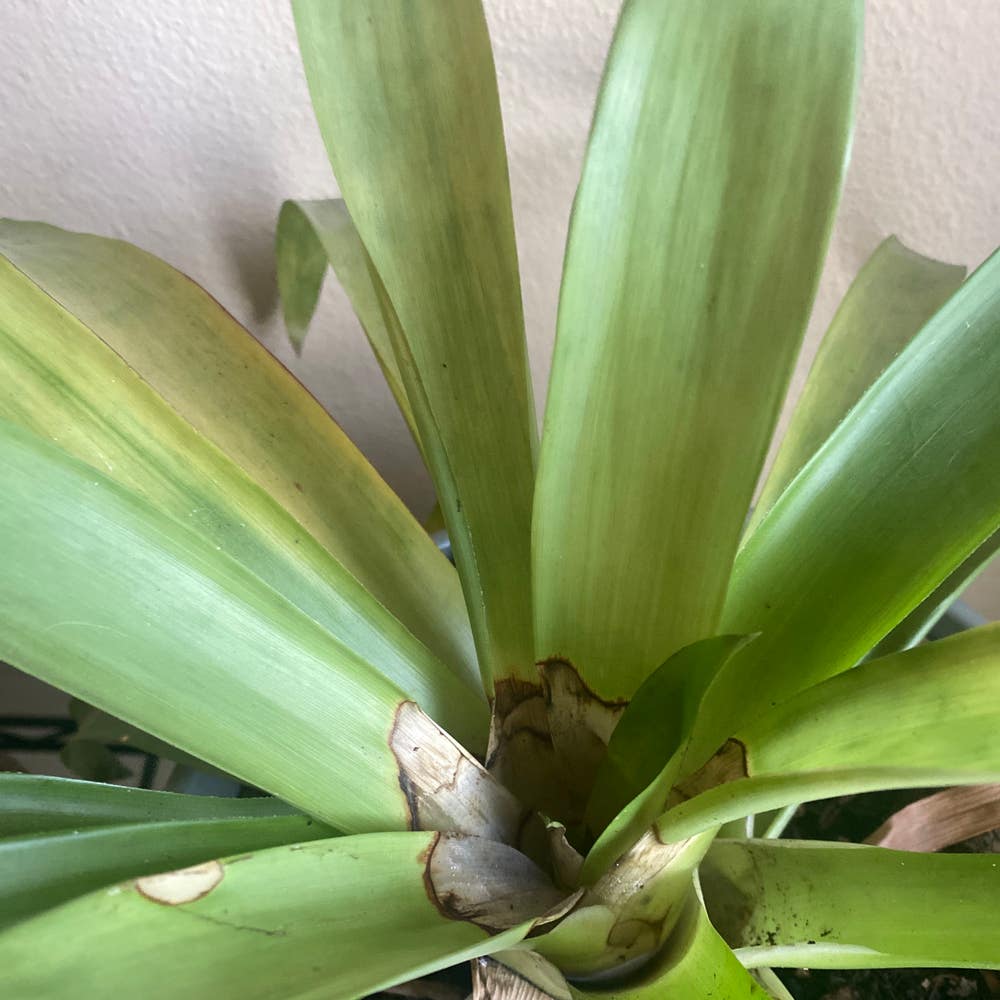
Black Spots on My Neoregelia 'Fireball' Leaves
Neoregelia 'Fireball'
By the Greg Editorial Team
Feb 15, 2024•4 min read
This article was created with the help of AI so we can cover more plants for you. May contain errors. See one? Report it here.
Banish black spots and keep your Neoregelia 'Fireball' radiant with this essential care guide. 🌿🔍
- Black spots signal fungal infections, sunburn, or pests on 'Fireball' leaves.
- 🍄☀️🐛 Different causes, different spots: Learn to identify each type.
- Prevent with care: Proper light, water, and air flow keep spots away.
Spotting the Trouble: Identifying Black Spots on Your 'Fireball'
Black spots on Neoregelia 'Fireball' leaves are warning signs, not mere cosmetic flaws. They typically manifest as dark lesions, sometimes encircled by a yellow halo. This discoloration can indicate a range of issues from fungal infections to sunburn or pests.
🕵️ What Do Black Spots Look Like?
Look for tiny black dots or irregular blotches on the leaves. A yellowish ring around the spot often accompanies fungal infections. Sunburn, conversely, results in dry, brownish spots, usually on the most light-exposed areas.
🌍 Where You'll Find Them
These spots can appear on any part of the leaf surface, including new growth. Fungal spots might feel crusty, while sunburn spots are dry and crispy.
🚦 Quick Tips for Differentiation
- Fungal spots often have a yellow halo or concentric rings.
- Sunburn spots are dry with scorched-looking edges.
- Pest-related spots may be accompanied by visible insects or sticky residue.
🔄 Process of Elimination
Monitor your watering habits and light exposure. Fungal spots will spread if conditions are right, while sunburn spots remain on the light-facing sides. If you notice pests, you'll need to take immediate action.
Remember, when in doubt, consult a professional. They can provide a precise diagnosis and recommend the best course of action.
Battling Fungus Among Us
🍄 Fungal Foes: Recognizing the Culprits
Black or brown lesions on your Neoregelia 'Fireball' leaves? You've got uninvited fungal guests. Anthracnose and leaf spot diseases are the party crashers here. They thrive in the moist, cozy nooks of your plant's foliage, leaving behind their calling card: unsightly spots.
🌿 Fungicide to the Rescue
Time to arm yourself with fungicides—tebuconazole and trifloxystrobin are your weapons of choice. But remember, precision is key; apply with care to avoid collateral damage. Rotate your fungicides to keep the pathogens on their toes and prevent them from building a resistance to your chemical arsenal.
🌬 Keeping Fungus at Bay
Prevention is your best defense. Air circulation is like kryptonite to fungi; make sure your 'Fireball' isn't stewing in stagnant air. Water at the base to avoid giving spores a free ride on wet leaves. Think of it as watering with surgical precision. And don't forget to remove any affected leaves—think of it as taking out the trash before it stinks up the place.
Sunburn: When Your 'Fireball' Gets Too Hot
🌞 Signs Your Plant's Had Too Much Sun
Black spots on Neoregelia 'Fireball' leaves can be a distress signal, indicating your plant might be getting too much sun. If the leaves sport a crispy texture and the vibrant color seems faded, it's time to rethink your plant's sunbathing habits.
⛅️ Shading Strategies
To prevent sunburn, it's crucial to provide filtered light. This can be achieved by placing your 'Fireball' under a canopy of taller plants or using a sheer curtain to soften the sun's impact. Ensure any shade structures allow for good air circulation to avoid creating a sweltering microclimate.
🌱 Sun Acclimation Tips
When adjusting your 'Fireball' to new lighting conditions, take it slow. Start with mild morning sunlight, and gradually increase exposure to avoid leaf burn. It's about finding a sweet spot where your plant gets enough light to thrive without the crispy side effects.
Pests: Tiny Critters, Big Problems
🐜 Spotting Pest Damage
Black spots on your Neoregelia 'Fireball' can be tell-tale signs of pest infestations. Scale insects and mealybugs are the usual suspects. These pests suck the sap from leaves, leaving behind black spots as evidence of their feast. Scale insects appear as small bumps on leaves and stems, while mealybugs look like tiny cottony tufts hiding in the nooks of your plant.
🛡️ Natural and Chemical Defenses
Combat these pests with a one-two punch of natural and chemical defenses. A strong spray of water can dislodge many of the critters. For a gentler approach, insecticidal soaps or neem oil can be effective. If you're up for it, introduce natural predators like ladybugs to your plant's ecosystem. For more stubborn infestations, chemical pesticides may be necessary—use them as a last resort and follow the directions closely.
👩⚕️ Regular Check-Ups
Prevention is better than cure. Regularly inspect your 'Fireball' for uninvited guests. Check under leaves and in hidden crevices. Removing dead foliage and maintaining good air circulation can discourage pests from settling in. Stay vigilant and your Neoregelia 'Fireball' will thank you with vibrant, spot-free leaves.
⚠️ Safety First
This content is for general information and may contain errors, omissions, or outdated details. It is not medical, veterinary advice, or an endorsement of therapeutic claims.
Always consult a qualified healthcare professional before using any plant as food, medicine, or supplement.
Never eat any plant (or feed one to pets) without confirming its identity with at least two trusted sources.
If you suspect poisoning, call Poison Control (800) 222-1222, the Pet Poison Helpline (800) 213-6680, or your local emergency service immediately.
Spotted an error? Please report it here.
Keep your Neoregelia 'Fireball' thriving 🌿 with Greg's custom care alerts that help prevent fungal, sunburn, and pest-related spots.