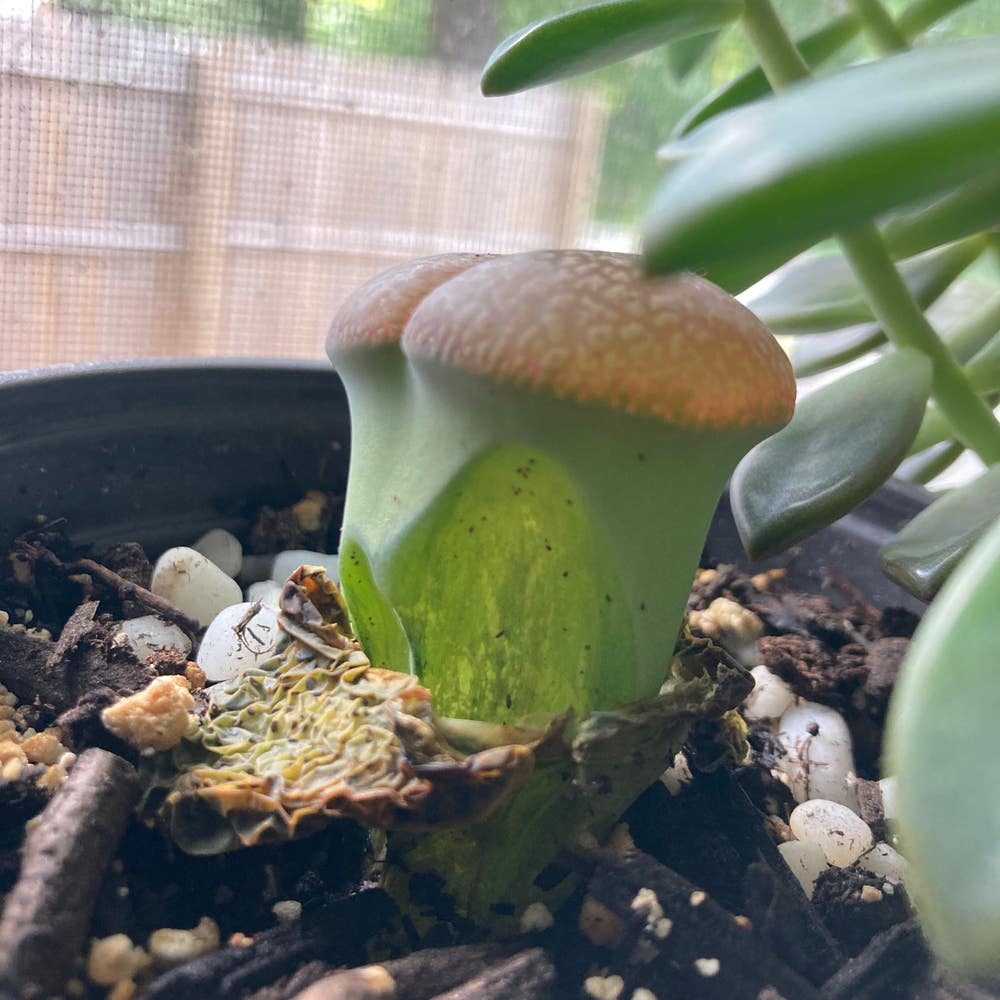
What to Do About Yellow Leaves on Your Living Stone
Lithops aucampiae
By the Greg Editorial Team
Oct 18, 2024•6 min read
This article was created with the help of AI so we can cover more plants for you. May contain errors. See one? Report it here.
Revive your living stone's vibrancy 🌱 by mastering the secrets to diagnosing and treating yellow leaves!
- 🌱 Yellow leaves indicate issues like overwatering, underwatering, or nutrient deficiencies.
- 💧 Overwatering causes yellowing at the base, while underwatering affects leaf tips.
- 🐛 Pests like mealybugs can also lead to yellow leaves and stunted growth.
Causes of Yellow Leaves
💧 Overwatering and Its Effects
Overwatering is a common culprit behind yellow leaves on your living stone. Symptoms include yellowing leaves, particularly at the base, a soft and mushy texture, and the potential for root rot.
To combat overwatering, ensure you use well-draining soil. A cactus soil mix or one blended with perlite is ideal for preventing water accumulation.
🌵 Underwatering and Its Symptoms
Underwatering can also lead to yellow leaves, especially at the tips. Look for signs like shriveling or wrinkling of leaves and a dry, brittle texture.
As a general guideline, water your plant when the top inch of soil feels dry. Adjust your watering frequency according to seasonal changes to keep your plant healthy.
🥦 Nutrient Deficiencies
Nitrogen Deficiency
A nitrogen deficiency manifests as general yellowing of older leaves and stunted growth. To remedy this, consider using a balanced succulent fertilizer that contains nitrogen.
Iron Deficiency
Iron deficiency presents itself as yellowing between leaf veins, leaving the veins green. Applying iron chelate supplements to the soil can help restore balance.
🐛 Pest Infestations
Mealybugs
Mealybugs are identifiable by their white, cotton-like masses on leaves. They cause yellowing leaves and stunted growth.
Control methods include natural options like neem oil or insecticidal soap, as well as chemical solutions such as systemic insecticides.
Aphids
Aphids are tiny green or black insects that often appear on new growth. They can distort growth and lead to yellowing leaves.
To manage aphids, rinse them off with water or use insecticidal soap for effective control.
Understanding these causes is crucial for maintaining the health of your living stone. Next, we’ll explore how to diagnose yellow leaves effectively.
Diagnosing Yellow Leaves
👀 Visual Signs to Look For
When diagnosing yellow leaves on your living stone, start by observing the leaf color. Yellowing leaves often indicate stress, while browning can signal more severe issues.
Texture changes are equally telling. Softness may suggest overwatering, while dryness points to underwatering.
💧 Differentiating Between Overwatering and Underwatering
Understanding the difference between overwatering and underwatering is crucial. Overwatered plants typically exhibit soft, mushy leaves and may develop root rot.
In contrast, underwatered plants show signs of distress with wrinkled, shriveled leaves and dry soil.
🐞 Identifying Pest Damage
Pest infestations can also lead to yellow leaves. Conduct a visual inspection for common pests like mealybugs and aphids.
Look for sticky residue or webbing on the leaves, which can indicate a pest problem that needs addressing.
🌱 Soil Condition Assessment
Assessing soil condition is vital for diagnosing yellow leaves. Check the drainage by feeling the soil moisture levels and examining its texture.
Signs of compaction or poor drainage can exacerbate yellowing leaves, making it essential to ensure your plant's soil is healthy and well-aerated.
By carefully evaluating these factors, you can pinpoint the cause of yellow leaves and take appropriate action. Next, let’s explore effective treatments to restore your living stone’s health.
Treatment for Yellow Leaves
🌊 Adjusting Watering Schedule
Establishing a consistent watering routine is crucial for your living stone's health. Adjust the frequency based on seasonal changes, ensuring you don’t overwater or underwater your plant.
Using the Greg plant care app can help you set reminders for watering, making it easier to keep track of your plant's needs. This way, you can maintain a healthy balance and prevent yellow leaves from becoming a recurring issue.
🪴 Improving Soil Drainage
Soil drainage plays a vital role in preventing yellow leaves. Repotting your living stone in cactus soil can significantly enhance drainage and aeration.
Additionally, consider adding perlite or sand to your soil mix. These materials improve aeration, allowing excess water to escape and preventing root rot.
🌱 Fertilization Tips for Succulents
Fertilizing your living stone correctly can help restore its vibrant color. Aim to fertilize every 4-6 weeks during the growing season for optimal results.
Choose a balanced NPK fertilizer or a specific succulent formula to meet your plant's nutritional needs. This will support healthy growth and help combat yellowing leaves.
🐞 Pest Control Methods
Natural Methods
For pest control, neem oil is an effective natural solution. Mix it with water according to the instructions and apply it to affected areas to deter pests.
Introducing beneficial insects, like ladybugs, can also help manage aphid populations. These natural predators will keep your plant healthy without harmful chemicals.
Chemical Methods
If natural methods fall short, systemic insecticides can be a reliable alternative. Follow application guidelines carefully to ensure effectiveness while keeping safety precautions in mind.
Using these methods will not only treat existing issues but also help prevent future infestations. With the right care, your living stone can thrive and stay vibrant.
As you implement these treatments, keep an eye on your plant's progress. This will set the stage for the next section on preventing yellow leaves, ensuring your living stone remains healthy and beautiful.
Preventing Yellow Leaves
🌱 Best Practices for Care
Establishing a regular watering schedule is crucial for your Living Stone. Adjust your watering frequency based on seasonal changes and environmental conditions to keep your plant thriving.
Regular soil checks are equally important. Assess soil moisture and drainage frequently to ensure your plant isn’t sitting in water, which can lead to yellow leaves.
☀️ Ideal Growing Conditions
Light Requirements
Your Living Stone thrives in bright, indirect sunlight. Avoid direct sun exposure to prevent leaf burn, which can lead to unsightly yellowing.
Temperature Preferences
Maintaining an optimal temperature range is vital. Protect your plant from extreme temperature fluctuations to ensure it remains healthy and vibrant.
🍂 Seasonal Care Adjustments
As seasons change, so should your care routine. Adjust watering and fertilization based on seasonal growth patterns to meet your plant's evolving needs.
Keep an eye out for pests during warmer months. Regular monitoring can help catch infestations early, preventing yellow leaves and other damage.
🔍 Regular Monitoring and Maintenance
Make it a habit to check your plant weekly for signs of stress or pests. Early detection can save your Living Stone from potential issues.
Consider keeping a care journal to track changes and adjustments. This practice not only helps you remember what works but also deepens your connection with your plant.
By following these preventive measures, you can keep your Living Stone healthy and vibrant, steering clear of those pesky yellow leaves. Next, let’s dive into diagnosing yellow leaves to better understand what might be going wrong.
⚠️ Safety First
This content is for general information and may contain errors, omissions, or outdated details. It is not medical, veterinary advice, or an endorsement of therapeutic claims.
Always consult a qualified healthcare professional before using any plant as food, medicine, or supplement.
Never eat any plant (or feed one to pets) without confirming its identity with at least two trusted sources.
If you suspect poisoning, call Poison Control (800) 222-1222, the Pet Poison Helpline (800) 213-6680, or your local emergency service immediately.
Spotted an error? Please report it here.
Keep your living stone thriving 🌿 by using Greg's tailored reminders for watering and pest control, ensuring those yellow leaves are a thing of the past!