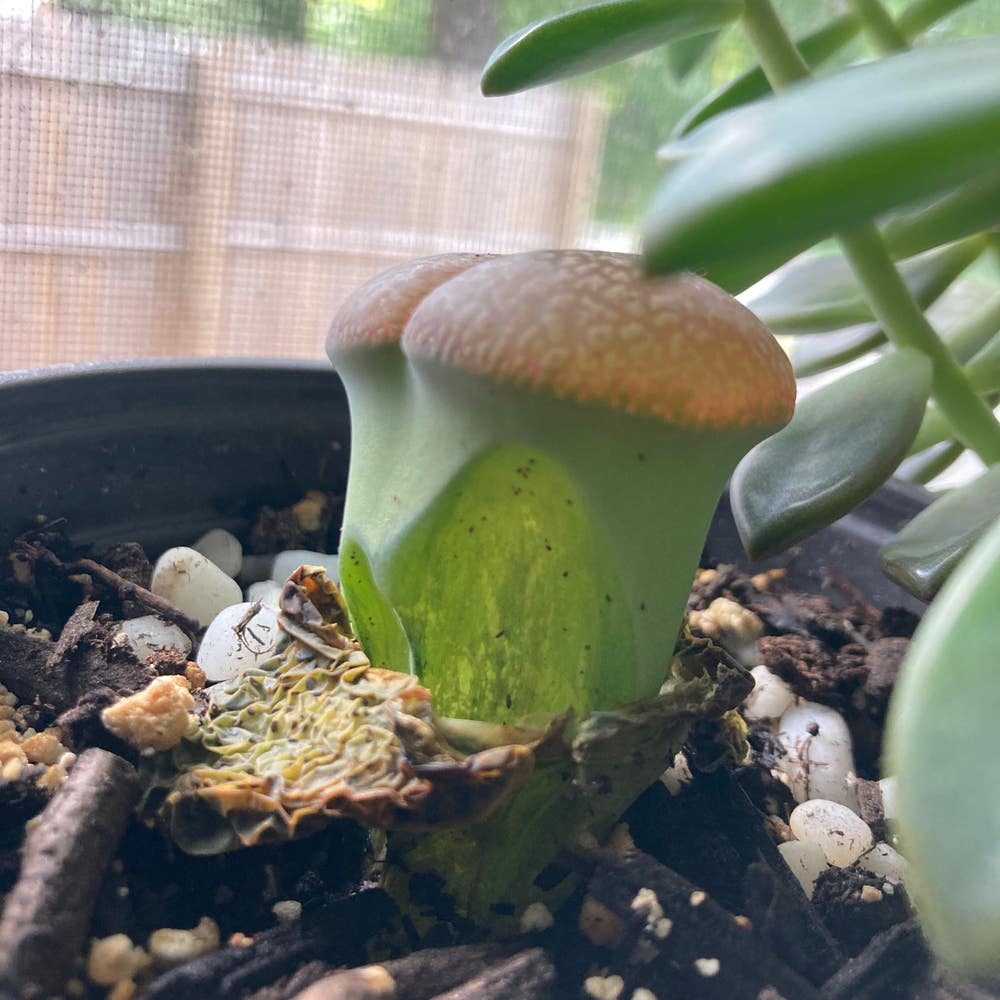
🪨 What to Do About Dropping Leaves on Your Living Stone
Lithops aucampiae
By the Greg Editorial Team
Oct 18, 2024•5 min read
This article was created with the help of AI so we can cover more plants for you. May contain errors. See one? Report it here.
Unlock the secrets to preventing leaf drop in your Lithops and watch your plant thrive! 🌱
- 🌱 Leaf drop in Lithops results from overwatering, underwatering, or environmental stress.
- 💧 Proper watering is key: let soil dry out completely between waterings.
- ☀️ Optimal conditions include 4-6 hours of sunlight and humidity below 50%.
Causes of Leaf Drop
Understanding why your living stone (Lithops) is dropping leaves is essential for effective care. Several factors can contribute to this distressing issue.
💧 Overwatering
Excess moisture is a common culprit behind leaf drop. When the roots sit in waterlogged soil, they can rot, leading to soft, mushy leaves that eventually fall off.
🚰 Underwatering
On the flip side, insufficient water can also stress your plant. If the leaves appear wrinkled or shriveled, it’s a sign that your Lithops is thirsty and needs more hydration.
🌪️ Environmental Stress
Environmental factors play a significant role in leaf health. Inadequate light can cause etiolation, while extreme temperatures and high humidity can create a hostile environment for your plant.
🐛 Pest Infestations
Pests are another serious threat to your Lithops. Mealybugs, aphids, and spider mites can weaken the plant, leading to noticeable leaf drop. Look for visible pests or sticky residue as indicators of an infestation.
By identifying these causes, you can take the necessary steps to restore your plant's health. Next, we’ll explore how to diagnose the specific problem affecting your Lithops.
Diagnosing the Problem
Understanding the specific cause of leaf drop is crucial for effective treatment. Identifying the underlying issue can save your living stone and help it thrive.
💧 Overwatering and Its Effects
Overwatering is a common culprit. Signs include soft, mushy leaves, yellowing, and root rot.
To remedy this, allow the soil to dry out completely before watering again. This simple adjustment can make a significant difference.
🚰 Underwatering and Its Effects
On the flip side, underwatering can also lead to leaf drop. Look for wrinkled, shriveled leaves and stunted growth as indicators.
If you suspect underwatering, gradually increase your watering frequency. Ensure the soil is adequately moist without becoming soggy.
🌪️ Environmental Stress Factors
Environmental factors play a significant role in leaf health. Insufficient light can lead to etiolation and eventual leaf drop.
Extreme temperatures, whether hot or cold, can stress your plant. Additionally, humidity levels matter; high humidity can promote fungal issues, while low humidity can lead to dehydration.
🐛 Pest Infestations and Their Impact
Pests can wreak havoc on your living stone. Common offenders include mealybugs, aphids, and spider mites.
Signs of infestation are visible pests, sticky residue, or webbing. For treatment, consider using insecticidal soap or neem oil to eliminate these nuisances effectively.
Understanding these factors will help you diagnose and address leaf drop issues. With the right approach, your living stone can bounce back and flourish.
Preventing Leaf Drop
Implementing preventive measures can help maintain healthy Lithops and keep those leaves vibrant.
💧 Proper Watering Techniques
Watering frequency: Allow the soil to dry out completely between waterings. This prevents overwatering, a common cause of leaf drop.
Watering method: Water thoroughly, ensuring excess drains away. This helps the roots absorb moisture without sitting in water.
Seasonal adjustments: Reduce watering during dormancy periods. Lithops need less water when they're not actively growing.
🌱 Ideal Soil Composition
Soil type: Use a well-draining cactus mix or create a custom blend of sand, perlite, and potting soil. This ensures good drainage and prevents root rot.
Soil pH: Aim for slightly acidic to neutral (pH 6.0-7.0). This range supports healthy growth.
☀️ Optimal Light Conditions
Light exposure: Provide full sun to partial shade, ensuring at least 4-6 hours of direct sunlight daily. This helps prevent etiolation and promotes robust growth.
Adjusting light: Gradually acclimate the plant to higher light levels to prevent sunburn. Sudden changes can stress the plant.
🌡️ Temperature and Humidity Requirements
Ideal temperature range: Maintain temperatures between 20°C to 30°C (68°F to 86°F) during the growing season. This range supports optimal growth.
Humidity preferences: Keep humidity levels low (below 50%). High humidity can lead to fungal issues, which can stress your Lithops.
By following these preventive measures, you can create a thriving environment for your Lithops, minimizing the risk of leaf drop. Next, let’s explore how to treat leaf drop effectively when it occurs.
Treating Leaf Drop
Addressing leaf drop promptly can help save your Living Stone. Quick action is essential to restore its health and vitality.
🌿 Steps to Take When Leaves Are Dropping
Assess watering habits: Start by checking the soil moisture levels. Is it too wet or too dry?
Inspect for pests: Look closely for any signs of infestation. Visible pests or sticky residue can indicate a problem.
Evaluate environmental conditions: Check the light and temperature around your plant. Are they within the ideal range for your Lithops?
🔄 Adjusting Care Routines Based on Symptoms
For yellowing leaves: This often signals overwatering. Reduce watering and improve drainage to help the plant recover.
For wrinkled leaves: Wrinkling usually indicates underwatering. Gradually increase your watering frequency to restore moisture.
🌱 When to Repot or Change Soil
Signs for repotting: Look for root rot, poor drainage, or pest infestations. These are clear indicators that a change is needed.
Recommended timing: Early spring is the best time to repot, just before the growing season begins. This timing helps your plant thrive as it enters its active growth phase.
By taking these steps, you can effectively treat leaf drop and ensure your Living Stone remains healthy and vibrant. Next, let’s explore how to prevent leaf drop from happening in the first place.
Seasonal Considerations
Understanding seasonal changes is vital for Lithops care. These unique plants have specific needs that shift throughout the year, and recognizing these patterns can help keep them thriving.
🌱 Care During Dormancy Periods
Dormancy typically occurs during the summer months. During this time, it's essential to reduce watering and avoid fertilizing, as the plant's growth slows down significantly.
🌼 Adjusting Care in Different Seasons
In spring and fall, increase watering as the plant actively grows. Conversely, during winter, maintain minimal watering while ensuring adequate light to support the plant's health.
By adapting your care routine to the seasons, you can help your Lithops flourish year-round. This proactive approach not only prevents issues like leaf drop but also enhances the overall vitality of your plant.
⚠️ Safety First
This content is for general information and may contain errors, omissions, or outdated details. It is not medical, veterinary advice, or an endorsement of therapeutic claims.
Always consult a qualified healthcare professional before using any plant as food, medicine, or supplement.
Never eat any plant (or feed one to pets) without confirming its identity with at least two trusted sources.
If you suspect poisoning, call Poison Control (800) 222-1222, the Pet Poison Helpline (800) 213-6680, or your local emergency service immediately.
Spotted an error? Please report it here.
Keep your Lithops vibrant and leaf-drop-free 🌵 by using Greg's tailored watering alerts and expert tips to master their care!