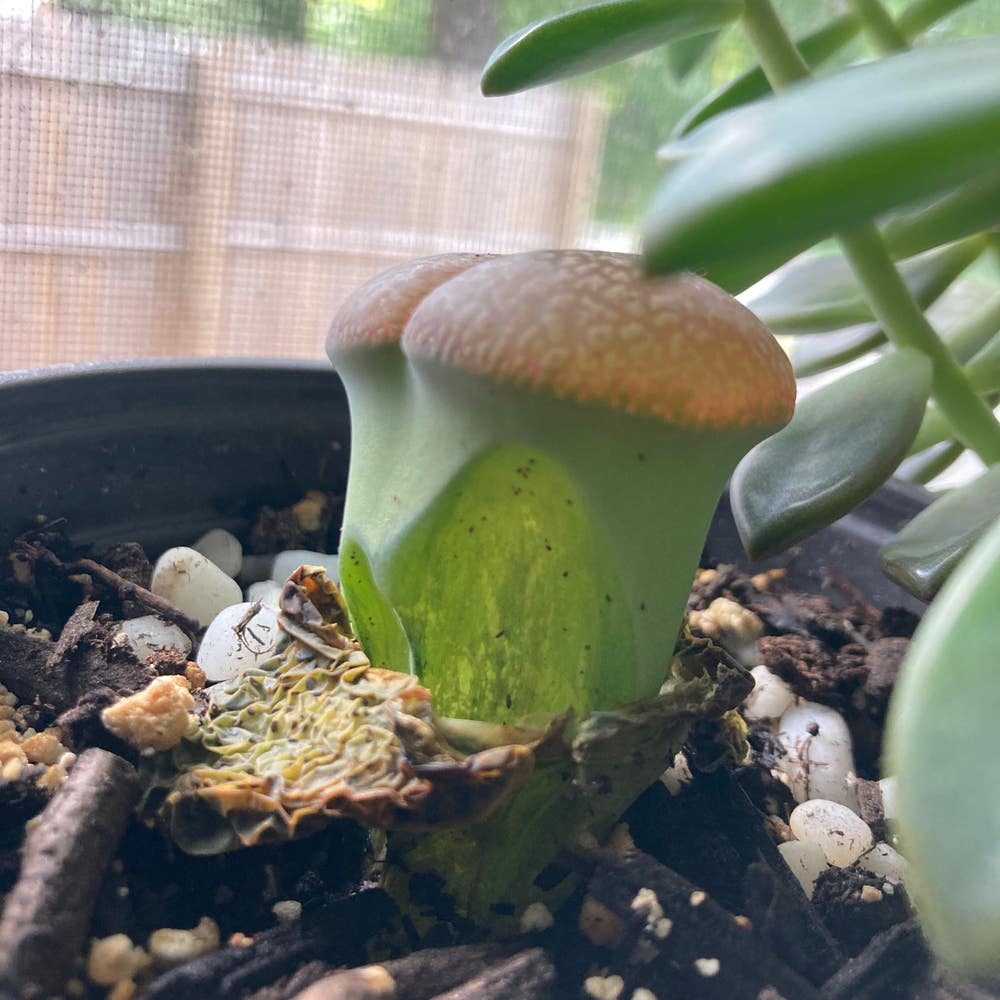
🌸 Best Tips for Blooming Living Stone
Lithops aucampiae
By the Greg Editorial Team
Oct 18, 2024•5 min read
This article was created with the help of AI so we can cover more plants for you. May contain errors. See one? Report it here.
Unlock the secret to Living Stone's rare blooms 🌼 and transform your garden with this essential care guide!
- 🌼 Living Stone plants bloom in late summer, producing flowers resembling small daisies.
- ☀️ Provide 6 hours of sunlight and proper watering to encourage blooming.
- 🌱 Flowers last 1-2 weeks, showcasing fleeting beauty before the plant's dormant phase.
Flowering Status of Living Stone
🌼 Clarification on Flower Production
Living Stone does indeed produce flowers, but let’s be clear: they aren’t the main attraction. Instead, these blooms play a supporting role in the plant’s overall charm.
Flowering typically occurs in late summer or early fall. This timing is largely influenced by environmental conditions, so keep an eye on your surroundings to catch these blooms at their best.
If Living Stone Does Flower
🌼 Flower Characteristics
Description of Colors and Structure
Living Stone flowers are a delightful surprise, typically resembling small daisies. They showcase a range of colors, including white, yellow, and pink, adding a vibrant touch to the plant's unique appearance.
The structure of these flowers features numerous petals arranged in a circular pattern, enhancing their daisy-like charm. This design not only attracts attention but also plays a role in their pollination.
Self-Pollination vs. External Pollination
These flowers are generally self-pollinating, which means they can produce seeds without needing another plant. However, they also benefit from external pollination by insects, which can enhance genetic diversity and lead to healthier offspring.
🌸 Blooming Process
Stages of Blooming and Typical Bloom Time
The blooming process begins with bud formation, which typically occurs in late summer. Flowers usually open up in late summer to early fall, creating a stunning display during this time.
Duration from Bud Formation to Full Bloom
Once the buds form, it takes about 2-3 weeks for them to fully bloom. This relatively short period allows for a quick burst of beauty in your garden.
Lifespan of the Flowers
Once in bloom, the flowers generally last for about 1-2 weeks before wilting. This brief lifespan encourages gardeners to appreciate their beauty while they last.
🌱 Encouraging Blooms
Tips to Encourage Flowering in Living Stone
To encourage your Living Stone to bloom, consider these tips:
- Provide adequate sunlight: Aim for at least 6 hours of sunlight daily.
- Maintain a proper watering schedule: Allow the soil to dry out between waterings to prevent overwatering.
- Ensure temperature fluctuations: Mimicking natural conditions can stimulate blooming.
Factors Influencing Flowering
Several factors influence flowering, including light intensity, temperature variations, and seasonal changes. Understanding these can help you create the ideal environment for your plant.
🌿 Post-Flowering
What Happens to the Plant After Flowering
After the flowering period, the plant typically enters a dormant phase. This is a time for it to conserve energy, preparing for the next growth cycle.
Discussion on Whether Living Stone Dies After Flowering
Rest assured, Living Stone does not die after flowering. Instead, it can continue to thrive and even produce offsets, ensuring its longevity in your garden.
🐝 Pollination Methods
Description of Pollination Methods
While self-pollination is common, cross-pollination can enhance genetic diversity. Insect activity plays a crucial role in this process, especially in natural settings, making it essential for a healthy ecosystem.
With a better understanding of how Living Stone flowers, you can appreciate its unique beauty and care for it effectively. Next, let’s explore what happens when Living Stone doesn’t flower.
If Living Stone Doesn't Flower
🌟 Primary Ornamental or Functional Features
Living Stone plants are celebrated for their striking stone-like appearance. Their thick, succulent leaves not only store water but also feature unique patterns that mimic natural stones, making them a fascinating addition to any garden.
These plants thrive in arid conditions, showcasing their resilience. Their foliage is not just functional; it adds a distinctive aesthetic that draws the eye and sparks curiosity.
🌱 Reproduction Without Flowers
Explanation of How Living Stone Reproduces Without Flowering
Living Stone has a clever way of reproducing without the need for flowers. It produces offsets—small plants that sprout at the base of the parent plant.
This method of asexual reproduction allows the Living Stone to thrive even in challenging environments. It ensures that the plant can propagate successfully, maintaining its presence without relying on flowering.
In essence, Living Stone's ability to reproduce through offsets highlights its adaptability and resilience in nature. This strategy allows it to flourish in conditions where flowering might be rare or challenging.
As we explore the unique aspects of Living Stone, we’ll uncover more about its fascinating reproductive strategies and adaptations.
Unique Aspects
🌿 Unusual Characteristics Related to Living Stone's Flowering or Non-Flowering Nature
Living Stone plants have a fascinating ability to camouflage themselves among stones, which is a clever adaptation for survival. This unique trait helps them blend into their environment, making it harder for herbivores to spot them.
Flowering in Living Stone is a rare event, typically triggered by specific environmental conditions. This rarity adds an element of intrigue, as gardeners may wait patiently for the right moment to witness these blooms.
📚 Interesting Facts or Trivia About Living Stone's Reproductive Strategy
The life cycle of Living Stone is closely tied to seasonal changes, with flowering responding to environmental cues. This connection highlights the plant's resilience and adaptability in varying climates.
Interestingly, Living Stone can thrive in harsh conditions where water is scarce, thanks to its effective reproductive strategy. By producing offsets, it ensures survival without relying solely on flowering, making it a remarkable plant for any garden enthusiast.
⚠️ Safety First
This content is for general information and may contain errors, omissions, or outdated details. It is not medical, veterinary advice, or an endorsement of therapeutic claims.
Always consult a qualified healthcare professional before using any plant as food, medicine, or supplement.
Never eat any plant (or feed one to pets) without confirming its identity with at least two trusted sources.
If you suspect poisoning, call Poison Control (800) 222-1222, the Pet Poison Helpline (800) 213-6680, or your local emergency service immediately.
Spotted an error? Please report it here.
Encourage your Living Stone to bloom with the right sunlight and watering schedule, and let Greg guide you with custom care reminders to ensure those charming flowers flourish! 🌼