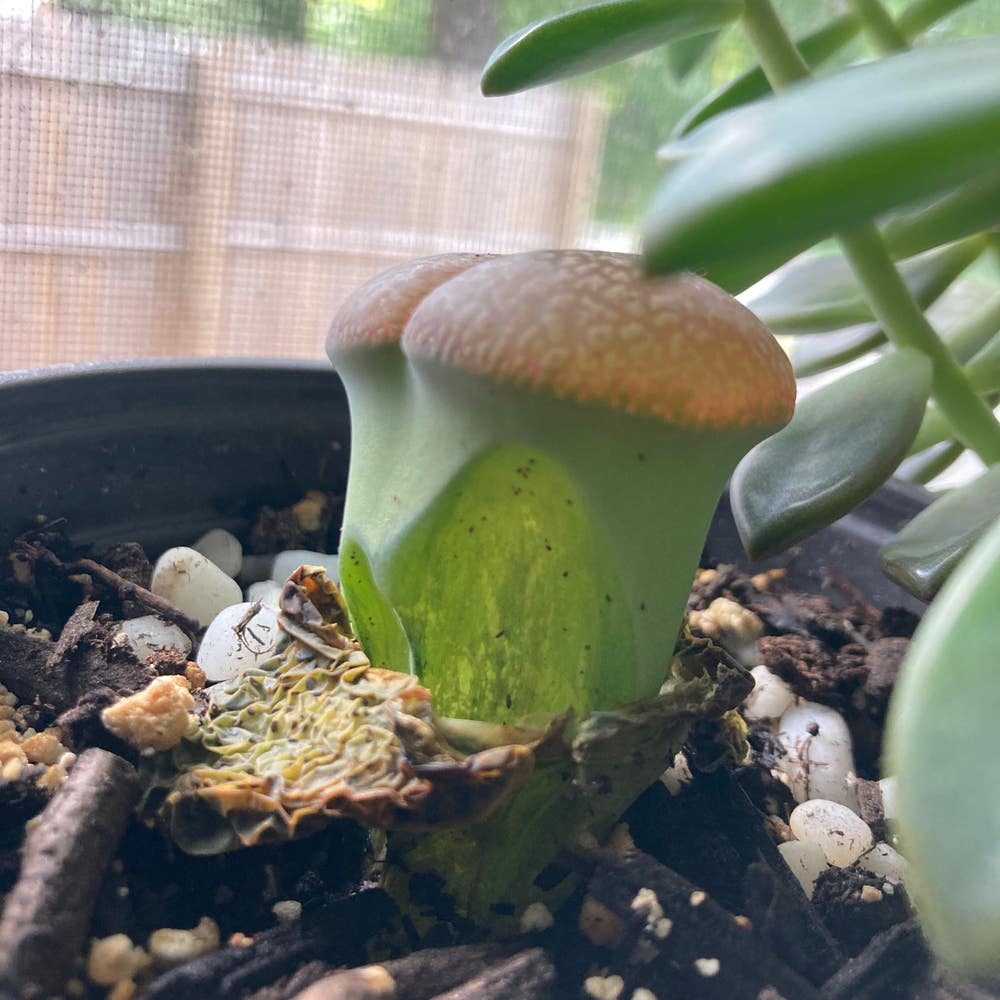
Humidity Needs for Your Living Stone
Lithops aucampiae
By the Greg Editorial Team
Oct 18, 2024•3 min read
This article was created with the help of AI so we can cover more plants for you. May contain errors. See one? Report it here.
Unlock vibrant growth for your living stones 🌵 by mastering their humidity needs and preventing rot!
- 🌬️ Maintain 10%-30% relative humidity for optimal growth of living stones.
- 📊 Monitor local humidity with hygrometers to ensure proper care.
- 🌱 Adjust watering and air circulation to prevent humidity-related stress and rot.
Humidity Needs for Living Stones
🌧️ Absolute vs. Relative Humidity
Absolute Humidity
Absolute humidity refers to the total amount of water vapor in a specific volume of air, measured in grams per cubic meter. Understanding this concept is crucial as it directly impacts the health of your living stones.
Relative Humidity
Relative humidity, on the other hand, is the percentage of moisture in the air compared to the maximum it can hold at a given temperature. This measurement is vital because it indicates saturation levels, which significantly affect transpiration rates in plants.
🌈 Ideal Humidity Levels
Optimal Humidity Range
For living stones, the ideal relative humidity range is between 10% and 30%. Maintaining low humidity levels is essential to prevent rot and promote robust growth.
Specific Humidity Tolerances
Different varieties of living stones have varying humidity preferences. For instance, Lithops lesliei thrives in slightly higher humidity, while Lithops karasmontana does well in lower humidity conditions.
🌍 Local Humidity Considerations
Assessing Local Humidity Levels
To manage humidity effectively, assess local humidity levels using tools like hygrometers or weather apps. These devices provide real-time data, helping you make informed decisions about plant care.
Seasonal Variations
Humidity levels fluctuate with the seasons. Expect higher humidity in spring and summer, while fall and winter typically bring lower levels. Adjust your care practices accordingly to accommodate these changes.
⚙️ Strategies for Managing Humidity
Boosting Humidity
To increase humidity around your plants, consider these strategies:
- Using Humidifiers: Place them near your plants, using low settings to avoid excess moisture.
- Grouping Plants: This creates a microenvironment, but ensure there's adequate air circulation.
- Pebble Trays: Fill trays with pebbles and water, regularly checking water levels to maintain humidity.
Reducing Humidity
If humidity levels are too high, implement these methods:
- Proper Air Circulation: Use fans or space plants apart to promote evaporation.
- Avoiding Overwatering: Water only when the soil is dry; yellowing leaves can be a sign of overwatering.
- Choosing the Right Potting Mix: Opt for well-draining soil that includes sand or perlite.
🚨 Common Humidity-Related Issues
Signs of Humidity Stress
Watch for visual indicators of humidity stress, such as changes in leaf texture or discoloration. Behavioral changes, like slower growth rates, can also signal issues.
Solutions for Humidity Problems
To address humidity problems, start with immediate actions like adjusting watering and improving air circulation. For long-term success, regularly monitor humidity levels to keep your living stones thriving.
With a solid understanding of humidity needs, you can create the perfect environment for your living stones. Next, we’ll explore how to assess and manage local humidity levels effectively.
⚠️ Safety First
This content is for general information and may contain errors, omissions, or outdated details. It is not medical, veterinary advice, or an endorsement of therapeutic claims.
Always consult a qualified healthcare professional before using any plant as food, medicine, or supplement.
Never eat any plant (or feed one to pets) without confirming its identity with at least two trusted sources.
If you suspect poisoning, call Poison Control (800) 222-1222, the Pet Poison Helpline (800) 213-6680, or your local emergency service immediately.
Spotted an error? Please report it here.
Master your living stones' humidity needs 🌧️ with Greg's tailored reminders and tips, ensuring a thriving environment for your unique plants!