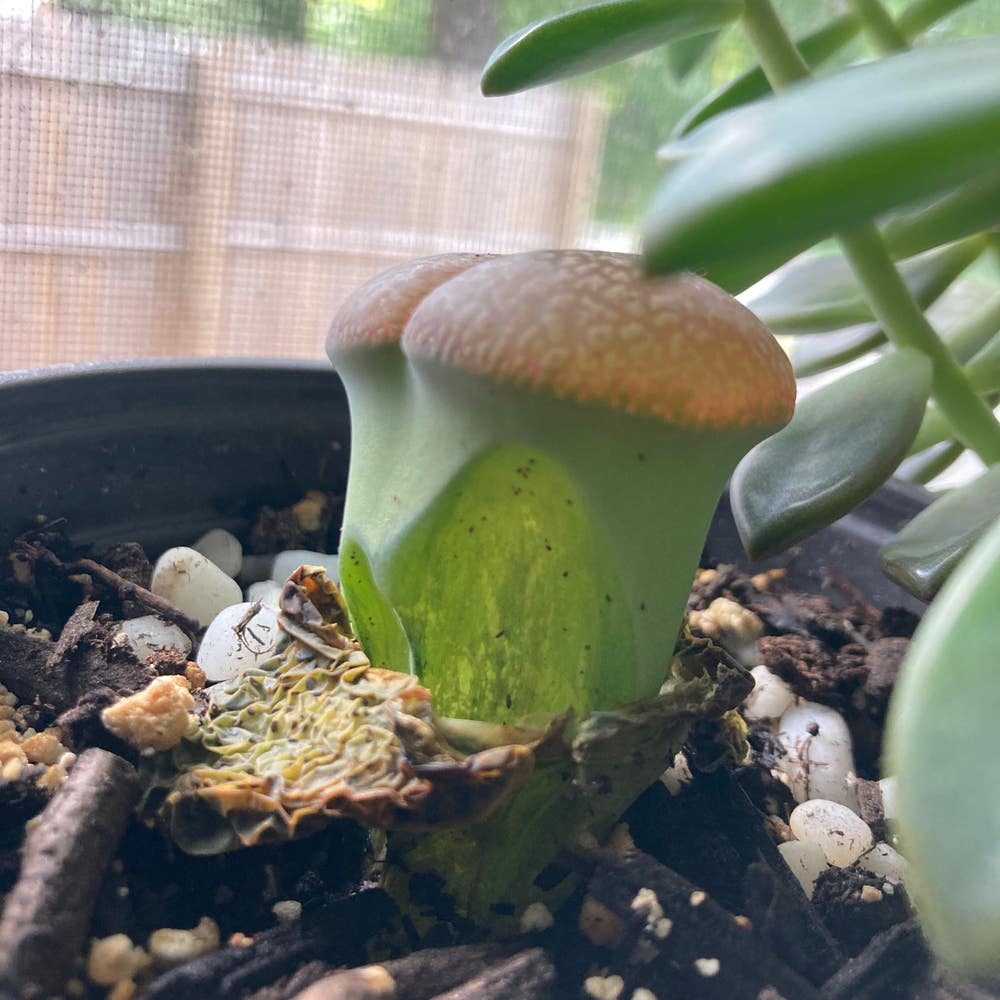
How to Cure Black Spots on Your Living Stone ✨
Lithops aucampiae
By the Greg Editorial Team
Oct 18, 2024•4 min read
This article was created with the help of AI so we can cover more plants for you. May contain errors. See one? Report it here.
Transform your Living Stone care 🌱 by learning to diagnose and prevent pesky black spots for vibrant growth!
- 🌱 Diagnose black spots by checking watering, pests, and light exposure.
- 💧 Water every 2-3 weeks during growth; adjust for seasonal changes.
- 🐛 Monitor for pests like mealybugs; use neem oil for effective control.
Diagnosing Black Spots
💧 Assessing Watering Habits
Understanding your watering habits is crucial for keeping your Living Stone healthy.
Overwatering Assessment
Overwatering can lead to black spots, so look for signs like soil that retains moisture and changes in leaf texture. During the growing season, aim to water every 2-3 weeks to maintain optimal moisture levels.
Underwatering Assessment
On the flip side, underwatering can also cause issues. If you notice wrinkled leaves or dry soil, it’s time to adjust your watering frequency based on your environment.
🐛 Checking for Pests
Pests can wreak havoc on your Lithops, so it's essential to keep an eye out.
Common Pests Affecting Lithops
Mealybugs and aphids are the usual suspects. Look for sticky residue or visible insects as signs of an infestation.
Pest Control for Lithops
To tackle these pests, consider using neem oil or insecticidal soap. These treatments can effectively eliminate unwanted guests without harming your plant.
☀️ Evaluating Light Exposure
Light exposure plays a significant role in the health of your Living Stone.
Ideal Light Conditions for Living Stone
Lithops thrive in bright, indirect sunlight for about 4-6 hours daily. If you notice stretching or pale leaves, your plant may not be getting enough light.
Identifying Sunburn
Conversely, too much direct sunlight can cause crispy edges and black spots. Monitor your plant’s exposure to prevent sunburn and keep it thriving.
By diagnosing these key areas—watering habits, pests, and light exposure—you can take the first steps toward curing those pesky black spots. Next, let’s explore effective treatment options to restore your Living Stone to its former glory.
Preventive Measures
Best Practices for Watering 🌊
Maintaining a proper watering schedule is crucial for your Living Stone. During the growing season, aim to water every 2-3 weeks, while in the dormant season, reduce this to once a month.
To avoid overwatering, consider using moisture meters or simply perform a finger test to check soil moisture. This will help you gauge when your Lithops truly needs a drink.
Ideal Light Conditions ☀️
Placement is key for optimal growth. Position your Living Stone near east or west-facing windows to ensure it receives bright, indirect sunlight.
Be cautious of direct midday sun, as it can lead to sunburn. Keeping your plant in the right light conditions will prevent those pesky black spots from appearing.
Soil Selection and Potting Tips 🪴
Choosing the right soil is essential for your Lithops' health. Opt for lightweight, porous soil that drains well to prevent water retention.
When potting, select a container that is slightly larger than the root ball to allow for growth. Terracotta pots are a great choice due to their breathability, helping to keep the roots healthy.
By following these preventive measures, you can significantly reduce the risk of black spots on your Living Stone. Next, let’s explore seasonal considerations to ensure your plant thrives year-round.
Seasonal Considerations
Care During the Growing Season 🌱
During the growing season, your Living Stone needs a bit more attention. Increase your watering frequency to keep the soil moist but not soggy.
Regularly monitor for pests and diseases, as these can thrive in warmer conditions. A monthly application of diluted cactus fertilizer can also give your plants the nutrients they need to flourish.
Winter Care to Prevent Black Spots ❄️
As winter approaches, it's crucial to adjust your care routine. Reduce your watering frequency to once a month or even less, as your Lithops will enter a dormant phase.
Ensure they receive adequate light during these shorter days. If natural light is lacking, consider using grow lights to keep your plants healthy and vibrant.
By adapting your care to the seasons, you can help prevent black spots and keep your Living Stones thriving year-round.
⚠️ Safety First
This content is for general information and may contain errors, omissions, or outdated details. It is not medical, veterinary advice, or an endorsement of therapeutic claims.
Always consult a qualified healthcare professional before using any plant as food, medicine, or supplement.
Never eat any plant (or feed one to pets) without confirming its identity with at least two trusted sources.
If you suspect poisoning, call Poison Control (800) 222-1222, the Pet Poison Helpline (800) 213-6680, or your local emergency service immediately.
Spotted an error? Please report it here.
Keep your Living Stone healthy and spot-free 🌿 by using Greg's tailored care reminders and expert tips to ensure it thrives all year round!