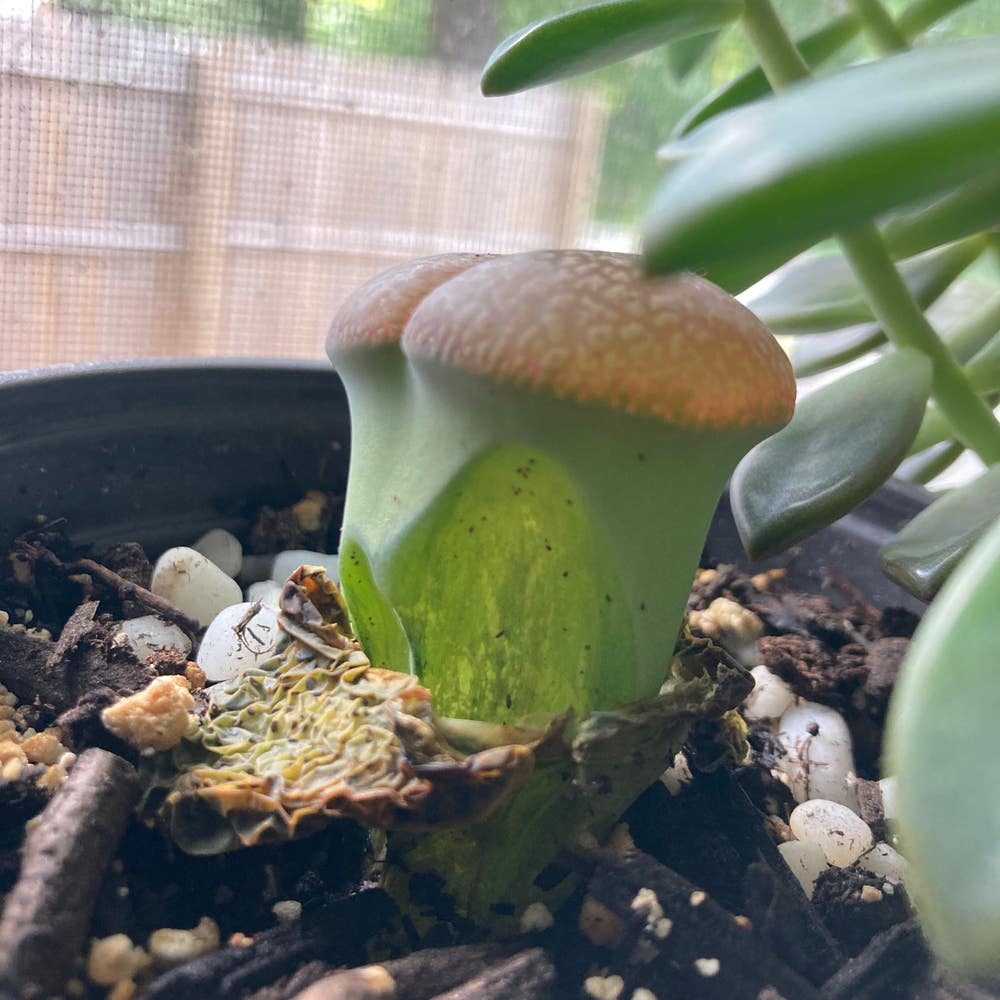
🪨 Direct Sunlight and Your Living Stone
Lithops aucampiae
By the Greg Editorial Team
Oct 18, 2024•4 min read
This article was created with the help of AI so we can cover more plants for you. May contain errors. See one? Report it here.
Master your Living Stone's sunlight needs 🌞 for vibrant growth and a thriving plant collection! 🌱
- ☀️ Living Stone needs 4-6 hours of direct sunlight daily for optimal growth.
- 🌱 Gradually acclimatize your Living Stone to prevent sunburn from intense sunlight.
- 🪟 South and east-facing windows provide the best light for thriving Living Stones.
Definition of Direct Sunlight
🌞 Explanation Suitable for Children
Direct sunlight is when the sun's rays shine straight onto a plant without anything blocking them, like clouds or buildings. Imagine standing outside on a sunny day; that bright light is direct sunlight!
🌤️ Contrast with Indirect Sunlight
Indirect sunlight occurs when the sun's rays are softened or filtered. This happens when they pass through a window or reflect off surfaces, much like being in the shade of a tree; you can see light, but it’s not as bright as being in the open sun.
Understanding these differences is crucial for caring for plants like Living Stone. Knowing how much light they need can help them thrive!
Sunlight Needs of Living Stone
🌞 Does it Need Direct Sunlight?
Living Stone thrives in bright light conditions, making direct sunlight essential for its growth. Aim for 4-6 hours of direct sunlight daily to keep your plant healthy and vibrant.
☀️ Can it Tolerate Direct Sunlight?
Yes, Living Stone can tolerate direct sunlight, but it’s crucial to acclimate it gradually. This helps prevent sunburn, and healthy exposure will result in vibrant colors and a firm texture.
🌤️ Can it Survive in Indirect Sunlight?
While Living Stone can survive in indirect sunlight, its growth may slow down. If direct sunlight isn’t available, ensure it gets at least 4 hours of bright indirect light to maintain its health and color.
In summary, understanding the sunlight needs of Living Stone is vital for its care. Next, we’ll explore how window direction impacts sunlight exposure for your plant.
Role of Window Direction
🌞 Best Window Directions for Living Stone
When it comes to positioning your Living Stone, window direction matters significantly. South-facing windows are the gold standard, soaking up the most direct sunlight throughout the day.
East-facing windows are also a great choice, offering gentle morning sunlight that can help your plant thrive without overwhelming it.
🌅 How Window Direction Affects Sunlight Exposure
West-facing windows can deliver intense afternoon sunlight. While this can be beneficial, you might need to provide some shading to prevent your plant from overheating.
On the other hand, north-facing windows typically offer low light. This may not provide enough brightness for your Living Stone to flourish, so consider alternative placements if you have one of these windows.
Understanding the role of window direction can make a significant difference in your plant's health. With the right positioning, your Living Stone can bask in the sunlight it craves, leading to vibrant growth and a happy plant.
Next, let’s explore how the hemisphere you live in can impact sunlight exposure for your Living Stone.
Impact of Hemisphere on Sunlight
🌍 Differences in Sunlight Intensity by Hemisphere
In the Northern Hemisphere, summer brings intense sunlight, which can significantly benefit your Living Stone. Conversely, in the Southern Hemisphere, winter months deliver less intense sunlight, impacting how much direct light your plant receives.
🌦️ Seasonal Variations in Sunlight Exposure
As seasons change, so does the angle and intensity of sunlight. This variation means you might need to adjust your plant's location; during winter, moving your Living Stone closer to windows can help maximize its sunlight exposure.
By being mindful of these factors, you can ensure your Living Stone thrives all year round. Next, let’s explore additional considerations for plant parents to keep their Living Stone healthy and vibrant.
Additional Considerations for Plant Parents
Signs of Too Much or Too Little Sunlight 🌞
Recognizing the signs of improper sunlight exposure is crucial for your Living Stone's health.
- Too much sunlight can scorch the leaves, causing them to turn brown or become translucent.
- Too little sunlight leads to elongated, weak leaves as they stretch toward the light source.
Tips for Adjusting Sunlight Exposure 🌅
Adjusting your plant's sunlight exposure can make a significant difference in its vitality.
- Gradually acclimate your Living Stone to direct sunlight by increasing exposure time over a week.
- Use sheer curtains to diffuse harsh sunlight if necessary.
- Rotate the plant regularly to ensure even light distribution.
Common Misconceptions about Living Stone and Sunlight 🤔
It's easy to fall for common myths about plant care.
Misconception: Living Stone can thrive in complete shade.
Reality: While it can survive in low light, it requires bright light for optimal health.Misconception: All succulents need the same sunlight conditions.
Reality: Different succulents have varying sunlight needs; Living Stone specifically prefers bright, direct light.
Understanding these aspects will help you create the best environment for your Living Stone. With the right care, your plant can flourish beautifully!
⚠️ Safety First
This content is for general information and may contain errors, omissions, or outdated details. It is not medical, veterinary advice, or an endorsement of therapeutic claims.
Always consult a qualified healthcare professional before using any plant as food, medicine, or supplement.
Never eat any plant (or feed one to pets) without confirming its identity with at least two trusted sources.
If you suspect poisoning, call Poison Control (800) 222-1222, the Pet Poison Helpline (800) 213-6680, or your local emergency service immediately.
Spotted an error? Please report it here.
Help your Living Stone thrive in sunlight ☀️ by using Greg's tailored tips for optimal care and gradual acclimatization to ensure vibrant growth!