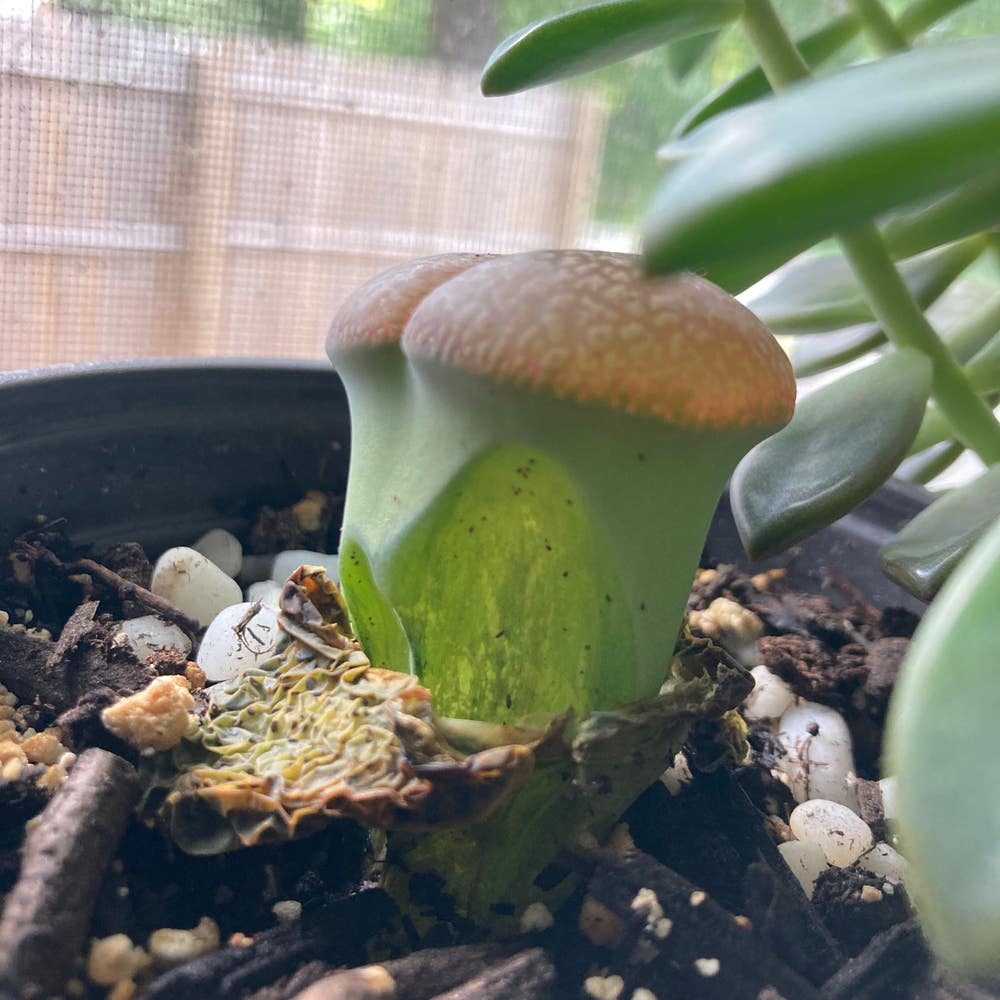
3 Tips for Healing Curling Leaves on Your Living Stone 🪨
Lithops aucampiae
By the Greg Editorial Team
Oct 18, 2024•5 min read
This article was created with the help of AI so we can cover more plants for you. May contain errors. See one? Report it here.
Revive your Living Stone 🌱 by mastering simple tips to prevent and treat leaf curl for vibrant growth!
- 🌊 Leaf curl is caused by overwatering, underwatering, pests, or environmental stress.
- 🌞 Bright, indirect sunlight and well-draining soil are essential for healthy Living Stones.
- 🐛 Regular pest inspections and quick treatments prevent infestations and leaf curl.
Causes of Leaf Curl
💧 Overwatering
Excess moisture is a common culprit behind leaf curl. When the roots sit in waterlogged soil, they can rot, leading to unhealthy leaves that curl and yellow.
🚰 Underwatering
On the flip side, insufficient water can also cause leaves to shrivel and curl. If the soil pulls away from the pot, it’s a clear sign your Living Stone needs a drink.
🐞 Pest Infestations
Pests like mealybugs and aphids can wreak havoc on your plant. Look for sticky residue or visible insects; these are telltale signs of an infestation that can lead to curling leaves.
🌡️ Environmental Stress Factors
Light and temperature play crucial roles in leaf health. Too much direct sunlight can scorch leaves, while extreme temperature fluctuations can stress the plant, causing it to curl up in defense.
Understanding these causes is the first step toward healing your Living Stone. Next, let’s dive into how to diagnose the specific issues affecting your plant.
Diagnosing the Problem
💧 Overwatering and Its Effects
Overwatering is a common issue that can lead to serious problems for your Living Stone. Look for signs like yellowing leaves, a mushy texture, and root rot, which indicate that your plant is drowning.
To assess soil moisture, use a moisture meter or simply stick your finger into the soil. If it feels wet several inches down, it’s time to cut back on watering.
🚰 Underwatering and Its Effects
On the flip side, underwatering can also cause your leaves to curl. Signs include dry, shriveled leaves and soil that pulls away from the pot.
Maintaining consistent moisture is crucial. Ensure the soil is dry but not completely parched to keep your plant healthy.
🐞 Pest Infestations
Pests like mealybugs and aphids can wreak havoc on your Living Stone. Keep an eye out for sticky residue, visible insects, or webbing, which are telltale signs of an infestation.
Regular inspections can help catch these pests early, preventing further damage to your plant.
🌡️ Environmental Stress Factors
Environmental conditions play a significant role in your plant's health. Bright, indirect sunlight is ideal; too much direct light can lead to sunburn, evident through bleached or crispy leaves.
Temperature is another critical factor. Living Stones thrive in a stable environment, so watch for signs of stress from extreme heat or cold.
Treating Curling Leaves
🌊 Step-by-Step Guide for Correcting Overwatering
Overwatering is a common issue that can lead to curling leaves. Start by assessing the soil moisture using a moisture meter or your finger.
Next, adjust your watering schedule. Allow the soil to dry out completely before watering again to prevent root rot.
If the problem persists, consider repotting your Living Stone. Use well-draining soil and a pot with drainage holes to ensure excess water can escape.
💧 Step-by-Step Guide for Correcting Underwatering
Underwatering can also cause leaf curling, so it's essential to check the soil moisture regularly. Ensure the soil is dry but not completely parched.
When you water, do so thoroughly. Soak the soil until water drains from the bottom, ensuring the roots receive adequate moisture.
To maintain healthy leaves, monitor your plant regularly. Establish a consistent watering schedule based on environmental conditions to keep your Living Stone thriving.
🐛 How to Identify and Treat Pests
Pests can wreak havoc on your plant, leading to curling leaves. Start by inspecting the plant for visible pests or signs of damage.
If you spot any, treatment options include using insecticidal soap or neem oil, particularly effective against mealybugs and aphids. Regular monitoring is crucial; check your plants weekly for early signs of pest issues.
🌡️ Adjusting Environmental Conditions
Environmental factors play a significant role in leaf health. Ensure your Living Stone receives bright, indirect sunlight by moving it to a suitable location.
Temperature stability is equally important. Keep your plant away from drafts and extreme heat to prevent stress and curling leaves.
By addressing these factors, you can help your Living Stone recover and flourish. Next, let’s explore how to prevent future leaf curl and maintain optimal plant health.
Preventing Future Leaf Curl
Best Watering Practices for Living Stone 🌊
To keep your Living Stone healthy, it's crucial to master your watering routine. Allow the soil to dry out completely between waterings to prevent overwatering, which is a common culprit for leaf curl.
In winter, when the plant is dormant, reduce your watering frequency. This seasonal adjustment helps avoid excess moisture that can lead to root issues.
Ideal Soil Conditions and Drainage 🪴
Choosing the right soil is essential for your plant's health. Opt for a cactus or succulent mix that promotes excellent drainage, ensuring your Living Stone thrives.
Additionally, select pots with drainage holes. This prevents water accumulation, which can lead to root rot and curling leaves.
Regular Pest Inspections 🔍
Pests can sneak up on your plants, so regular inspections are key. Schedule bi-weekly checks to catch any potential infestations early.
If you spot pests, act quickly. Treat any infestations immediately to minimize damage and keep your Living Stone looking its best.
Seasonal Care Adjustments 🍂
As the seasons change, so should your plant care routine. Adjust the light exposure by moving your Living Stone to a spot that receives bright, indirect sunlight.
Also, monitor the temperature closely. Keeping your plant within its ideal temperature range helps prevent stress and promotes healthy growth.
By following these preventive measures, you can ensure your Living Stone remains vibrant and free from leaf curl. Next, let’s explore how to treat curling leaves effectively when they do occur.
⚠️ Safety First
This content is for general information and may contain errors, omissions, or outdated details. It is not medical, veterinary advice, or an endorsement of therapeutic claims.
Always consult a qualified healthcare professional before using any plant as food, medicine, or supplement.
Never eat any plant (or feed one to pets) without confirming its identity with at least two trusted sources.
If you suspect poisoning, call Poison Control (800) 222-1222, the Pet Poison Helpline (800) 213-6680, or your local emergency service immediately.
Spotted an error? Please report it here.
Keep your Living Stones thriving 🌿 by using Greg's tailored watering schedules and pest alerts to prevent curling leaves and ensure optimal growth!