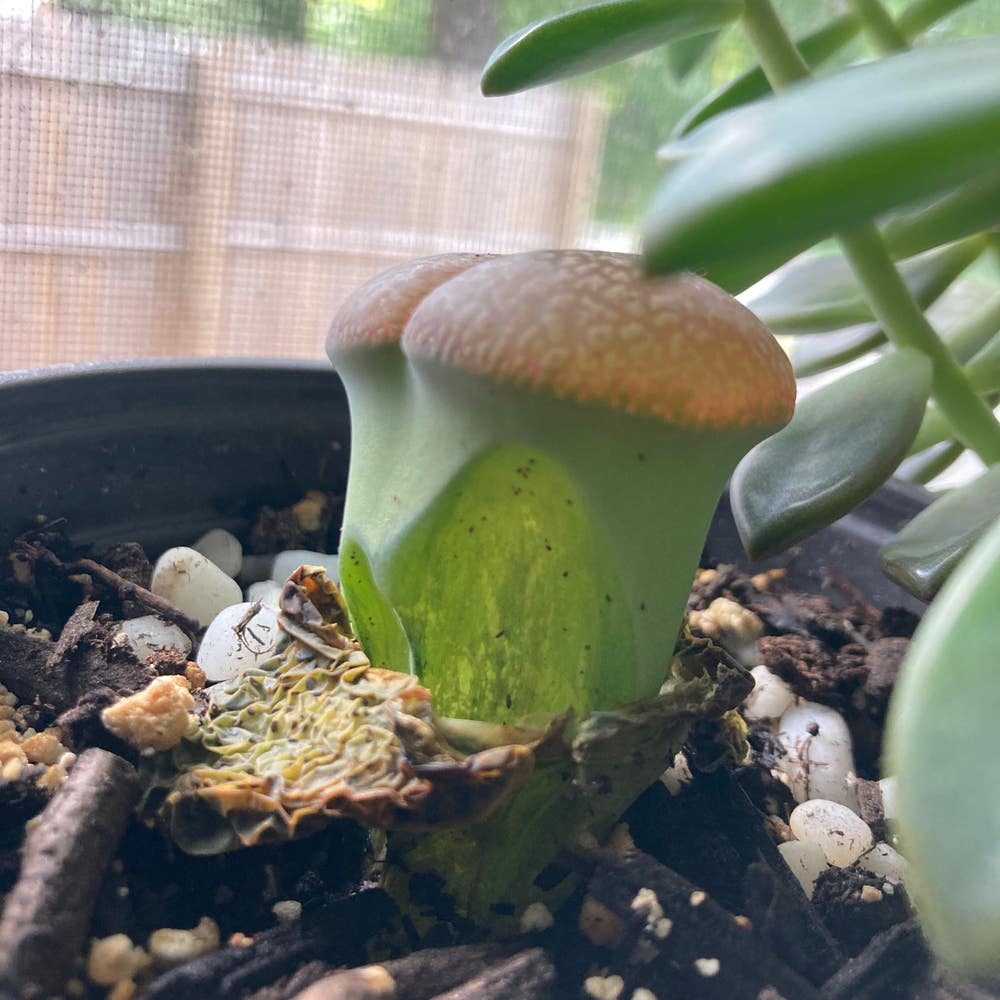
What to Do About Living Stone Root Rot 🪨
Lithops aucampiae
By the Greg Editorial Team
Oct 18, 2024•5 min read
This article was created with the help of AI so we can cover more plants for you. May contain errors. See one? Report it here.
Transform your Living Stone from root rot 🌱 to thriving beauty with these essential recovery steps!
- 🌱 Identify root rot by checking for brown, mushy roots versus firm, white ones.
- ✂️ Trim affected roots with sterilized scissors to prevent further infection and promote healing.
- 🌞 Repot with well-draining soil and wait to water, ensuring recovery from transplant shock.
Treating Root Rot
🌱 Step-by-Step Treatment for Root Rot
Remove the Living Stone from its pot
Gently take the plant out of its container. Be careful not to damage the roots during this process.Inspect the roots for rot
Look closely at the roots. Healthy roots are firm and white, while affected ones may appear brown and mushy.Trim away rotten roots using sterilized scissors
Use clean, sterilized scissors to cut away any rotten sections. This helps prevent further infection.Allow the plant to dry for a few hours
Set the plant aside in a shaded area. This drying period is crucial for healing.Repot in fresh, well-draining soil
Choose a soil mix designed for succulents. A blend of cactus mix and perlite works well for Living Stones.Water sparingly after repotting
After repotting, wait a few days before watering. This allows the roots to recover and adapt to their new environment.
🧪 Recommended Fungicides for Living Stone
Effective fungicides
Consider using fungicides specifically formulated for succulents. These can help combat any lingering fungal issues.Types of fungicides suitable for succulents
Look for products containing ingredients like copper or sulfur. These are generally safe and effective.Application methods and safety precautions
Always follow the manufacturer's instructions. Wear gloves and a mask to protect yourself during application.
🌿 How to Repot a Living Stone with Root Rot
Selecting the right pot
Choose a pot with drainage holes. This is essential to prevent future root rot.Preparing the new soil mix
Mix well-draining soil with perlite or sand. This enhances aeration and drainage.Positioning the plant in the new pot
Place the Living Stone in the center of the pot. Ensure the roots are spread out comfortably.Watering techniques post-repotting
Water lightly after repotting, ensuring the soil is moist but not soggy. Monitor the plant closely for signs of stress.
With these steps, you can effectively treat root rot in your Living Stone. Next, let’s explore how to prevent root rot from occurring in the first place.
Preventing Root Rot
🌊 Best Watering Practices for Living Stone
Watering your Living Stone correctly is crucial to prevent root rot. Aim to water only when the top inch of soil feels dry; this ensures your plant gets the moisture it needs without becoming waterlogged.
Look for signs that indicate when to water, such as shriveling leaves or a dry, crumbly soil texture. Remember, it's better to underwater than overwater; these plants thrive on neglect.
🕳️ Importance of Soil Drainage
Soil drainage is a game-changer for Living Stones. The best soil mixes include cactus mix or a blend with perlite to enhance drainage, allowing excess water to escape easily.
To test soil drainage capabilities, pour water into the pot and observe how quickly it drains. If water pools on the surface, it’s time to rethink your soil choice.
🪴 Choosing the Right Pot for Living Stone
Selecting the right pot can make all the difference. Terracotta pots are excellent for their breathability, while plastic pots retain moisture longer, which can be a double-edged sword.
Ensure your pot has adequate drainage holes to prevent water accumulation. The size of the pot matters too; a snug fit encourages healthy root growth without excess moisture lingering around.
By following these practices, you can significantly reduce the risk of root rot and keep your Living Stone thriving. Next, let’s explore how to identify healthy plants versus those struggling with issues.
Identifying Healthy vs. Affected Plants
Signs of a Healthy Living Stone 🌱
A thriving Living Stone is a sight to behold. Look for firm, plump leaves that boast vibrant colors, signaling that your plant is well-hydrated and healthy.
Additionally, a robust root system is crucial. Healthy roots are typically white or light tan, firm to the touch, and free from mushiness or discoloration.
How to Differentiate Between Root Rot and Other Issues 🕵️♂️
Root rot can often masquerade as other plant problems. Common culprits include pests, nutrient deficiencies, and environmental stress, which can all produce similar symptoms.
To accurately diagnose the issue, inspect your plant closely. Check for pests on the leaves and examine the soil moisture levels to rule out overwatering or underwatering.
Post-Treatment Care
Care Tips After Treating Root Rot 🌱
Once you've treated root rot, adjusting your watering schedule is crucial. Start by watering less frequently, allowing the soil to dry out completely between waterings.
Light exposure plays a significant role in your plant's recovery. Ensure your Living Stone gets bright, indirect sunlight to promote healing without overwhelming it.
Fertilization should be approached with caution. Wait at least a month post-treatment before introducing any fertilizers, as the plant needs time to stabilize.
Monitoring Plant Recovery 👀
Keep an eye out for signs of recovery. New growth, such as fresh leaves or stems, is a positive indicator that your Living Stone is bouncing back.
Changes in leaf texture and color can also signal improvement. Look for plump, vibrant leaves as a sign that your plant is regaining its health.
Ongoing care practices are essential for long-term health. Regularly check soil moisture and adjust your watering schedule as needed to ensure your Living Stone thrives.
By following these post-treatment care tips, you can help your Living Stone recover and flourish, setting the stage for a healthy future. Next, let’s explore how to prevent root rot from occurring in the first place.
⚠️ Safety First
This content is for general information and may contain errors, omissions, or outdated details. It is not medical, veterinary advice, or an endorsement of therapeutic claims.
Always consult a qualified healthcare professional before using any plant as food, medicine, or supplement.
Never eat any plant (or feed one to pets) without confirming its identity with at least two trusted sources.
If you suspect poisoning, call Poison Control (800) 222-1222, the Pet Poison Helpline (800) 213-6680, or your local emergency service immediately.
Spotted an error? Please report it here.
Revive your Living Stone from root rot and ensure its long-term health 🌱 with Greg's tailored watering reminders and expert care tips that keep your plant thriving!