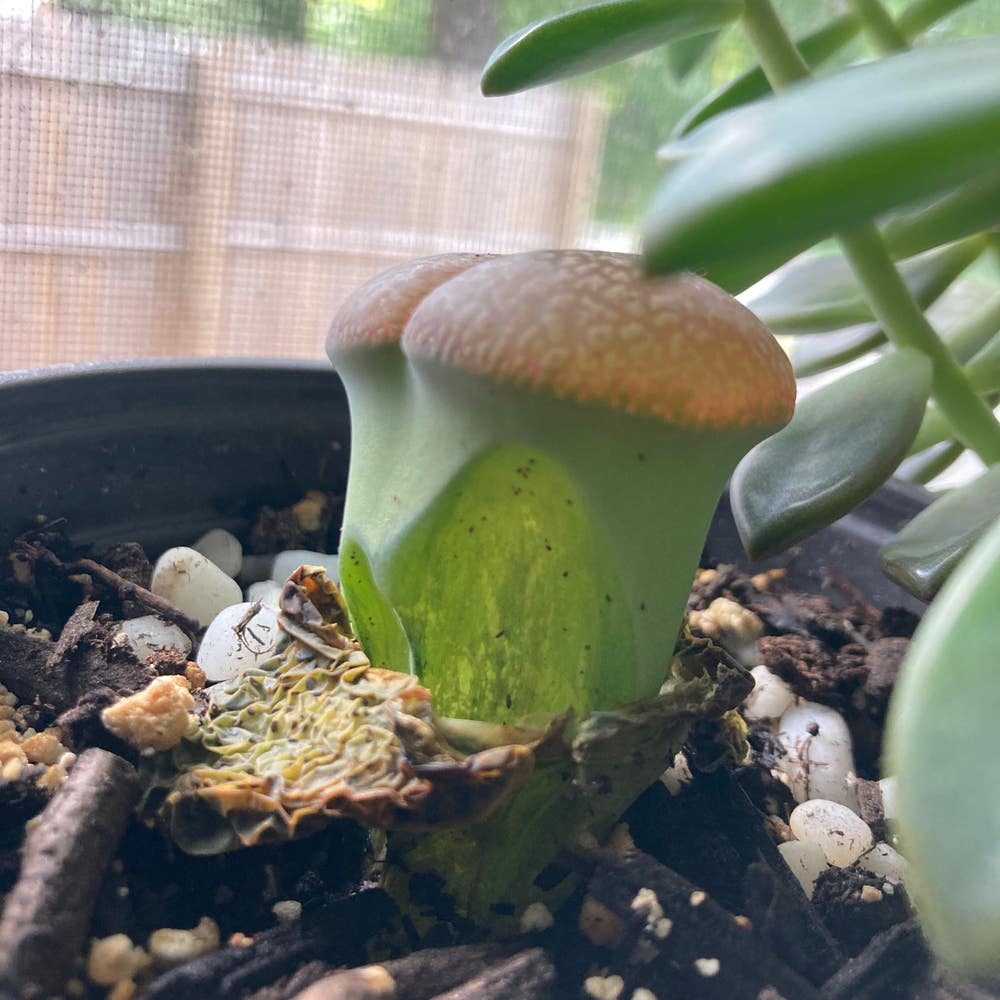
Best Tips for Droopy Leaves on Living Stone 🪨
Lithops aucampiae
By the Greg Editorial Team
Oct 18, 2024•4 min read
This article was created with the help of AI so we can cover more plants for you. May contain errors. See one? Report it here.
Transform droopy Lithops into thriving beauties with essential care tips and expert diagnosis! 🌱✨
- 💧 Droopy leaves result from overwatering, underwatering, or poor drainage. Adjust care accordingly.
- ☀️ Insufficient light causes Lithops to stretch and droop. Ensure 6-8 hours of indirect sunlight.
- 🌱 Use well-draining soil to prevent root suffocation and maintain healthy, firm leaves.
Causes of Droopy Leaves
💧 Overwatering
Overwatering is a common culprit behind droopy leaves. Symptoms include swollen, mushy leaves that signal potential root rot, which can exacerbate the drooping issue.
🌵 Underwatering
On the flip side, underwatering can also lead to droopy leaves. When the plant lacks moisture, its leaves shrivel and lose turgor as it tries to conserve water.
🏞️ Poor Soil Drainage
Soil quality plays a crucial role in plant health. Heavy, compacted, or non-draining materials can lead to poor soil drainage, causing water retention that suffocates the roots and results in droopy leaves.
☀️ Inadequate Sunlight
Insufficient light can weaken your plant significantly. If you notice leaves stretching towards light sources, they may become elongated and weak, ultimately leading to droop.
Understanding these causes is essential for diagnosing and treating droopy leaves effectively. Next, let’s explore how to diagnose the problem accurately.
Diagnosing the Problem
Assessing Watering Habits 🌊
To get started, check the soil moisture. You can use a moisture meter or simply stick your finger into the soil to gauge its dampness.
For Lithops, the ideal watering schedule is every 2-3 weeks during the growing season. This helps prevent both overwatering and underwatering, which are common culprits of droopy leaves.
Evaluating Light Conditions ☀️
Next, evaluate the light exposure your plant receives. Lithops thrive in bright, indirect sunlight, so make sure they’re not getting too much direct sun.
Keep an eye out for signs of stretching or discoloration in the leaves. These can indicate that your plant is reaching for more light, which can lead to droopiness.
Checking Soil Quality 🏺
Now, let’s inspect the soil drainage. Ensure that your soil mix is well-draining, ideally one designed specifically for succulents.
Also, look for compacted soil. If you find it, aerate the soil to improve drainage, as poor drainage can suffocate the roots and cause droopy leaves.
By carefully assessing these factors, you can pinpoint the issue affecting your Lithops and take the necessary steps to revive them. Next, we’ll explore how to bring those droopy leaves back to life!
Reviving Droopy Leaves
🌱 Step-by-Step Guide to Recovery
Adjusting Watering Schedule (difficulty: easy)
If your plant is overwatered, reduce the frequency of watering. Conversely, increase it if underwatered, ensuring the soil dries out completely between waterings.Improving Light Exposure (difficulty: moderate)
Relocate your Lithops to a brighter spot with indirect sunlight. Rotate the plant periodically to ensure even light distribution, promoting balanced growth.Soil Amendments (difficulty: hard)
Consider repotting your plant using a well-draining succulent mix. Adding perlite or sand can significantly enhance drainage, preventing future issues.
👀 Signs of Recovery to Monitor
Keep an eye out for leaf firmness returning within a few days. You should also look for new growth emerging from the center of the plant, indicating that your efforts are paying off.
With these steps, you can breathe new life into your droopy Lithops. Next, let’s explore some preventative measures to keep your plant thriving long-term.
Preventative Measures
🌊 Best Practices for Watering
To keep your Lithops thriving, stick to a strict watering schedule. Only water when the soil is completely dry to prevent droopy leaves.
Using distilled or rainwater is a smart choice. This helps avoid mineral buildup that can harm your plant.
🌱 Ideal Soil Composition
The right soil mix is crucial for healthy Lithops. Aim for a blend of 50% potting soil, 25% perlite, and 25% coarse sand.
This combination ensures quick drainage, which is essential to prevent root rot.
☀️ Optimal Light Conditions
Lithops love light but prefer it indirect. Aim for 6-8 hours of indirect sunlight daily to keep them happy.
If your plants are near windows, consider using sheer curtains. This diffuses harsh light and protects your Lithops from stress.
🍂 Seasonal Care Adjustments
As the seasons change, so should your care routine. Water less in winter and increase frequency during the summer months.
Keep an eye on temperature fluctuations, too. Adjust light exposure as needed to ensure your Lithops stay vibrant and healthy.
By following these preventative measures, you can maintain the health of your Lithops and enjoy their unique beauty year-round. Next, let’s explore how to diagnose any issues that may arise.
⚠️ Safety First
This content is for general information and may contain errors, omissions, or outdated details. It is not medical, veterinary advice, or an endorsement of therapeutic claims.
Always consult a qualified healthcare professional before using any plant as food, medicine, or supplement.
Never eat any plant (or feed one to pets) without confirming its identity with at least two trusted sources.
If you suspect poisoning, call Poison Control (800) 222-1222, the Pet Poison Helpline (800) 213-6680, or your local emergency service immediately.
Spotted an error? Please report it here.
Keep your Living Stones vibrant and droop-free 🌞 by using Greg's tailored watering reminders and expert tips to ensure they get just the right care they need!