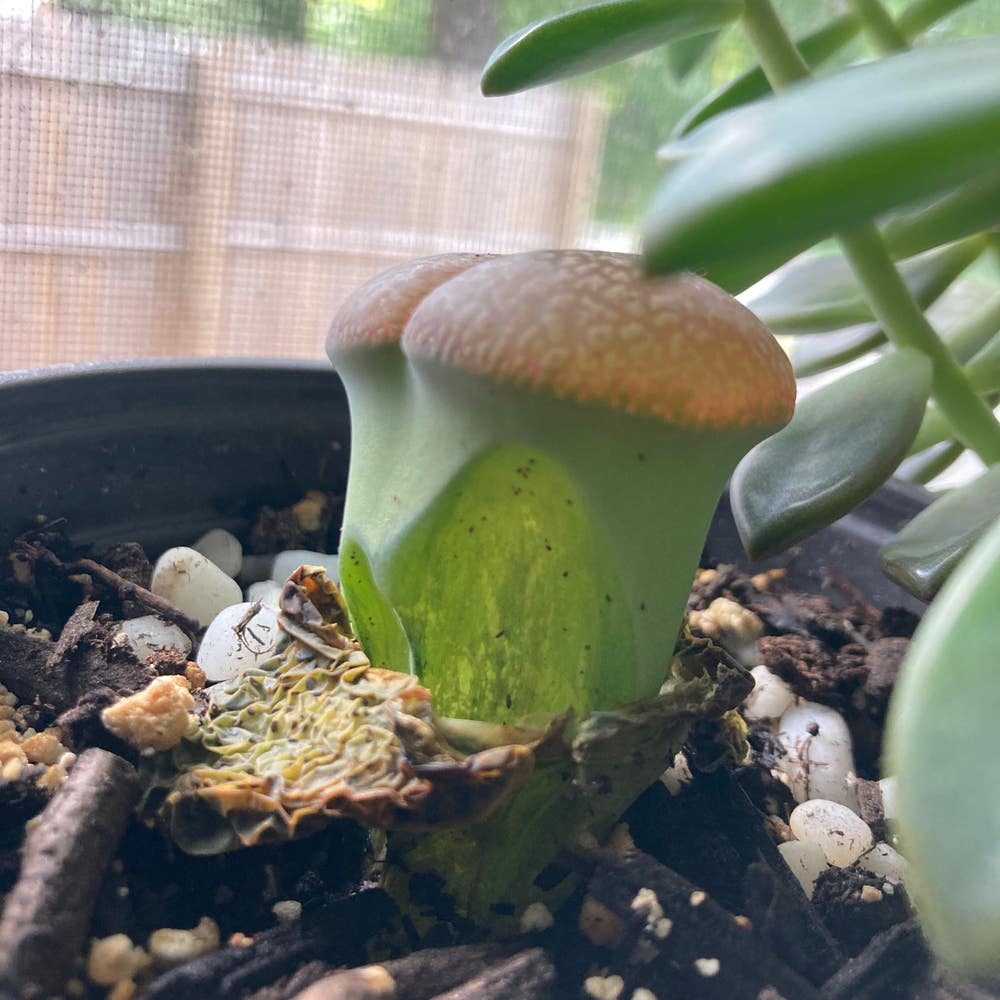
☀️ Optimal Temperature for Your Living Stone
Lithops aucampiae
By the Greg Editorial Team
Oct 18, 2024•5 min read
This article was created with the help of AI so we can cover more plants for you. May contain errors. See one? Report it here.
Keep your living stones thriving year-round by mastering temperature management techniques! 🌱🌍
- 🌡️ Recognize temperature stress signs like wrinkled leaves and scorching for effective care.
- 🌬️ Ensure good ventilation and avoid overwatering to prevent root rot and stress.
- 🌱 Monitor seasonal needs and adjust care routines for optimal living stone health.
Temperature Stress in Living Stones
🌡️ Signs of Temperature Stress
Temperature stress can manifest in various ways, and recognizing these signs is crucial for your living stones' health.
Symptoms of Cold Stress
- Wrinkled Leaves: This often indicates dehydration, signaling that your plant is struggling.
- Discoloration: Leaves may turn brown or become mushy, a clear sign that something is off.
Symptoms of Heat Stress
- Leaf Scorching: Look for brown tips or edges, which suggest your plant is getting too much sun.
- Stunted Growth: A lack of new leaf formation can indicate that your living stone is not thriving.
🔍 Causes of Temperature Stress
Understanding the causes of temperature stress can help you prevent it in the future.
Environmental Factors
- Sudden Temperature Changes: Rapid drops or spikes can shock your plant.
- Inadequate Acclimatization: Moving your living stones to a new environment without proper adjustment can lead to stress.
Common Mistakes
- Overwatering in Hot Months: This can suffocate roots and lead to rot.
- Poor Ventilation Indoors: Stale air can exacerbate temperature issues, making it harder for your plant to thrive.
🌱 Recovery from Temperature Stress
If your living stones are showing signs of temperature stress, don’t worry—recovery is possible.
Steps to Aid Recovery
- Gradually Adjust Temperature: Bring your plant back to its optimal range slowly.
- Reduce Watering Frequency: Cut back on watering until your plant stabilizes.
- Provide Indirect Light: This minimizes further stress while your plant recovers.
Monitoring Recovery Signs
Keep an eye out for new growth and improved leaf texture. These are positive indicators that your living stone is bouncing back.
By being vigilant about temperature stress, you can ensure your living stones remain healthy and vibrant. Next, we’ll explore how seasonal temperature changes can impact their care.
Seasonal Temperature Considerations
Temperature Changes Through the Seasons 🌡️
Living stones thrive in specific temperature ranges that shift with the seasons. In summer, they enjoy ideal warmth but require careful monitoring to prevent overheating.
During winter, cooler temperatures are essential for dormancy. Adjusting care routines seasonally is crucial to ensure your plants remain healthy and vibrant.
Dormancy Period Temperature Needs ❄️
The dormancy period for living stones typically occurs during the hottest months, around mid-summer. During this time, maintaining a temperature range of 15°C to 20°C (59°F to 68°F) is vital for their health.
Signs of dormancy include reduced water uptake and minimal growth. Recognizing these signs helps you provide the right care during this critical phase.
Adjusting Care Based on Seasonal Temperature Shifts 🌱
As temperatures rise in spring, it's time to adjust your watering routine. During dormancy, reduce watering frequency to prevent over-saturation.
Conversely, as your plants awaken from dormancy, increase watering to support their growth. Additionally, provide more light during active growth periods to encourage robust development.
By understanding these seasonal shifts, you can ensure your living stones thrive year-round. This knowledge sets the stage for effective temperature management techniques, which we'll explore next.
Geographic Considerations
Adapting Living Stones to Different Climates 🌍
Growing living stones in non-native climates can be a rewarding challenge. Here are some effective strategies to ensure their success.
Indoor Cultivation with Temperature Control
Indoor cultivation offers a controlled environment, which is ideal for living stones. Utilize grow lights to maintain warmth and ensure consistent temperature levels year-round.
Outdoor Placement in Sheltered Areas
If you prefer outdoor gardening, choose sheltered spots that protect your plants from extreme weather. This can help mitigate the impact of harsh winds or intense sunlight.
Importance of Monitoring Local Climate Patterns 🌦️
Understanding your local climate is crucial for the health of your living stones. Regularly monitor temperature changes and weather forecasts to adjust your care routine accordingly.
By adapting your approach based on geographic considerations, you can create a thriving environment for your living stones. This proactive strategy not only enhances their growth but also deepens your connection to these unique plants.
As you navigate these geographic challenges, remember that small adjustments can lead to significant improvements in your plants' health and vitality.
Temperature Management Techniques
Indoor Temperature Control 🌡️
Creating the right indoor environment for your living stones is crucial. Use grow lights to maintain warmth during winter, ensuring your plants thrive even when the sun is scarce.
Thermostats and heaters can help regulate temperature effectively. Avoid drafts and direct heat sources, as these can lead to temperature fluctuations that stress your plants.
Outdoor Temperature Considerations ☀️
When placing your living stones outdoors, choose sheltered spots to protect them from extreme heat or cold. This simple step can make a significant difference in their health.
Using shade cloths during peak summer temperatures is another effective strategy. Regularly monitor outdoor temperatures to ensure your plants are not exposed to conditions that could lead to stress.
Using Pots and Soil to Regulate Temperature 🪴
The type of pot you choose can impact temperature regulation. Terracotta pots are excellent for breathability and help maintain a stable temperature.
Avoid plastic pots, as they tend to retain heat, which can be detrimental. Additionally, opt for well-draining soil to prevent overheating and root rot, incorporating materials like perlite to enhance drainage and aeration.
By managing temperature effectively, you can create an optimal environment for your living stones, ensuring they remain healthy and vibrant. Next, let’s explore how seasonal temperature changes affect their care.
⚠️ Safety First
This content is for general information and may contain errors, omissions, or outdated details. It is not medical, veterinary advice, or an endorsement of therapeutic claims.
Always consult a qualified healthcare professional before using any plant as food, medicine, or supplement.
Never eat any plant (or feed one to pets) without confirming its identity with at least two trusted sources.
If you suspect poisoning, call Poison Control (800) 222-1222, the Pet Poison Helpline (800) 213-6680, or your local emergency service immediately.
Spotted an error? Please report it here.
Keep your living stones thriving 🌿 by adjusting their care with Greg's personalized tips and reminders for optimal temperature management!