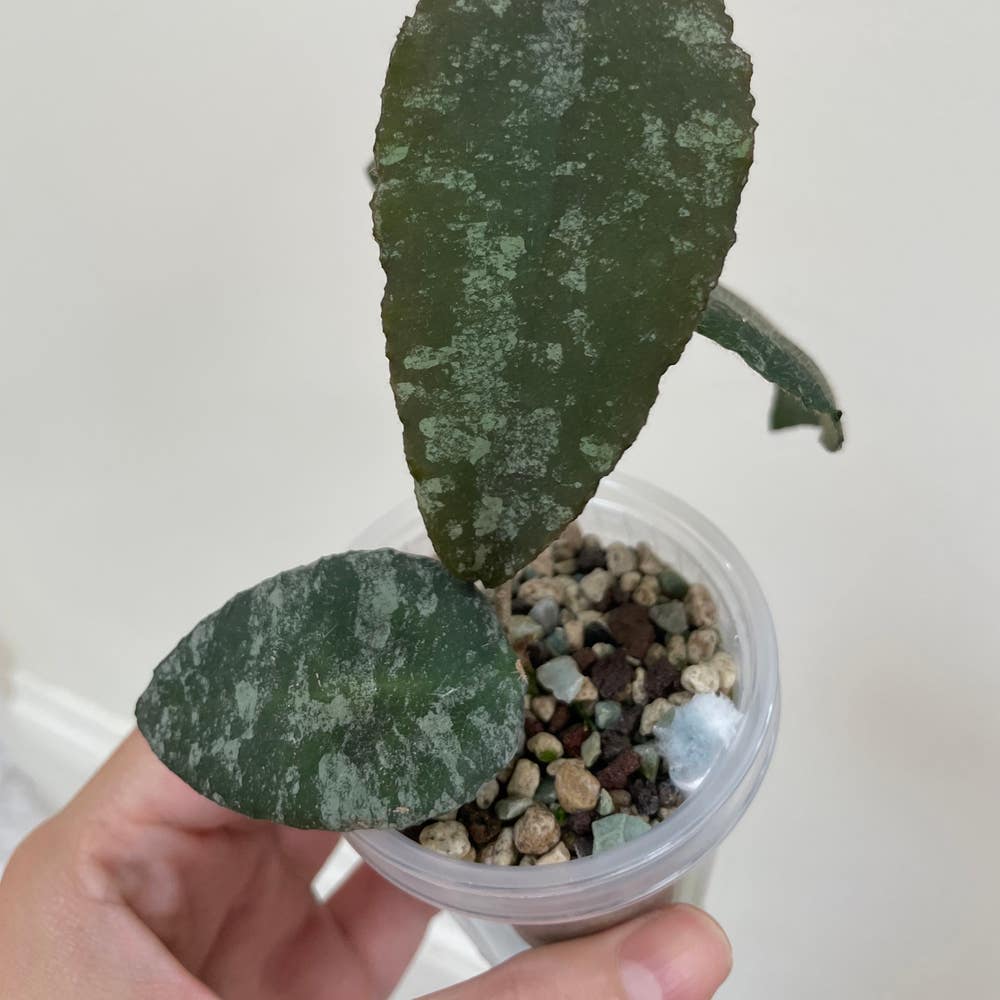
Why Does My Hoya caudata 'Sumatra' Have Yellow Leaves?
Hoya caudata 'Sumatra'
By the Greg Editorial Team
Jun 18, 2024•4 min read
This article was created with the help of AI so we can cover more plants for you. May contain errors. See one? Report it here.
Solve the mystery of your Hoya's yellow leaves 🍂 and bring back its vibrant green splendor! 🌿
- Yellow leaves signal distress, but older leaves naturally yellow as they age.
- 🌞🌱 Bright, indirect sunlight and balanced watering prevent yellowing.
- Nutrient balance is key; use a balanced fertilizer, especially in the growing season.
Spotting the Signs: When Yellow Isn't Mellow
🚨 Recognizing Early Symptoms
Yellowing leaves on your Hoya caudata 'Sumatra' can be the first whisper of distress. Look for leaves that lose their lush green, turning a tired yellow. This change often starts at the leaf edges or tips and can progress inward if the issue persists.
🕵️ Differentiating Between Natural and Problematic Yellowing
Not every yellow leaf is a cry for help. Older leaves naturally pass on, making room for fresh growth. But, if you notice multiple leaves yellowing, or if new leaves are affected, it's time to play plant detective. Consistent yellowing across the plant or yellowing combined with other symptoms like wilting or spotting should raise a red flag.

Water Woes: Finding the Sweet Spot
💦 Overwatering Overload
Overzealous watering turns your Hoya caudata 'Sumatra' into a soggy mess. Yellow leaves are the SOS signals of roots gasping for air. To avoid the dreaded root rot, let the soil's top inch dry out before giving it another drink. Remember, your plant's not a fish; it doesn't need to swim.
🏜️ The Thirsty Plant Predicament
Neglecting hydration, your Hoya's leaves droop like a Monday morning mood. Wrinkles and brown tips are cries for water. Stick your finger in the soil up to your second knuckle; if it's dry, it's time for a watering. Consistency's key, but don't be a slave to the calendar. Watch your plant, not the clock.

Let There Be Light: But Not Too Much!
🌞 The Goldilocks Zone for Sunlight
Bright, indirect sunlight is the sweet spot for your Hoya caudata 'Sumatra'. It's like finding the perfect pair of jeans; not too tight, not too loose, just right for comfort and style.
🕶 Recognizing the Right Light
Direct sunlight? Think of it as the plant equivalent of a beach holiday without sunscreen – a big no-no. Your Hoya will end up with the botanical version of a sunburn. Indirect light is your friend here, the kind that filters through a sheer curtain, giving life without the harshness.
🌅 Adjusting for Seasons
As the seasons shift, so does the light. Keep an eye on your Hoya and don't be afraid to play musical chairs with its location. The goal is to maintain that Goldilocks zone year-round, despite the changing angle of the sun.
💡 Artificial Lighting
Not enough natural light? No problem. Artificial grow lights can work, but think of them as a dietary supplement – helpful, but not a full meal. Keep them at a safe distance to avoid the equivalent of plant indigestion.
📐 Monitoring and Adapting
Keep tabs on your Hoya. If it starts sporting a pale look or the leaves reach out like they're begging for sunlight, it's time to reassess. Move it closer to the light source, but not so close that it's in the direct firing line. Remember, balance is key.
🍃 The Telltale Signs
Yellow leaves can be a cry for help. Too much light and they'll scream with scorched spots. Too little and they'll grow pale and uninterested, like a teenager asked to do chores. Aim for a consistent, dappled light that keeps your Hoya looking perky and vibrant.

Feeding Your Hoya: A Balanced Diet for Lush Leaves
💪 Nutrient Know-How
Yellow leaves on your Hoya caudata 'Sumatra' might be screaming for a nutrient pick-me-up. Nitrogen, phosphorus, and potassium are the big three in the plant food world. Think of them as the plant equivalent of carbs, protein, and fats for us humans. A deficiency in any of these can turn your Hoya into a lackluster shadow of its former self.
To combat this, consider a balanced fertilizer with an N-P-K ratio like 10-10-10. It's like a multivitamin for your plant, ensuring it gets all the essentials without overdoing it. Remember, moderation is key—too much fertilizer can lead to nutrient burn, and nobody wants a fried Hoya.
🛠️ The Fertilizer Fix
When it comes to feeding your Hoya, timing is everything. During the growing season, a well-balanced, water-soluble fertilizer every other week is your ticket to green glory. But as the seasons change, so should your fertilizing fervor. Ease up as the growth slows down; your Hoya is not trying to win a race, it's just living its best plant life.
Choosing the right fertilizer is like picking the perfect snack—something that satisfies without causing a bellyache. A liquid fertilizer with a high potassium level, diluted to half strength, can be just the ticket. And for those who prefer the organic route, compost tea might just be your Hoya's cup of tea.
Remember, your Hoya's appetite wanes in winter. It's not the time for a nutrient feast. Keep the fertilizer in the cabinet and let your plant chill. Come spring, you can start the feeding frenzy again, and watch as those leaves stay as green as an envious garden gnome.
⚠️ Safety First
This content is for general information and may contain errors, omissions, or outdated details. It is not medical, veterinary advice, or an endorsement of therapeutic claims.
Always consult a qualified healthcare professional before using any plant as food, medicine, or supplement.
Never eat any plant (or feed one to pets) without confirming its identity with at least two trusted sources.
If you suspect poisoning, call Poison Control (800) 222-1222, the Pet Poison Helpline (800) 213-6680, or your local emergency service immediately.
Spotted an error? Please report it here.
Revive your Hoya caudata 'Sumatra' from yellow peril to green marvel 🌿 with Greg's personalized care reminders for the perfect water and light balance!