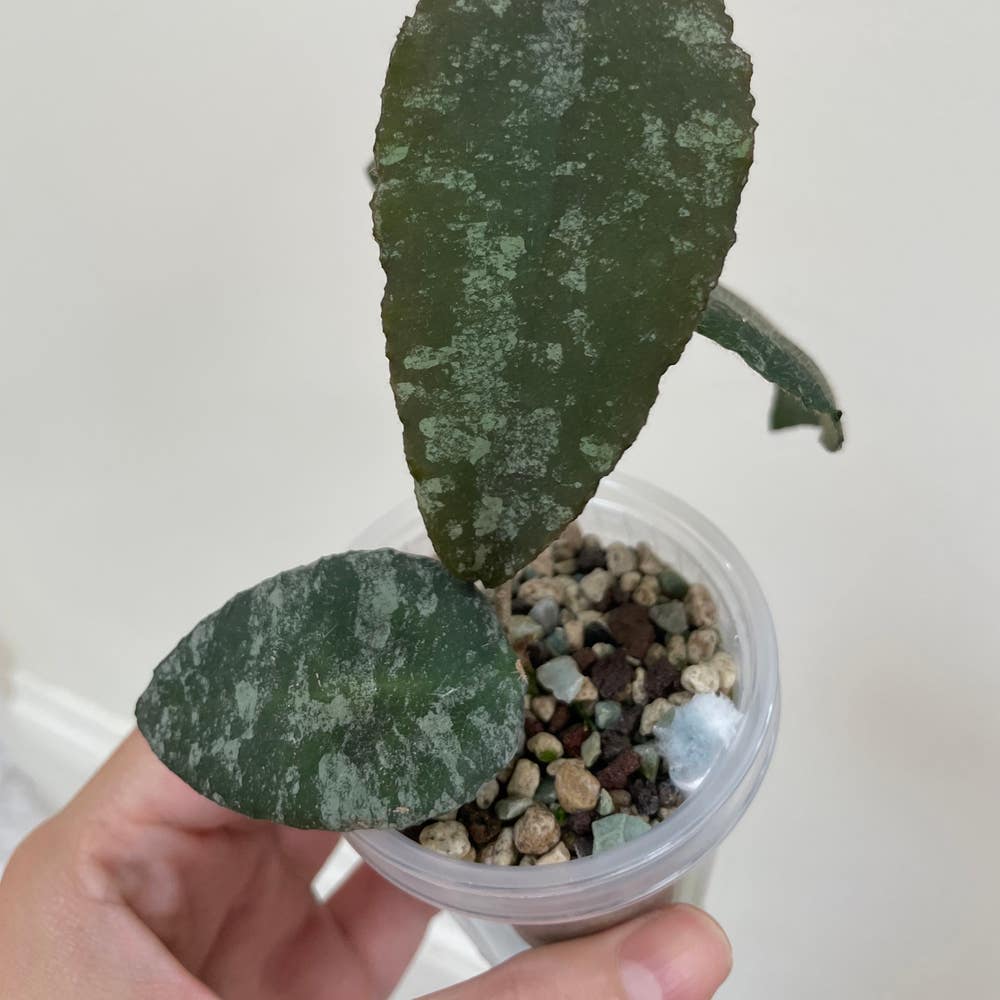
Black Spots on My Hoya caudata 'Sumatra' Leaves
Hoya caudata 'Sumatra'
By the Greg Editorial Team
Jun 18, 2024•6 min read
This article was created with the help of AI so we can cover more plants for you. May contain errors. See one? Report it here.
Banish black spots on your Hoya 🌿 with this essential guide to diagnosis and plant-saving treatments! 🛡️
- Fungal vs. bacterial: Learn to spot the difference in black spots.
- Adjust environment: Reduce humidity and increase airflow to prevent spots.
- Seek help if needed: Don't hesitate to consult a professional for persistent issues.
Spotting the Culprits: What Causes Black Spots?
🕵️♂️ Visual Clues of Black Spots
Black spots on Hoya caudata 'Sumatra' leaves are small and dark, often starting as tiny specks. They can grow, merging into larger blotches if ignored. These spots typically begin their siege from the underside of leaves, a favorite hideout for plant pathogens.
🦠 Common Perpetrators
Fungal foes like Anthracnose and Glomerella are notorious for causing black spots. They thrive in moist conditions, turning leaves into a blackened mess. Bacterial bullies, on the other hand, exploit prolonged leaf wetness, creating spots with a distinctive greasy appearance.
🌿 Environmental Stressors as Accomplices
Environmental factors such as light, water, and temperature also play a role. Too much or too little of these can stress your Hoya, making it more susceptible to black spots. High humidity and poor air circulation are like rolling out the red carpet for these microscopic invaders.

The Detective Work: Diagnosing Your Plant's Black Spots
🍄 Fungal vs. Bacterial: Spotting the Difference
Fungal infections often start as tiny black dots with a yellow halo, like a bullseye on your plant's leaves. They can grow into larger blotches and may cause leaves to fall off. Bacterial spots might look water-soaked or slimy and could emit a nasty smell if things get out of hand. They're the plant world's version of a bad cold that just won't quit.
🌡️ Environmental Check-Up
Before you play the blame game, do an environmental check-up. Are your Hoya caudata 'Sumatra' leaves getting scorched by the sun, or are they drowning in too much love (aka water)? Check for crispy tips or mushy roots – these are dead giveaways. Remember, spots from poor care don't usually have those funky rings or dark edges that scream infection.
Light and temperature can be sneaky accomplices in the black spot crime scene. Too much sun can lead to leaf sunburn, while too little can create a damp, shadowy hideout for fungi to party.
Watering habits need a hard look too. Overwatering can turn your plant's roots into a mushy mess, while underwatering can stress it out, leaving it vulnerable to attack. It's a delicate balance, like trying to walk a tightrope in a windstorm.
Keep your gardening tools clean and your eyes peeled for the first sign of trouble. If you spot something suspicious, don't wait for an engraved invitation; act fast. This isn't a drill; it's a rescue mission for your beloved Hoya.

The Battle Plan: Treating Black Spots
🛡️ Fungicides and Bactericides: Choosing Your Weapons
Fungicides and bactericides are the heavy artillery in your plant care arsenal. When black spots besiege your Hoya caudata 'Sumatra', you'll need to select your weapons carefully. For early-stage infections, reach for protectant fungicides. They act like a shield, warding off further fungal advances. If the black spots have already thrown a party on your plant, systemic fungicides are your go-to. They work from the inside out, cleaning house.
Remember, it's not a free-for-all. Follow the label like it's the holy grail of plant health. Overuse is a no-go—it's like antibiotics; you don't want to create superbugs, but for plants. And if you're into homebrews, a baking soda mix—water, soda, and a drop of soap—can be your DIY remedy. Weekly spritzes could keep the fungus among us at bay.
🌬️ Adjusting the Environment
Now, let's tweak the living quarters. Humidity is a black spot's best friend; reduce it. Think of it as setting the mood—too steamy and you're asking for trouble. Airflow is key. It's like social distancing for plants; give them space to breathe. Keep the leaves dry; water at the base to avoid unwanted leaf wetness. It's like avoiding splashback at a urinal—nobody wants that.
Mulch can be a game-changer. A 3-inch layer is the sweet spot, keeping soil moisture consistent without suffocating roots. It's the equivalent of a comfy blanket for your plant's feet. And don't forget to clean up. Fallen leaves and debris are like a black spot's buffet. Clear it out, and you starve the enemy.
In the end, it's about balance. Too much love can be just as bad as neglect. Keep your plant care sharp, and those black spots will be nothing but a bad memory.

Keeping the Peace: Preventative Measures
🕵️ Routine Checks and Balances
Regular inspections are the backbone of plant health. Like a detective on a stakeout, keep a keen eye on your Hoya caudata 'Sumatra' for early signs of black spots. Cleanliness is next to godliness; ensure your gardening tools are sterilized to prevent spreading any plant pathogens.
🛡️ Creating a Hostile Environment for Spots
To keep black spots from crashing your plant party, balance is key. Ensure the soil drains well and isn't the botanical equivalent of a swamp. Adjust watering habits with the seasons—your plant's thirst in the summer isn't the same as in winter. Lighting should be just right, like Goldilocks' porridge—not too harsh, not too dim. Keep temperatures consistent; your Hoya doesn't appreciate a surprise sauna or an unexpected frost.
Regularly remove any dead or fallen leaves to prevent them from becoming a playground for pests and pathogens. Introduce a no-fly zone for pests by keeping the foliage dry and improving air circulation around your plant. Remember, prevention is a marathon, not a sprint; integrate these practices into your routine care, and those black spots will be history.
When to Call for Backup
Sometimes, despite our best efforts, black spots on Hoya caudata 'Sumatra' leaves persist or worsen. That's your cue to call for backup. When your plant's health is rapidly declining or if you're stumped after trying all the tricks in your plant-care arsenal, it's time to consult a professional.
🚩 Recognizing Red Flags
If you're witnessing extensive root rot or if the plant's condition is going downhill fast, don't play the waiting game. Professional help can offer targeted treatments and care adjustments that might just save your leafy friend.
🌐 Tapping into the Community
There's no shame in seeking wisdom from those who've been down this road. Plant forums, local gardening clubs, and your neighborhood nursery are treasure troves of advice. And hey, there's always an app for that—PictureThis and similar apps put a network of botanical experts in your pocket.
💸 The Cost of Expertise
Be aware, expert advice might cost you a few greenbacks. But think of it as an investment in your plant's longevity. The right guidance can turn a plant tragedy into a growth opportunity.
🚨 When Problems Persist
If your plant's leaves stay mushy or the situation gets grimmer, it's time to call in the cavalry. A local horticulturist or plant specialist can provide a fresh perspective and might spot issues you've missed.
📲 Utilizing Digital Resources
Don't forget about digital resources. Snap a photo of the issue and hit up an
⚠️ Safety First
This content is for general information and may contain errors, omissions, or outdated details. It is not medical, veterinary advice, or an endorsement of therapeutic claims.
Always consult a qualified healthcare professional before using any plant as food, medicine, or supplement.
Never eat any plant (or feed one to pets) without confirming its identity with at least two trusted sources.
If you suspect poisoning, call Poison Control (800) 222-1222, the Pet Poison Helpline (800) 213-6680, or your local emergency service immediately.
Spotted an error? Please report it here.
Eradicate those black spots 🕵️♂️ on your Hoya caudata 'Sumatra' with Greg's environmental monitoring and expert care tips for a flawlessly healthy plant!