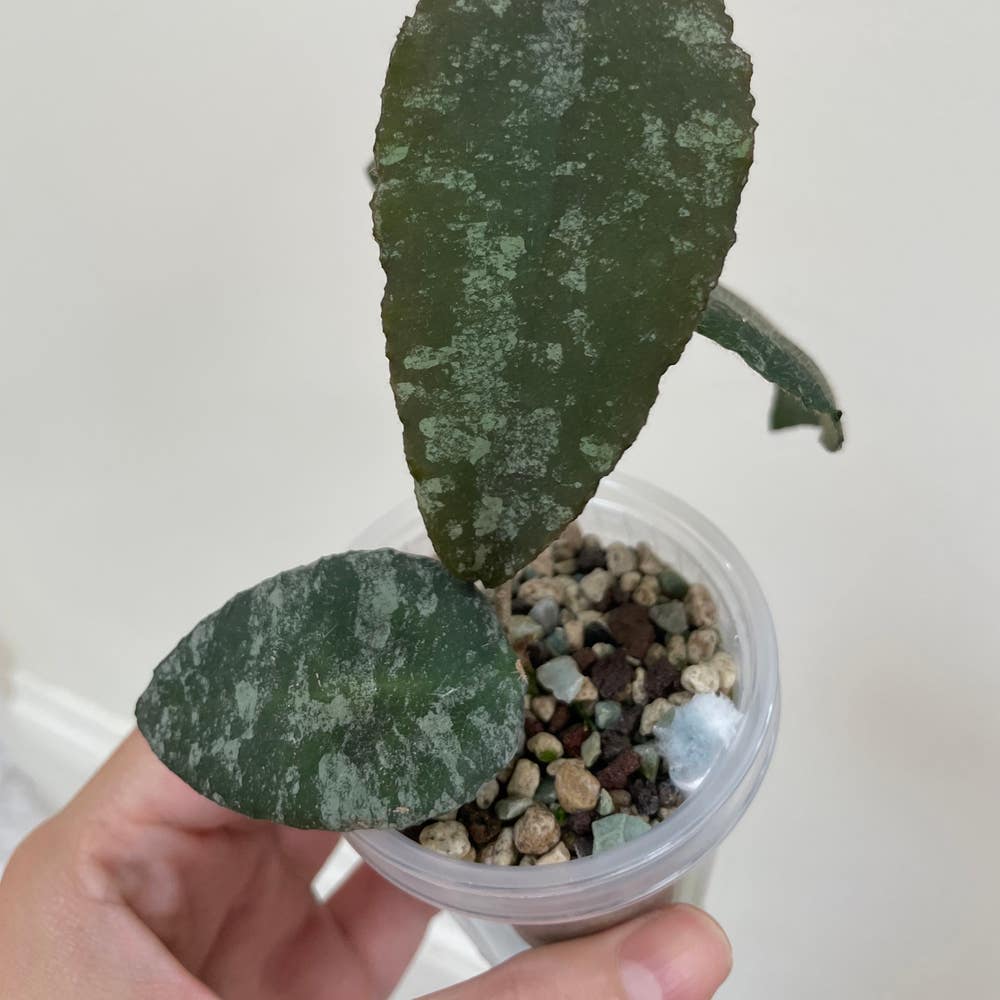
Why Is My Hoya caudata 'Sumatra' Not Doing Well?
Hoya caudata 'Sumatra'
By the Greg Editorial Team
Jun 18, 2024•5 min read
This article was created with the help of AI so we can cover more plants for you. May contain errors. See one? Report it here.
Nurse your wilting Hoya caudata 'Sumatra' back to health with this life-saving plant care guide! 🌿🚑
- 💧 Over/under-watering? Yellow leaves and soil scent or wilting signal water issues.
- 🌡️🌞 Mind light and temperature, aiming for 60-95 F and bright, indirect light.
- 🐛🍂 Pests and sunburn harm, use neem oil and relocate to less intense sunlight.
Water Woes: Too Much or Too Little
🚱 Spotting the Signs
Yellowing leaves and a soil scent that's just not right? Might be your Hoya caudata 'Sumatra' crying out from too much water. On the flip side, wilting leaves are the plant's way of saying, "Hey, I'm parched over here!" Check for mushy stems or brown marks, which scream overwatering, while browning tips could be a cry for hydration.
Making It Right
Balance is everything. Aim for soil that feels like a wrung-out sponge—moist, not drenched. Adjust your watering with the seasons; less in winter, more when it's hot. And if you're overdoing it, let the soil dry out a bit. Think of it as a plant detox. Got a pot that's holding water hostage? Time for a repot with well-draining soil. Remember, your watering can isn't a fire hose. Use it with love, not force.

Light and Temperature Tangles
💡 Symptoms of Stress
Hoya caudata 'Sumatra' can be quite the drama queen when it's not basking in the right light or temperature conditions. Yellowing leaves might signal a plea for a more consistent watering routine or a cry against too much direct sunlight. If your plant's growth is more stunted than a bonsai, it's begging for more light. And those leaf spots or discolorations? They're not a fashion statement; they're distress flares calling for pest inspection or disease treatment.
💡 Finding the Sweet Spot
To keep your Hoya caudata 'Sumatra' from throwing a fit, aim for a temperature range of 60-95 F (15-35 C). Avoid the melodrama of temperature fluctuations; your plant's not into surprise plot twists. When it comes to light, think bright but indirect—like a spotlight that's not too in-your-face. Direct sunlight is as harsh as a critic's review, and your Hoya's not trying to get sunburned. Remember, it's all about that sweet spot where your plant feels like it's living in its own personal rainforest—without you having to don a poncho indoors.

Pests: Uninvited Guests
🐜 Catching the Culprits
Pests can turn your Hoya caudata 'Sumatra' into an all-you-can-eat buffet. Spider mites, scales, thrips, aphids, and mealybugs are the usual suspects. They're tiny but mighty, wreaking havoc on your plant's health. Spider mites spin fine webs, while mealybugs look like tiny cotton specks. Aphids are small and pear-shaped, often clustering on new growth. Scales might be mistaken for part of the plant, thanks to their shell-like covering.
🚪 Eviction Notice
Once you've spotted these freeloaders, it's time to show them the door. Isolate the plant to prevent a pest block party. Trim off the compromised areas—think of it as giving your plant a haircut to remove the bad ends. For a non-toxic eviction, insecticidal soap or neem oil are your go-to bouncers. They'll kick pests out without the harsh chemicals. If you're dealing with a stubborn infestation, you might need to bring in the big guns: organic or chemical insecticides. Remember, the key to pest management is regular check-ups—stay vigilant to keep your Hoya caudata 'Sumatra' pest-free.

Sunburn and Leaf Scorching
🌞 Recognizing Overexposure
Crispy, brown edges on your Hoya caudata 'Sumatra' leaves are screaming for shade. If they're looking bleached, like they've lost a fight with the sun, it's a clear sign of overexposure. Texture changes are a dead giveaway too; think wrinkled, scaly, or leaves that crunch under your touch.
🏡 Shading Strategies
Relocation may be your plant's best friend. Move it to a spot where the sun's rays are less intense, like a north-facing window or a shaded corner. If you're outdoors, a shade cloth can be a plant's knight in shining armor, warding off those harsh UV assaults. And don't forget to rotate your plant regularly; every side deserves its moment in the limelight, just not all at once.
Watering in the cool of the morning or evening helps, and mulching is like giving your plant's roots a cozy blanket, keeping them cool and moist. Pruning? Do it, but don't strip your plant bare; it needs some armor against the sun's relentless barrage. And always, always acclimate your Hoya slowly to new lighting conditions—like easing into a hot bath after a snowball fight.
Fungus Among Us: Mold and Root Rot
🍄 Detecting Decay
- Yellowing leaves and a funky smell from the soil are your Hoya caudata 'Sumatra's' cry for help.
- Mushy roots? That's the handshake of root rot. Black or brown spots on leaves are its calling card.
🍄 Fungal Fix
- Prevention is your best friend: well-draining soil and a watchful eye on watering.
- Treatment: Caught early, a hydrogen peroxide bath can save your plant. Remove all affected parts and let the healthy tissue callus before repotting.
- Repotting should be done with care. Use a mix of peat, perlite, and orchid bark to keep those roots happy and breathing.
- If all else fails, cuttings may be your Hoya's lifeline. Snip healthy sections and propagate for a fresh start.
⚠️ Safety First
This content is for general information and may contain errors, omissions, or outdated details. It is not medical, veterinary advice, or an endorsement of therapeutic claims.
Always consult a qualified healthcare professional before using any plant as food, medicine, or supplement.
Never eat any plant (or feed one to pets) without confirming its identity with at least two trusted sources.
If you suspect poisoning, call Poison Control (800) 222-1222, the Pet Poison Helpline (800) 213-6680, or your local emergency service immediately.
Spotted an error? Please report it here.
Combat overwatering and pests to keep your Hoya caudata 'Sumatra' healthy 🌿 with Greg's personalized care reminders and expert community advice.