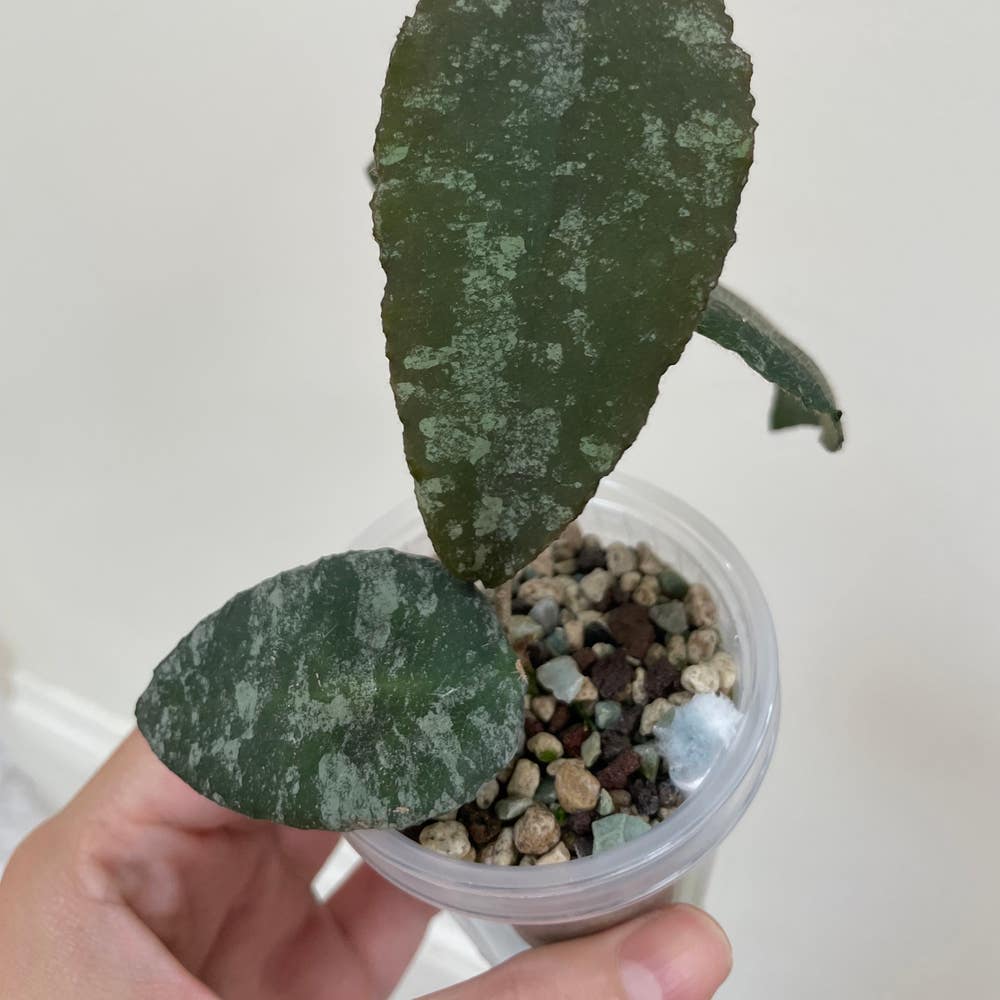
💧 Why Are My Hoya caudata 'Sumatra' Leaves Curling?
Hoya caudata 'Sumatra'
By the Greg Editorial Team
Jun 18, 2024•4 min read
This article was created with the help of AI so we can cover more plants for you. May contain errors. See one? Report it here.
Unravel the mystery 🕵️♂️ behind your Hoya's curling leaves and learn to keep them lusciously flat! 🌿
- Water wisely to prevent Hoya leaf curl from over/underwatering.
- 🌡️ Temperature and humidity levels are key to curl-free leaves.
- 🌤️ Bright, indirect light is essential for healthy Hoya leaves.
Spot the Signs: Recognizing Leaf Curling in Your Hoya
🍃 Visual cues of leaf curling
Curling Hoya caudata 'Sumatra' leaves are the plant's cry for attention. Look for leaves that mimic a rolled-up scroll or have crispy edges. These are your red flags.
🌿 How leaf curling differs from natural leaf movements
Unlike the natural vining and reaching for the sun, leaf curling is a stress signal. It's the difference between a plant stretching out comfortably and one hunching over in discomfort. Keep an eye out for leaves that seem to be defensively curling inward, rather than those simply orienting towards light sources.

The Usual Suspects: Identifying Causes of Leaf Curling
💧 Too Thirsty or Too Drowned: Watering Woes
Overwatering and underwatering are the prime suspects in the case of the curling Hoya caudata 'Sumatra'. When leaves take a downward turn, it's a sign they're drowning in excess moisture. Conversely, an upward curl suggests they're clinging to every drop they can. The soil's top inch should be your clue—dry? Time to hydrate. Soggy? Hold off on the watering can.
🌡 Feeling the Heat: Temperature and Humidity Troubles
Temperature and humidity are the divas of plant care, demanding constant attention. Leaves curling tighter than a coiled spring indicate a temperature tantrum. Too hot or too cold, and your Hoya's leaves will let you know. Humidity levels also play a starring role; too little and your plant's leaves will start to mimic a dried-up autumn leaf. Aim for steady, moderate conditions to keep your Hoya's leaves serene and flat.
🌞 Light Levels: Finding the Sweet Spot
Lighting is a balancing act—too much and your Hoya's leaves will crisp up like overdone toast, too little and they'll stretch out in a desperate search for more. Direct sunlight is a no-go; it's the equivalent of putting your plant in a tanning bed. Yet, too much shade turns your Hoya into a wallflower. Find that sweet spot where the light is bright but indirect to prevent the dreaded curl.

Combat Strategies: Fixing the Curl
🚰 Adjusting Watering Habits for Happy Hoya Leaves
Overwatering and underwatering can both lead to leaf curling in Hoya caudata 'Sumatra'. To strike the right balance, perform the touch test: insert your finger into the soil up to 2 inches deep. If it's dry, it's time to water; if moist, hold off. Embrace the soak and dry method, allowing the plant to drink its fill, then wait until the soil is dry before the next watering. Remember, consistency is key, but adjust for seasonal changes—less in winter, more in summer.
🌡️ Creating the Ideal Home: Temperature and Humidity Control
Hoyas are like Goldilocks; they prefer conditions that are just right. Maintain a room temperature above 60 degrees Fahrenheit and aim for a humidity level between 40-60%. This can be achieved with a pebble tray or a humidifier to create a mini ecosystem. Ensure good air circulation without drafts.
🌞 Let There Be (The Right Amount of) Light!
Light is crucial, but too much can cause as much damage as too little. Hoyas thrive in bright, indirect sunlight. Avoid direct beams that can scorch the leaves. Rotate your plant regularly for even growth and adjust for the seasonal changes in light intensity. If you're unsure about light levels, a simple test with a light meter or your hand can help gauge the intensity.

Defending Your Hoya: Pest and Disease Control
🐛 Common Critters: Identifying Pests that Cause Curling
Pests are the ninjas of the plant world, stealthy and destructive. Aphids, mealybugs, and spider mites top the list of usual suspects. They're small but mighty, with an appetite for your Hoya's vital fluids. Spot them by their signature damage: curling leaves and sticky residue.
🦠 Sickly Symptoms: Recognizing Diseases Linked to Curling
Diseases in Hoyas can be more insidious than a spy in a thriller novel. Fungal foes like root rot and Botrytis blight leave behind a trail of gray spots and weak stems. These aren't just cosmetic issues; they threaten your plant's very essence.
💉 Treatment and Prevention Tactics
Isolation is your first line of defense—think of it as plant quarantine. Remove the affected leaves with the precision of a surgeon, using sterilized tools. For pests, unleash a targeted attack with insecticidal soap or neem oil, ensuring you coat every leaf, especially the undersides. Repeat treatments like you're binge-watching your favorite series—consistently and thoroughly.
Prevention is your Hoya's armor. Maintain high humidity to deter pests—they can't stand a good spa day. Keep your plant's environment clean and inspect regularly, like a hawk eyeing its prey. By staying vigilant, you'll keep those leaves curl-free and your Hoya thriving.
⚠️ Safety First
This content is for general information and may contain errors, omissions, or outdated details. It is not medical, veterinary advice, or an endorsement of therapeutic claims.
Always consult a qualified healthcare professional before using any plant as food, medicine, or supplement.
Never eat any plant (or feed one to pets) without confirming its identity with at least two trusted sources.
If you suspect poisoning, call Poison Control (800) 222-1222, the Pet Poison Helpline (800) 213-6680, or your local emergency service immediately.
Spotted an error? Please report it here.
Prevent your Hoya's leaves from curling by using Greg to create a custom care plan 🌱 that nails the right balance of water, light, and home environment.