How Do I Cure Hoya Carnosa Tricolor Root Rot?
Hoya carnosa 'Tricolor'
By the Greg Editorial Team
Jun 15, 2024•8 min read
This article was created with the help of AI so we can cover more plants for you. May contain errors. See one? Report it here.
Rescue your Hoya Carnosa 🌿 from root rot and ensure its vibrant future with our expert recovery guide.
- Yellow leaves and foul odor signal root rot in Hoya Carnosa Tricolor.
- Trim affected roots and use fungicides to treat root rot effectively.
- Prevent with proper watering, drainage, and repotting in suitable soil.
Identifying Root Rot in Hoya Carnosa Tricolor
🚨 Signs and Symptoms
Yellowing leaves and a foul odor from the soil are your Hoya Carnosa Tricolor's cry for help. Dropping leaves, particularly the older ones, can be a red flag. If your plant's new growth looks like it's giving up the ghost, it's time to play detective with the roots.
🔍 Inspecting the Roots
Roots should be firm and tenacious, not soft or mushy. Discoloration is a telltale sign; healthy roots are not playing hide and seek with shades of brown or black. If the roots crumble like a bad cookie, they're toast. And don't be fooled by white roots that come off with a gentle tug—these are not healthy, they're history.
🧲 The Pull Test
Gently pull on each root. If it's like pulling apart string cheese, it's a no-go. Healthy roots don't shed like a cat in summer. If you're left holding a root as thin as a hair, it's time to take action.
👁️ Visual Clues
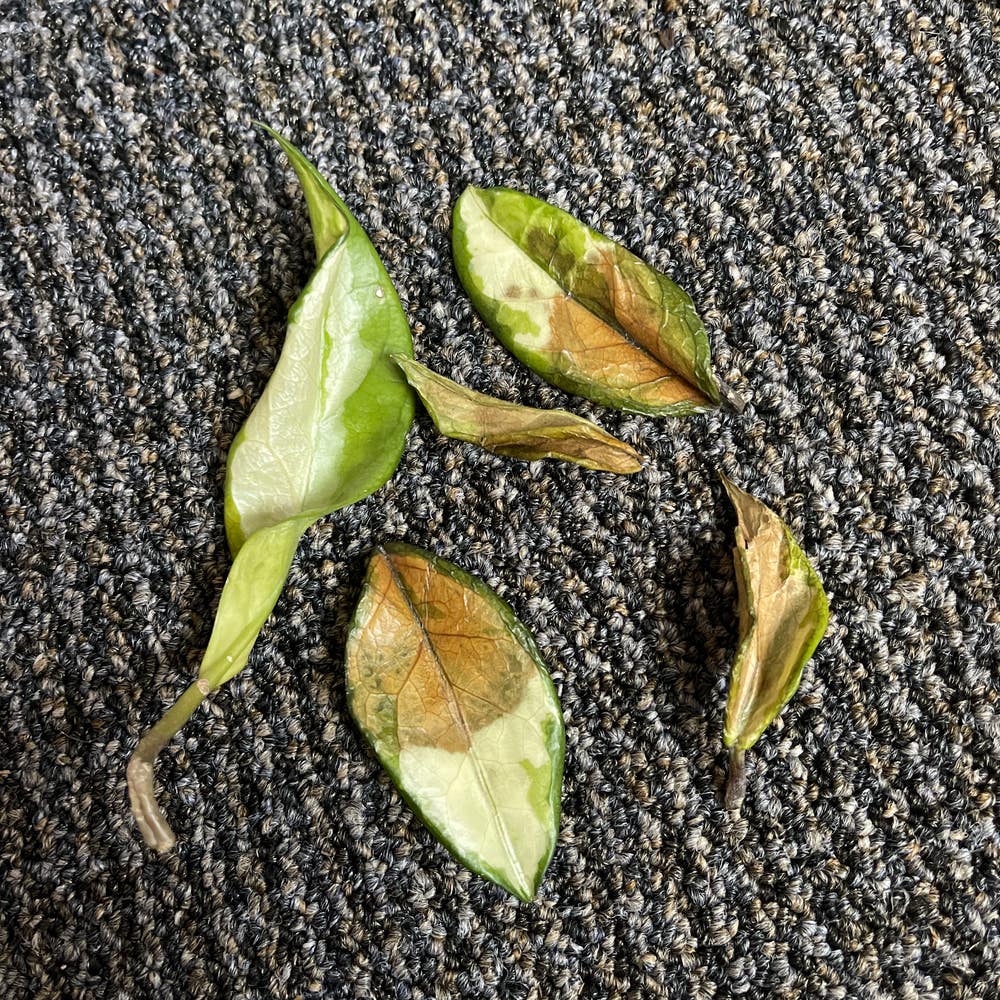
Black or brown spots on leaves might as well be flashing neon signs of root rot. If your Hoya isn't thriving and you're stumped, get your hands dirty and check those roots. Remember, even a Hoya with the perfect setup can succumb to root rot. It's all about early detection and swift action.

Treating Root Rot in Hoya Carnosa Tricolor
🌱 Removing the Plant and Examining Roots
First things first: gently remove your Hoya Carnosa Tricolor from its pot. It's like defusing a bomb; you don't want to trigger more damage. Shake off the excess soil and get a good look at the roots. Healthy roots are like a firm handshake, while rotten ones are a limp fish—squishy and suspect.
✂️ Trimming Affected Roots
Grab your pruning shears or sharp scissors. It's surgery time. Snip off the mushy, dark roots like you're editing a bad selfie—mercilessly. If the stem shows signs of rot, keep cutting until you see clear or white sap. It's like finding the silver lining in a bad situation. If you're in doubt, cut a bit more. It's better to lose a bit of the plant than the whole thing.
🧼 Disinfecting and Applying Fungicides
After the amputation, disinfect the wounds. Dip the remaining roots and stem in a 3% hydrogen peroxide solution, not unlike marinating chicken—except you're not making dinner, you're saving a life. Let it air dry; this is the plant equivalent of a band-aid. If you're feeling fancy, treat the healthy roots with a fungicide following the product's instructions. It's like giving your plant an immune boost.
🔄 Rerooting if Necessary
If you've had to perform a major root-ectomy, you might need to reroot. It's like a plant reboot, and luckily, Hoyas are like tech-savvy teens—they pick up quickly. You can root them in your preferred medium, and with the right conditions, they'll bounce back.
Remember, root rot is the plant version of a horror movie—it's better to prevent it than to fight it. But if you're in the thick of it, these steps are your survival guide.

Soil and Repotting Strategies
In the battle against root rot, your Hoya Carnosa Tricolor's soil mix and pot choice are your first line of defense. Let's dig into the dirt on keeping your plant's feet dry and happy.
🌱 Choosing the Right Soil Mix
The ideal soil mix for your Hoya Carnosa Tricolor should be the botanical equivalent of a well-aerated, comfy pair of sneakers—supportive but breathable. Aim for a mix that boasts a balance of peat moss, perlite, orchid bark, and pumice, with a pH hovering between 6.0 and 7.0. This concoction ensures excess water bids a hasty retreat from the roots, preventing the dreaded soggy-bottom scenario.
🏺 Selecting the Perfect Pot
When it comes to pots, think of Goldilocks—not too big, not too small. Your Hoya prefers a snug fit, so only size up when it's bursting at the seams. Ensure your pot has adequate drainage holes; otherwise, you're setting the stage for a root rot encore. Terra cotta pots are the unsung heroes here, offering breathability that plastic pots can't match.
🌿 Repotting Like a Pro
Repotting isn't a yearly fashion statement for your Hoya; it's a necessity only when it's root-bound or the soil has thrown in the towel. When it's time for a change, don't get pot-happy—choose a new home just a few inches larger to avoid waterlogged soil. And remember, spring and summer are the seasons of growth, making them ideal for this transition.
Remember, your Hoya Carnosa Tricolor doesn't need a mansion—just a cozy, well-drained space to call home. Keep these tips in your gardening toolkit, and you'll be a repotting rockstar in no time.

Watering Practices to Prevent Root Rot
Adjusting watering frequency is crucial for Hoya Carnosa Tricolor's health. Overwatering is the express lane to root rot city, so let's avoid that. Check the soil's top inch; if it's dry, it's time to water. If not, give it a breather.
🚰 Proper Soil Drainage
Ensure your pot isn't a water trap. Drainage holes are non-negotiable. They're like the escape routes in a building—without them, you're setting yourself up for disaster.
🏜️ Dry Periods Between Waterings
The soil needs to hit the pause button on moisture to prevent root rot. Think of it as the plant's meditation time—dry out completely during winter, and slightly in between waterings during the growing season.
💧 Watering Technique
Water slowly and at the base, avoiding a flood. You're aiming for a gentle rain, not a monsoon. And never, ever, let the plant sit in soggy soil. It's like making someone wear wet socks—uncomfortable and just plain wrong.
🌦️ Seasonal Adjustments
Be a weather watcher. Plants drink less when it's cooler, so reduce watering in winter. They're not hibernating bears, but they do slow down.
🕵️ Monitoring After Watering
After you water, play detective. Check if the water's draining or throwing a pool party at the bottom of the pot. No party should be happening down there—good drainage is key.
Remember, your Hoya Carnosa Tricolor isn't a fish—it doesn't need to swim. Keep it hydrated, but let it breathe.
Monitoring and Promoting Recovery
🌱 Observing Signs of Recovery
After addressing root rot in your Hoya Carnosa Tricolor, vigilance is key. Look for new, healthy growth that's free of brown spots. This is a clear sign your plant is on the mend. If the old symptoms persist or worsen, it's time to reassess your care approach.
🛠 Adjusting Treatment
Respond to your plant's needs by tweaking your care routine. Positive changes should be noticeable within a few weeks. If the plant appears more vibrant, you're on the right track. Otherwise, consider adjusting light, water, or humidity levels.
☀️ Encouraging Healthy Growth
To foster recovery, ensure your Hoya gets adequate sunlight and isn't drowning in water or fertilizer. Over-fertilization can stress the plant, making it more disease-prone. Also, keep an eye on the thermometer to avoid temperature stress, which can be just as harmful as poor watering practices.
🎉 Celebrating New Growth
When you spot new roots peeking through the drainage hole or observe a spurt in growth, it's a small victory. It means your Hoya is ready for a larger home. Repot if necessary, but always with well-draining soil and a pot that supports healthy root development.
Remember, recovery takes time. Patience is not just a virtue; it's a necessity when nursing your Hoya back to health.
Preventative Measures Against Root Rot
💧 Consistent Watering Schedule
Timing is everything when it comes to watering your Hoya Carnosa Tricolor. Stick to a schedule that feels like second nature, adjusting for the whims of the seasons. Too much love in the form of water, and you're asking for trouble. Let the soil's thirst guide you—dry periods are as vital as the watering itself.
🚰 The Role of Drainage
Your plant's pot is its fortress—make sure it's equipped with a proper moat. Drainage holes are non-negotiable; they're the escape route for excess water that roots dread. And if you're using a saucer, don't let it become a swimming pool. Empty it religiously, or better yet, ditch it altogether.
🌡️ Temperature, Humidity, and Air Circulation
Think of your plant's environment as a microclimate. It doesn't take much for humidity to throw a party for fungi, and root rot loves a good bash. Keep the air moving, the humidity checked, and the temperature steady. Stable conditions mean fewer shocks and less stress for your green buddy.
🌱 Extra Tips for Vigilance
- Elevate your plant. Literally. Get it off the ground to improve air flow around the pot.
- Mulch? Sure, but don't overdo it. A thin layer will do to keep moisture levels just right.
- Cleanliness is next to godliness. Sterilize your tools and pots to keep diseases at bay.
- Watch for pests like it's your favorite sport. They're often the first sign that something's amiss.
Remember, prevention isn't just about avoiding disaster—it's about fostering a thriving, rot-free life for your Hoya Carnosa Tricolor.
⚠️ Safety First
This content is for general information and may contain errors, omissions, or outdated details. It is not medical, veterinary advice, or an endorsement of therapeutic claims.
Always consult a qualified healthcare professional before using any plant as food, medicine, or supplement.
Never eat any plant (or feed one to pets) without confirming its identity with at least two trusted sources.
If you suspect poisoning, call Poison Control (800) 222-1222, the Pet Poison Helpline (800) 213-6680, or your local emergency service immediately.
Spotted an error? Please report it here.
Spot early signs of root rot and nurse your Hoya Carnosa Tricolor back to health with Greg's tailored care reminders 🛡️, ensuring your green friend thrives without future scares.