🍃 How to Fix Curling Leaves on Your Variegated Wax Plant
Hoya carnosa 'Tricolor'
By the Greg Editorial Team
Oct 09, 2024•5 min read
This article was created with the help of AI so we can cover more plants for you. May contain errors. See one? Report it here.
Revive your variegated wax plant 🌱 by quickly diagnosing and preventing curling leaves for vibrant growth!
- 🌱 Curling leaves indicate stress from light, water, nutrients, or pests—identify the cause!
- 💧 Maintain humidity between 50-70% to prevent curling and browning edges.
- 🌞 Provide bright, indirect light for 6-8 hours daily to support healthy growth.
Causes of Curling Leaves
🌪️ Environmental Stress Factors
Impact of Light Exposure
Light plays a crucial role in the health of your variegated wax plant. Insufficient light can lead to weak growth and curling leaves, while excessive direct sunlight may cause leaf burn, resulting in similar curling symptoms.
Humidity Requirements
Maintaining the right humidity is vital for optimal growth. Ideally, humidity levels should be between 50-70%; anything lower can lead to leaf curling and browning edges.
💧 Watering Issues
Overwatering Issues
Overwatering is a common culprit behind curling leaves. Signs include yellowing leaves and mushy stems, often indicating root rot, which can severely affect leaf health.
Soil drainage is essential for your Hoya. Using well-draining soil prevents waterlogging, allowing roots to breathe and thrive.
Underwatering Signs
On the flip side, underwatering can also cause distress. Symptoms include crispy, dry leaves and stunted growth, with leaf curl acting as a stress response to insufficient moisture.
🥦 Nutrient Deficiencies
Nutrient deficiencies can significantly impact leaf health. A nitrogen deficiency often results in yellowing and curling, while magnesium deficiency leads to curling and browning of leaf edges.
For optimal growth, consider using a balanced fertilizer with recommended NPK ratios. Regular application during the growing season can help maintain leaf vitality.
🐛 Pest Infestations
Common Pests
Pests can wreak havoc on your plant's health. Mealybugs, identifiable by their white, cotton-like masses on leaves, can stunt growth and cause curling.
Spider mites are another threat, leaving fine webbing and stippled leaves in their wake. These pests weaken the plant, leading to further leaf curl.
🌡️ Temperature Fluctuations
Temperature plays a significant role in the well-being of your variegated wax plant. The ideal range is between 18°C to 27°C (65°F to 80°F).
Cold drafts can cause leaf curl, while heat stress may lead to wilting and curling. Keeping your plant in a stable environment is key to preventing these issues.
Understanding these causes will help you diagnose and address curling leaves effectively. Next, we'll explore how to identify specific symptoms of leaf curl for better care.
Diagnosing Curling Leaves
Identifying Symptoms of Leaf Curl 🌿
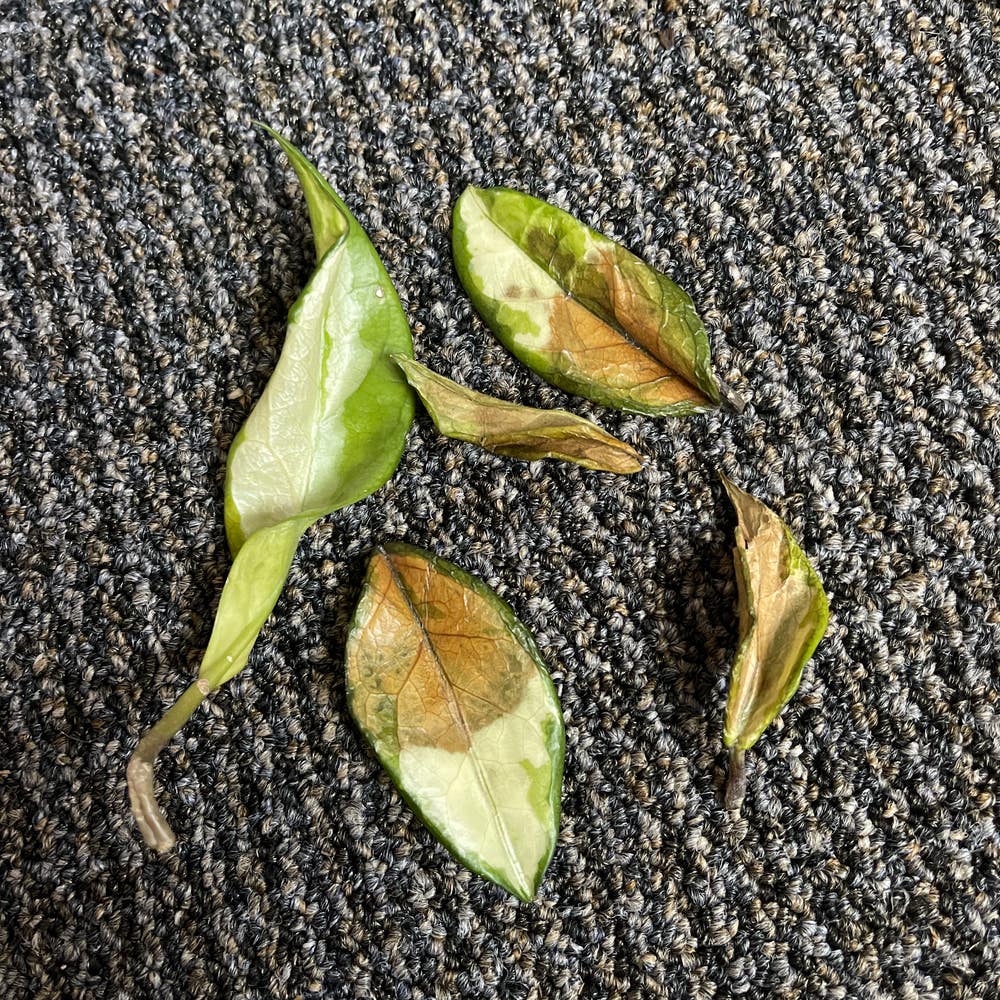
Curling leaves can be a cry for help from your variegated wax plant. Look closely at the leaves: inward curling often signals distress, while outward curling can indicate other issues.
Color changes can accompany these curls. Yellowing or browning edges might suggest nutrient deficiencies or environmental stress.
Differentiating Between Types of Curl 🔍
Understanding the type of curl is crucial for diagnosis. Inward curl typically points to underwatering or pest infestations, while outward curl usually indicates overwatering or environmental stress.
Recognizing these patterns can help you pinpoint the problem faster, allowing for timely intervention.
Assessing Overall Plant Health 🏥
To get a complete picture of your plant's health, evaluate the leaf color, texture, and growth patterns. Healthy leaves should be vibrant and firm, not limp or discolored.
Don't forget to check the roots and soil moisture levels. Root health is vital; if the roots are rotting, no amount of care will save your plant.
By carefully assessing these indicators, you can effectively diagnose the issues causing curling leaves and take the necessary steps to restore your plant's health.
Solutions for Curling Leaves
🌊 Adjusting Watering Practices
Establishing a consistent watering schedule is crucial for your Variegated Wax Plant. Aim to water every 1-2 weeks, adjusting based on the soil's moisture level.
To check soil moisture, use a moisture meter or simply insert your finger into the soil. This will help you determine when your plant truly needs water.
💧 Improving Humidity Levels
Humidity plays a vital role in keeping your plant healthy. Consider using humidifiers or pebble trays to boost moisture in the air.
Grouping your plants can also create a microclimate, enhancing humidity levels naturally. This simple trick can make a significant difference in your plant's well-being.
🐞 Treating Pest Infestations
Pest control is essential for maintaining leaf health. For mealybugs and spider mites, neem oil or insecticidal soap works wonders.
Regular inspections are key. Catching infestations early can save your plant from severe damage.
🌱 Fertilizing Appropriately
Fertilizing your Wax Plant correctly can prevent nutrient deficiencies. Use a balanced fertilizer during the growing season for optimal growth.
Apply fertilizer every 4-6 weeks, and reduce frequency in winter. This ensures your plant gets the nutrients it needs without overdoing it.
🌡️ Correcting Temperature Issues
Maintaining the right temperature is straightforward but essential. Avoid placing your plant near drafts or heat sources to prevent stress.
Using thermometers can help you monitor temperature fluctuations effectively. Keeping your plant in its ideal range will promote healthy growth.
With these solutions, you can effectively address curling leaves and foster a thriving Variegated Wax Plant. Next, let’s explore preventive measures to keep your plant healthy in the long run.
Preventive Measures
Best Practices for Wax Plant Care 🌱
Regularly checking your variegated wax plant for signs of stress is crucial. Adjust your care routine as needed to keep your plant thriving.
Ensure that your pot is the right size and has proper drainage. This prevents root issues that can lead to curling leaves.
Ideal Growing Conditions ☀️
Your wax plant loves bright, indirect sunlight for about 6-8 hours daily. This light exposure is essential for healthy growth.
Maintain humidity levels between 50-70% to create a comfortable environment. Keeping the temperature within the range of 18°C to 27°C (65°F to 80°F) is also vital for optimal health.
Regular Monitoring and Maintenance Tips 🔍
Conduct weekly inspections for pests and check the overall health of the leaves. This proactive approach helps catch issues before they escalate.
Monthly checks on soil moisture and humidity levels are also beneficial. Staying on top of these factors will ensure your wax plant remains vibrant and healthy.
By implementing these preventive measures, you can significantly reduce the risk of curling leaves and promote a flourishing wax plant. Next, let’s explore solutions for addressing curling leaves when they do occur.
⚠️ Safety First
This content is for general information and may contain errors, omissions, or outdated details. It is not medical, veterinary advice, or an endorsement of therapeutic claims.
Always consult a qualified healthcare professional before using any plant as food, medicine, or supplement.
Never eat any plant (or feed one to pets) without confirming its identity with at least two trusted sources.
If you suspect poisoning, call Poison Control (800) 222-1222, the Pet Poison Helpline (800) 213-6680, or your local emergency service immediately.
Spotted an error? Please report it here.
Keep your variegated wax plant thriving 🌿 by using Greg's tailored reminders for optimal watering and humidity, ensuring those curling leaves become a thing of the past!