🌡 Good Temperature Range for Your Variegated Wax Plant
Hoya carnosa 'Tricolor'
By the Greg Editorial Team
Oct 09, 2024•4 min read
This article was created with the help of AI so we can cover more plants for you. May contain errors. See one? Report it here.
Help your variegated wax plant flourish 🌱 by mastering temperature care and spotting stress signs early for vibrant growth!
- 🌡️ Optimal temperature for variegated wax plants is 60°F to 80°F (15°C to 27°C).
- ❄️🔥 Signs of temperature stress include leaf discoloration, curling, and wilting.
- 📏 Regular monitoring and adjustments ensure a stable environment for your wax plant.
Temperature Tolerance Levels
Optimal Range 🌡️
The ideal temperature range for your variegated wax plant is between 60°F to 80°F (15°C to 27°C). Within this range, different varieties have their own preferences.
For instance, Hoya carnosa 'Tricolor' enjoys slightly warmer conditions, while Hoya carnosa 'Krimson Queen' thrives comfortably within the same optimal range. Knowing these specifics can help you create the perfect environment for your plants.
Acclimatization 🌱
When it comes to cold tolerance, these plants can handle brief dips below 50°F (10°C). However, they can also withstand heat up to 90°F (32°C), but only for short periods.
Acclimatization is crucial for your wax plant's health. Gradually introducing it to temperature changes can help prevent stress and ensure it thrives in your home.
Signs of Temperature Stress
Symptoms of Cold Stress ❄️
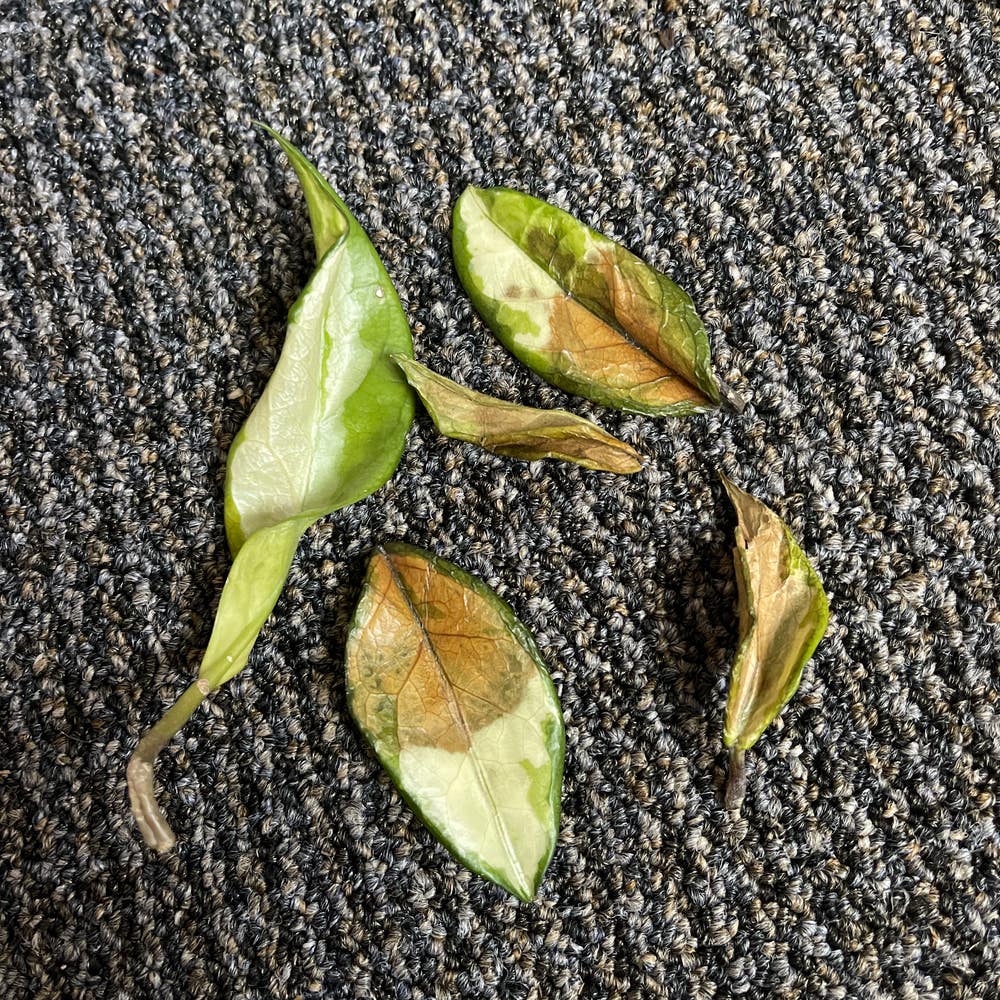
Cold stress can manifest in several noticeable ways. Look out for leaf discoloration, where leaves may turn yellow or brown, indicating distress.
Another sign is leaf drop, where the plant sheds leaves prematurely. You might also notice stunted growth, with the plant's development slowing or halting altogether.
Symptoms of Heat Stress 🔥
Heat stress presents its own set of symptoms. One common indicator is leaf curling, where the edges of the leaves curl inward, signaling that the plant is struggling.
Wilting is another telltale sign; leaves may appear limp or droopy. Additionally, sunburn can occur, resulting in brown, crispy patches on leaves that are exposed to direct sunlight.
Recovery from Temperature Stress 🌱
If you notice these symptoms, immediate action is crucial. Relocate the plant to a more suitable temperature to help it recover.
Pruning damaged leaves can also encourage new growth. For long-term care, focus on gradual acclimatization to prevent future stress, ensuring your plant thrives in its environment.
By being attentive to these signs and taking proactive steps, you can help your variegated wax plant flourish despite temperature challenges.
Causes of Temperature Stress
🌬️ Environmental Factors
Temperature stress in your variegated wax plant can often stem from sudden changes in its environment. Drafts from open windows or the heat from nearby appliances can create uncomfortable conditions for your plant.
Prolonged exposure to extreme temperatures, whether from heat waves or unexpected cold snaps, can also wreak havoc. These fluctuations can lead to serious health issues for your plant.
🏠 Indoor vs. Outdoor Conditions
When it comes to indoor conditions, stability is key. Keeping your plant away from windows or heating vents helps maintain a consistent temperature, reducing stress.
Outdoor conditions present their own challenges. Fluctuating weather patterns can expose your plant to rapid temperature changes, making it crucial to monitor the environment closely.
📉 Impact of Temperature Fluctuations
Rapid temperature changes can significantly affect your plant's health. Stress can manifest in various ways, from leaf discoloration to stunted growth.
Regularly monitoring temperature is essential to prevent these issues. Keeping an eye on your plant’s environment ensures it remains healthy and thriving.
Understanding these causes of temperature stress will help you create a nurturing environment for your variegated wax plant. Next, let’s explore the signs that indicate your plant may be experiencing temperature stress.
Best Practices for Maintaining Ideal Temperature
Monitoring Temperature 🌡️
Keeping an eye on your variegated wax plant's temperature is crucial. Use thermometers or smart plant care apps to track the environment effectively.
Regular checks are especially important during seasonal transitions. Sudden changes can catch you off guard, so stay proactive to ensure your plant thrives.
Adjusting Location Based on Seasons 🌍
As the seasons change, so should your plant's location. During colder months, consider moving your wax plant indoors to shield it from chilly drafts.
In the summer, provide shade or protection from extreme heat. Simple adjustments can make a world of difference in keeping your plant healthy and happy.
By implementing these best practices, you can create a stable environment for your variegated wax plant, ensuring it flourishes year-round. Next, let’s explore the signs of temperature stress to watch for in your plant.
⚠️ Safety First
This content is for general information and may contain errors, omissions, or outdated details. It is not medical, veterinary advice, or an endorsement of therapeutic claims.
Always consult a qualified healthcare professional before using any plant as food, medicine, or supplement.
Never eat any plant (or feed one to pets) without confirming its identity with at least two trusted sources.
If you suspect poisoning, call Poison Control (800) 222-1222, the Pet Poison Helpline (800) 213-6680, or your local emergency service immediately.
Spotted an error? Please report it here.
Keep your variegated wax plant thriving 🌿 by using Greg's smart alerts to monitor its temperature and make quick adjustments, ensuring it stays within its ideal range of 60°F to 80°F!