Why Is My Hoya Carnosa Tricolor Not Doing Well?
Hoya carnosa 'Tricolor'
By the Greg Editorial Team
Jun 15, 2024•9 min read
This article was created with the help of AI so we can cover more plants for you. May contain errors. See one? Report it here.
Nurture a thriving Hoya Carnosa Tricolor 🌿 by sidestepping these typical care blunders.
- Wilting and yellowing leaves signal distress; root rot often due to overwatering.
- Balance light and temperature; avoid sunburn and cold drafts.
- Combat pests and diseases with neem oil, insecticidal soap, and regular pruning.
Signs of Distress in Hoya Carnosa Tricolor
🚨 Recognizing Trouble
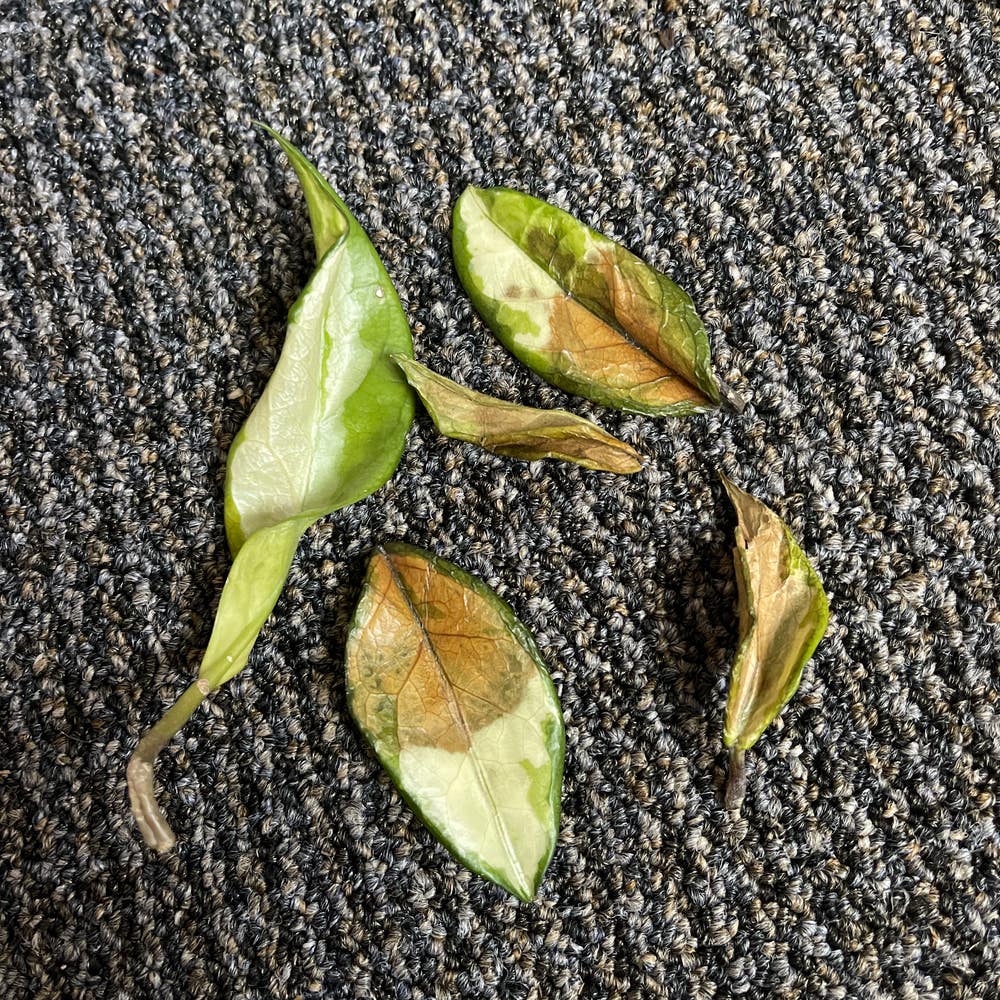
Wilting leaves are the plant's white flag, signaling surrender to some form of distress. Yellowing leaves, particularly starting at the tips or edges, are your Hoya's way of crying out for help. Stunted growth is the silent alarm that something's amiss. These symptoms demand your attention—stat.
🏥 Early Intervention: The Plant ER
Acting fast can be the difference between life and a plant funeral. Root rot, a result of overwatering, is like the plant's silent killer. It's sneaky, but the signs are there: yellow leaves and a general look of "I'm not okay." On the flip side, leaves that resemble taco shells are a cry for hydration. Don't wait for the wrinkles; be proactive.
☀️ Sunburn and Pests: The Unwanted Guests
Too much sun leaves your Hoya looking like it just had a bad day at the beach—sunburned. And pests? They're like that annoying relative who shows up uninvited and won't leave. Mealybugs and aphids are the main culprits, turning your Hoya into an all-you-can-eat buffet. Diluted neem oil or insecticidal soap are your bouncers, showing these pests the door.
🌡️ Temperature Tantrums
Hoyas are tropical souls; they don't do well with the cold shoulder. Cold drafts can cause leaves to yellow faster than a banana left out in the sun. Keep your Hoya away from drafty windows and air conditioning units to avoid the chills.
✂️ The Right Response
When you spot trouble, don't just stand there—prune away the drama. Unhealthy looking parts of the plant are like bad vibes; cut them out. And remember, a healthy Hoya is less likely to attract those pesky pests and diseases. It's like keeping your immune system strong so you don't catch that cold going around.

Watering Woes: Over and Under-Watering
Over-watering is the plant equivalent of helicopter parenting—too much of a good thing can be harmful. Your Hoya Carnosa Tricolor will throw a fit in the form of yellow leaves and a general appearance of being under the weather. If the soil feels like a soggy sponge, you've gone overboard.
🚱 Recognizing the Symptoms
- Soggy soil: It's a telltale sign you're loving your plant to death with water.
- Unhappy plant: A light green, wilted Hoya is crying out for an intervention.
💧 Striking the Balance
- Let it breathe: Allow the soil to dry out at least halfway before the next watering session.
- Consistency is key: Regular watering during growth periods is like a steady paycheck for your plant—it thrives on it.
Under-watering, on the other hand, is like forgetting to feed the cat—neglectful and bound to result in a grumpy living being. A Hoya Carnosa Tricolor left too dry will sport shriveled leaves and stunted growth, a clear cry for hydration.
🏜️ Under-Watering Signs
- Shriveled leaves: They're not just quirky; they're thirsty.
- Stunted growth: When your Hoya's growth is slower than a snail on a leisurely stroll, it's time to up the water ante.
💦 The Watering Sweet Spot
- Thorough, but not too frequent: Water well, then give it a break. Think of it as a plant spa day followed by some alone time.
- Drainage is your friend: Ensure your pot isn't holding water hostage. Good drainage equals happy roots.
Remember, the goal is to avoid turning your Hoya Carnosa Tricolor into a botanical drama queen. Keep the watering even-keeled, and you'll be golden—or rather, your Hoya will be green and glorious.

Light and Temperature Troubles
💡 Identifying Light Issues
Too much or too little light can leave your Hoya Carnosa Tricolor in a world of hurt. Scorched leaves are a telltale sign of excessive exposure, while a lackluster, pale complexion screams for more sun. It's a delicate balance that demands your attention.
💡 Finding the Sweet Spot
To avoid playing a never-ending game of light musical chairs, use a light meter to measure intensity. Your goal? A consistent stream of bright, indirect light. Think of it as the plant's daily dose of happiness without the sunburn.
🌡️ Temperature Tantrums
Your Hoya isn't shy about throwing a fit when temperatures fluctuate. Leaves may droop or growth may stall if it's too hot or too cold. Aim for a stable environment, where the temperature is just right—not too hot, not too cold.
🌡️ Stable Temperature Strategies
Invest in a thermostat or move your plant away from drafty windows and heat sources. Remember, your Hoya's comfort zone lies in moderate temperatures that don't swing wildly with the weather forecast.
🛠️ Tools and Technology
Don't rely on guesswork. Use thermometers to keep tabs on the temperature and adjust your plant's location as needed. It's like giving your Hoya a climate-controlled bubble where it can flourish.
🌿 Adapting to Seasons
Seasonal shifts mean changing light and temperature conditions. Be proactive—move your Hoya closer to light sources in winter and ensure it's not baking during the summer blaze. It's a bit like adjusting your wardrobe for the weather, but for your plant.
💡 Light Requirements by Season
Your Hoya's light needs change with the seasons. In winter, it might need a boost from artificial lighting, while summer may call for some shade during peak hours. It's a dance with the sun, and you're leading.

Battling Pests
Spotting pests early on your Hoya Carnosa Tricolor can be the difference between a thriving plant and a struggling one. Telltale signs include webbing for spider mites and a cotton-like substance for mealybugs.
🐞 Common Pests and Their Signs
🕷 Mealybugs
- Look for white, cottony masses on the undersides of leaves and at leaf nodes.
🕸 Spider Mites
- Watch for fine webbing and yellow or bronzed leaves.
🌿 Effective Treatments
Neem oil and insecticidal soaps are your go-to allies in the fight against these sap-suckers. Apply diligently, especially under the leaves where these critters love to hide.
🛡️ Preventive Measures
Regularly cleaning the leaves not only keeps your plant looking sharp but also wards off pests. Remember, prevention is better than cure, so inspect your Hoya regularly for any unwanted guests.
💡 Pro Tip: Isolation
Upon detecting pests, isolate your plant to prevent a full-blown infestation. This is like setting up a quarantine zone – no one in, no one out, until the coast is clear.
Fungal Foes and Root Rot
Recognizing the signs of mold, fungus, and root rot is crucial for the health of your Hoya Carnosa Tricolor.
🚨 Recognizing the Signs
Mold may present as a white, fuzzy substance on the soil or leaves, while root rot often emits a foul odor from the soil. Roots may appear mushy or blackened, and leaves can show signs of yellowing or wilting.
🛠 Taking Corrective Action
When you spot these symptoms, it's time to act fast. Repot the plant using fresh, well-draining soil and a clean pot. Trim away any affected roots with sterilized shears.
🛡️ Preventative Measures
To prevent future outbreaks, ensure proper drainage and avoid overwatering. Boost airflow around your plant and consider using a fungicide as a preventive measure, especially in the damp winter months.
Dealing with Pests
Keep an eye out for fungus gnats, as they can spread pathogens like Pythium. Control these pests to reduce the risk of infection spreading.
Remember, early detection and prompt action are your best defenses against fungal foes and root rot. Keep your Hoya Carnosa Tricolor thriving by staying vigilant and addressing issues as soon as they arise.
Addressing Environmental Stressors
In the quest for Hoya Carnosa Tricolor health, the devil's in the details of its environment. Let's get down to the nitty-gritty.
🌱 The Right Soil Mix
Soil is the unsung hero in your plant's life story. Your Hoya's roots crave a mix that holds moisture without acting like a wet sponge. Think airy, light, and rich in organic matter. A blend with perlite or vermiculite ensures good drainage and prevents the dreaded root rot. Remember, your plant's not making mud pies down there.
🏺 Pot Size Matters
Size isn't everything, except when it comes to pots. Too small, and your Hoya's growth is cramped; too large, and you're inviting moisture mayhem. The pot should be the Goldilocks of containers – just right. And those drainage holes? Non-negotiable. They're like escape routes for excess water, so make sure there's enough.
🦠 Root Rot: The Silent Killer
Root rot sneaks up like a ninja in damp soil. If you spot it, it's time for a rescue mission. Gently remove your plant, trim the afflicted roots, and repot in fresh, well-draining soil. Sometimes, a little fungicide goes a long way, but consider it the plant equivalent of antibiotics – not to be overused.
🌦️ Environmental Fine-Tuning
Your Hoya isn't asking for a spa retreat, but it wouldn't say no to stable conditions. Avoid placing it where drafts or temperature swings are more common than plot twists in a soap opera. And humidity? Aim for consistent, not a rainforest one day and a desert the next.
🧂 Salty Situations
Excess fertilizer salts can turn your Hoya's life salty, literally. If you've been heavy-handed with the feed, flush the soil with water to wash away the bitterness. Think of it as a detox for your plant's roots.
🌱 Repotting: A Fresh Start
When the soil's as tired as a marathon runner, it's time for a change. Repot your Hoya every couple of years to refresh the soil and give those roots new horizons to explore. It's like moving to a new neighborhood with better amenities for your plant.
👂 Listen to Your Plant
Ultimately, your Hoya will whisper its needs. Yellow leaves? Might be screaming for a soil intervention. Stunted growth? Perhaps it's the pot playing the villain. Stay observant, be proactive, and your Hoya will reward you with the kind of lush growth that makes other plant parents green with envy.
⚠️ Safety First
This content is for general information and may contain errors, omissions, or outdated details. It is not medical, veterinary advice, or an endorsement of therapeutic claims.
Always consult a qualified healthcare professional before using any plant as food, medicine, or supplement.
Never eat any plant (or feed one to pets) without confirming its identity with at least two trusted sources.
If you suspect poisoning, call Poison Control (800) 222-1222, the Pet Poison Helpline (800) 213-6680, or your local emergency service immediately.
Spotted an error? Please report it here.
Nurture your Hoya Carnosa Tricolor back to health with savvy care 🌿, and let Greg's tailored reminders and expert community keep your green friend flourishing.