Why Are My Hoya Carnosa Tricolor Leaves Droopy?
Hoya carnosa 'Tricolor'
By the Greg Editorial Team
Jun 15, 2024•7 min read
This article was created with the help of AI so we can cover more plants for you. May contain errors. See one? Report it here.
Perk up your Hoya's droopy leaves 🍃 with expert tips for a lush, vibrant plant life!
- Over/underwatering causes droopiness, check soil moisture to determine watering needs.
- Bright, indirect sunlight and stable humidity are crucial for Hoya health.
- Consistent care and monitoring prevent droopy leaves and maintain plant well-being.
Diagnosing Droopy Leaves in Hoya Carnosa Tricolor
💦 Overwatering: The Squishy Culprit
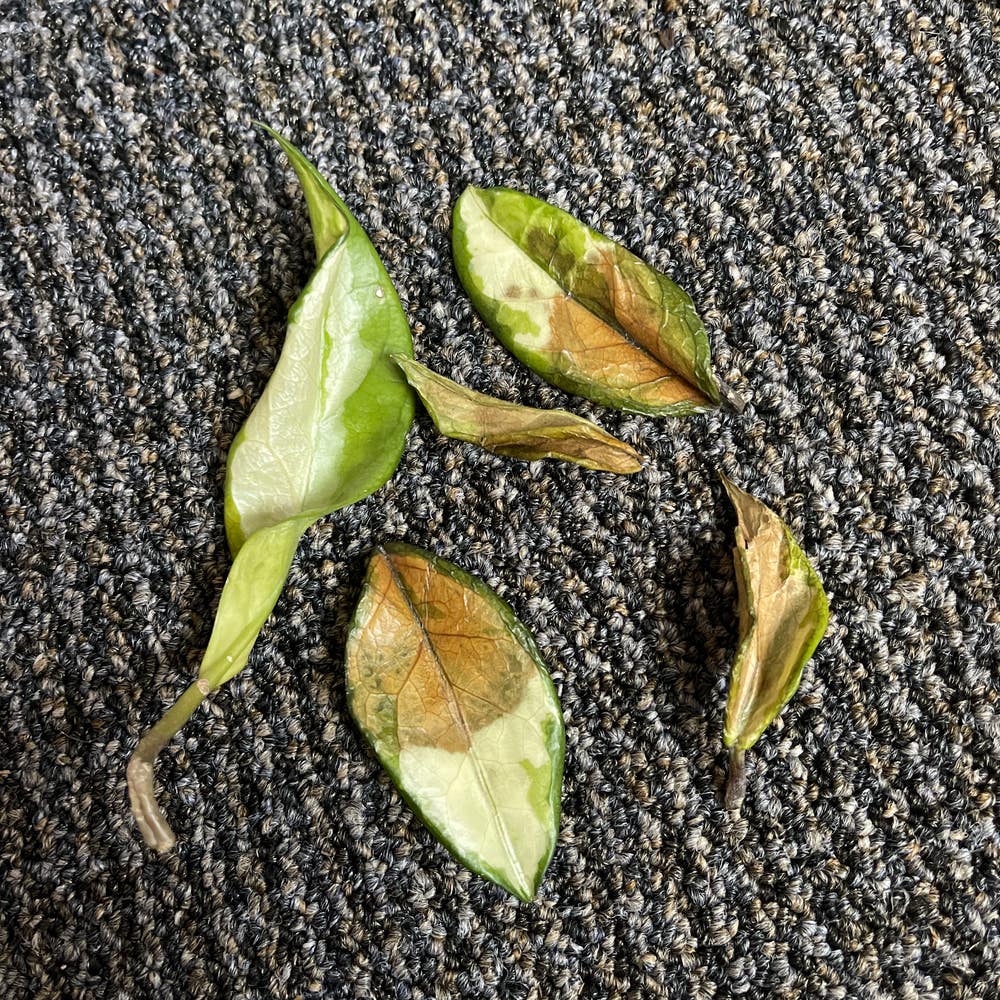
Yellowing leaves? Your Hoya Carnosa Tricolor might be drowning in kindness. Overwatering leads to limp, soft leaves, a classic sign of too much H2O. Root rot could be the silent killer here, thriving in soggy soil like an unwanted guest at a garden party.
🏜️ Underwatering: A Thirsty Hoya
On the flip side, if your Hoya's leaves are more wrinkled than a linen shirt on laundry day, it's parched. Droopy leaves that feel like an old balloon a week after the party? That's underwatering. Wilted leaves can play the double agent, signaling either too much or too little water, so context is key.
🚰 The Root of the Problem
Don't be fooled by a dry surface; get intimate with your plant's soil. If the topsoil is dry, but the pot feels heavier than your last Amazon delivery, it might still be waterlogged. Roots need to breathe, and without proper drainage, they might as well be fish out of water.
🌮 The Tell-Tale Taco Test
The "taco leaf" test isn't just a party trick. If your Hoya's leaf folds easier than a bad poker hand, it's time for a drink. But remember, it's not just about the taco test—check for other signs like wrinkling and yellowing to confirm your diagnosis.
The Balancing Act
It's a fine line between quenching thirst and waterlogging. Your Hoya isn't a cactus, but it's not a water lily either. Find that sweet spot where the soil is as moist as a well-made cake—neither soggy nor bone-dry.

Addressing Light and Environmental Stressors
In the quest to remedy droopy leaves in Hoya Carnosa Tricolor, light and environmental stressors stand out as usual suspects.
🌞 Adjusting Light Exposure
Bright, indirect sunlight is the sweet spot for these tropical beauties. Too much shade, and they slump; too much sun, and they sizzle. Gradually shift your plant towards or away from the light source to avoid shocking its system. It's like adjusting to pool water—dip a toe before you dive.
🌡️ Balancing Temperature and Humidity
Keep the thermostat steady—Hoya Carnosa Tricolor despises temperature tantrums. Aim for a consistent 60-75°F (15-24°C), avoiding drafts and heat sources like they're social faux pas. Humidity-wise, think of a rainforest, not a desert—40-60% humidity keeps leaves plump and happy. If your air is drier than a stand-up comedian, consider a humidifier or a pebble tray to up the ante on moisture.

Corrective Watering Techniques for Droopy Leaves
💧 Modifying Watering Frequency and Quantity
Overwatering is like giving your plants a never-ending bath—it's just too much of a good thing. To fix those droopy leaves, dial back on the aqua. Underwatering, on the other hand, is like sending your plant on a desert trek without a canteen. Strike a balance by checking the top inch of soil; if it's dry, it's time for a drink. Remember, your Hoya Carnosa Tricolor isn't a camel—it can't store water for the long haul.
🛠 Tools for Soil Moisture Assessment
Ditch the guesswork and use tools to measure soil moisture. A simple finger test can work, but for a more high-tech approach, try a soil moisture meter. It's like having a thirst-o-meter for your plant. And for Pete's sake, make sure your pot has drainage holes. It's the difference between a well-drained raincoat and a soggy sweater—your plant will thank you for it.

Enhancing Environmental Conditions
🌡️ Regulating Temperature and Humidity
Temperature swings are like mood swings for your Hoya Carnosa Tricolor—they're not fun for anyone. Keep the thermostat steady; 68-80F is the sweet spot. Too cold and your plant might start shivering, too hot and it's sweating buckets.
💦 Humidity: The Invisible Embrace
Your Hoya's a humidity hog. It craves that moist air like a sponge. If your air's drier than a stand-up comedian's wit, it's time to act. Humidifiers are your best bet, set it and forget it. They keep the moisture just right, without making a spectacle of themselves.
🪴 Pebble Trays: Old School Cool
Pebble trays are the vinyl records of plant care—classic and still effective. Fill a tray with pebbles, add water, but don't let the pot bottom touch the drink. It's a DIY humidity haven.
🌿 Group Therapy
Grouping plants together is like a plant party where everyone benefits from shared humidity. Just make sure they're not too cozy; you want to avoid a fungal fiasco.
💨 Air Circulation: The Breeze Police
Good air circulation is the unsung hero. It's like having a bouncer at the door, keeping the bad stuff out. A gentle fan can keep the air moving without causing a leafy hurricane.
🛍 Accessories: The Humidity Helpers
Humidifiers are the VIPs of the plant world, offering that premium moisture your Hoya craves. Pebble trays? They're the reliable sidekicks, boosting humidity without any fuss. Just remember, no waterlogged roots allowed.
💦 Misting: A Spritz of Bliss
Misting is the equivalent of a refreshing facial spritz on a hot day. A fine mist can give your Hoya a quick humidity fix, but don't overdo it—we're not creating a rainforest here.
🛠 The Right Tools for the Job
Invest in a humidity meter. It's like having a personal trainer for your plant's atmosphere. It'll tell you when to dial up the moisture or when to lay off the water vapor.
Remember, your Hoya Carnosa Tricolor isn't asking for a spa retreat—just a stable, comfy environment where it can thrive without throwing a droopy leaf tantrum.
Preventative Care for Hoya Carnosa Tricolor
💧 Consistent Care Routine
Consistency is your Hoya's best friend. Establish a care routine that caters to its specific needs. Water when the top inch of soil is dry, avoiding the common pitfall of overwatering. Remember, this plant's roots dislike a soggy environment as much as cats despise water.
🌞 Light and Location
Place your Hoya where it can bask in bright, indirect sunlight for 6 to 8 hours daily. East or west-facing windows are prime real estate for these variegated beauties. Too much direct sun can turn your Hoya into a crispy critter, so watch out for that.
💦 Humidity and Temperature
Hoyas are tropical souls, so aim for 40% to 60% humidity. If your home is drier than a stand-up comedian's wit, consider using a humidifier or a pebble tray. Keep the temperature steady; dramatic fluctuations can make your Hoya more dramatic than a soap opera character.
🌱 Fertilization Schedule
Feed your Hoya a balanced fertilizer every 2-3 months during the growing season. In the winter, give it a break – it's not hungry. Keep fertilizer off the leaves unless you want to deal with the horticultural equivalent of acid-washed jeans.
🐛 Pest and Disease Monitoring
Regularly clean the leaves to prevent pest parties and dust accumulation. If you spot any unwanted guests, like aphids or mealybugs, show them the door with insecticidal soap or a mild dish soap solution.
✂️ Pruning and Grooming
Trim any scraggly growth to keep your Hoya looking like it just stepped out of a salon. But don't go Edward Scissorhands on it; a light trim will do.
🍃 Early Detection
Keep an eye out for leaf health indicators such as color changes or spots. If something seems off, adjust your care routine accordingly. It's easier to prevent a problem than to treat one, just like it's easier to avoid eating the whole cake than to burn off the calories later.
Remember, your Hoya Carnosa Tricolor is more than a plant – it's a commitment. Treat it right, and it'll be less maintenance than a pet rock.
⚠️ Safety First
This content is for general information and may contain errors, omissions, or outdated details. It is not medical, veterinary advice, or an endorsement of therapeutic claims.
Always consult a qualified healthcare professional before using any plant as food, medicine, or supplement.
Never eat any plant (or feed one to pets) without confirming its identity with at least two trusted sources.
If you suspect poisoning, call Poison Control (800) 222-1222, the Pet Poison Helpline (800) 213-6680, or your local emergency service immediately.
Spotted an error? Please report it here.
Keep your Hoya Carnosa Tricolor's leaves firm and uplifted 🌱 with Greg's personalized watering schedule and environmental monitoring, ensuring they never droop from neglect or over-care.