🕯 What to Do When Your Variegated Wax Plant Leaves Turn Yellow
Hoya carnosa 'Tricolor'
By the Greg Editorial Team
Oct 09, 2024•6 min read
This article was created with the help of AI so we can cover more plants for you. May contain errors. See one? Report it here.
Transform your variegated wax plant's health and banish yellowing leaves with these vital care strategies! 🌿
- 🌱 Yellow leaves indicate issues: overwatering, underwatering, pests, or nutrient deficiencies.
- 💧 Adjust watering: let top inch of soil dry out to prevent yellowing.
- 🐛 Inspect for pests: mealybugs and spider mites can cause yellowing leaves.
Causes of Yellowing Leaves
💧 Overwatering and Its Effects
Overwatering is a common issue that can lead to yellowing leaves, especially those at the bottom of the plant. You might notice wilting even when the soil feels wet, a clear sign that your plant is struggling.
The consequences of overwatering can be severe. Poor soil drainage can cause root rot, while excess moisture creates a breeding ground for fungal infections, further discoloring leaves.
Prevention Tips:
- Always ensure your pots have drainage holes.
- Use a well-draining soil mix to keep roots healthy.
🚰 Underwatering and Its Signs
On the flip side, underwatering can also cause yellowing leaves, particularly at the tips. If your leaves feel crispy or dry, it’s a strong indicator that your plant needs more water.
Underwatering can stunt growth and lead to overall plant decline. To avoid this, regularly check soil moisture levels and water thoroughly when the top inch of soil feels dry.
🌱 Nutrient Deficiencies
🌿 Nitrogen Deficiency
A nitrogen deficiency manifests as general yellowing of older leaves. This can also result in stunted growth, making your plant look less vibrant.
To treat this deficiency, use a balanced fertilizer that includes nitrogen. This will help restore your plant’s health and vigor.
🧂 Magnesium Deficiency
Magnesium deficiency shows up as yellowing between leaf veins, known as interveinal chlorosis. You may also notice leaf curling or browning at the edges.
Applying magnesium sulfate, commonly known as Epsom salt, to the soil can effectively treat this issue. It’s a simple yet powerful solution to revitalize your plant.
🐛 Pest Infestations
🦠 Mealybugs
Mealybugs are notorious for their cotton-like clusters on leaves and stems. If you see yellowing and wilting leaves, it’s likely a sign of infestation.
To control mealybugs, use insecticidal soap or neem oil. These treatments can help keep your plant pest-free.
🕷️ Spider Mites
Spider mites leave fine webbing on leaves, accompanied by yellow speckling on the surfaces. This can be detrimental to your plant's health.
Increasing humidity and applying miticides can help manage spider mite infestations. Keeping your plant in a more humid environment can deter these pests.
🍄 Fungal Infections and Root Rot
Fungal infections often present as yellowing leaves paired with mushy roots. A foul smell from the soil is another alarming sign that something is wrong.
To treat fungal infections, remove any affected roots and repot the plant in fresh, well-draining soil. If necessary, apply fungicide to combat the infection effectively.
Understanding these causes of yellowing leaves is crucial for maintaining the health of your variegated wax plant. With the right care, you can prevent these issues and ensure your plant thrives.
Next, let’s explore how to diagnose yellow leaves effectively.
Diagnosing Yellow Leaves
Visual Signs to Look For 🌈
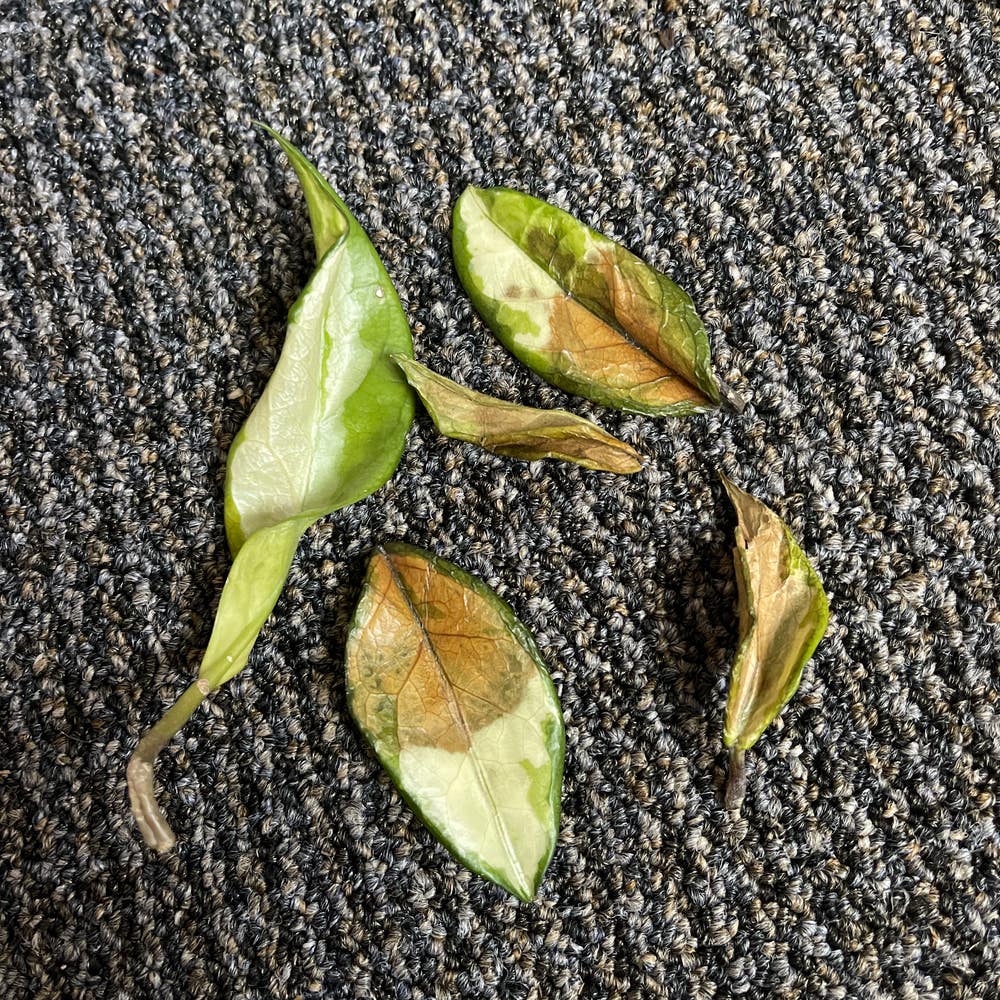
When your variegated wax plant's leaves turn yellow, start by assessing their color and texture. Look for patterns in the yellowing; older leaves often show signs first, indicating potential issues.
Assessing Soil Moisture 💧
Next, check the soil moisture. You can use the finger test—insert your finger into the soil up to the second knuckle—or opt for a soil moisture meter for precise readings.
Checking for Pests 🐜
Inspect the undersides of leaves and stems for pests. A magnifying glass can help you spot tiny invaders that might be causing the yellowing.
Evaluating Light Conditions ☀️
Light exposure is crucial for plant health. Ensure your wax plant receives bright, indirect light; too much direct sunlight can lead to leaf burn and yellowing.
Identifying Nutrient Deficiencies 🥦
Finally, observe for signs of nutrient deficiencies. Yellowing leaves can indicate a lack of nitrogen or magnesium, so consider conducting soil tests to assess nutrient levels.
By carefully diagnosing these factors, you can pinpoint the cause of yellow leaves and take appropriate action. Next, we’ll explore treatment options to restore your plant's health.
Treatment Options
Adjusting Watering Practices 🌊
- Start by determining the correct watering frequency based on soil moisture.
- Water thoroughly until excess drains out of the pot.
- Allow the top inch of soil to dry out between waterings to prevent yellowing leaves.
Fertilizing Appropriately 🌱
- Opt for a balanced fertilizer that includes micronutrients.
- Apply it during the growing season, specifically in spring and summer, every 4-6 weeks for optimal plant health.
Treating Pests and Diseases 🐛
- First, identify the specific pest or disease affecting your variegated wax plant.
- Use appropriate treatments, such as insecticidal soap or fungicides, to combat the issue effectively.
Improving Soil Drainage 💧
- Consider repotting your plant using a well-draining soil mix, like cactus mix or a blend with added perlite.
- Ensure that your pots have adequate drainage holes to prevent water accumulation.
Modifying Light Exposure ☀️
- Relocate your plant to a spot with bright, indirect light to promote healthy growth.
Preventive Measures
Best Watering Practices 🌊
Establishing a consistent watering schedule is crucial for your variegated wax plant. Adjust your routine based on seasonal changes to keep your plant thriving.
Using the Greg plant care app can be a game-changer. This AI-powered tool sends reminders, ensuring you never forget to water your plant.
Ideal Soil Mix for Variegated Wax Plant 🌱
The right soil mix is vital for drainage and aeration. A recommended blend is 50% potting soil, 30% perlite, and 20% orchid bark.
This combination promotes healthy root growth and prevents waterlogging, which can lead to yellowing leaves.
Regular Pest Inspections 🐜
Conduct weekly checks for any signs of pests. Early detection can save your plant from significant damage.
Using sticky traps can help monitor pest populations effectively. They catch unwanted visitors while you focus on nurturing your plant.
Seasonal Care Adjustments 🌦️
Adjust your watering and fertilization routines according to seasonal growth patterns. Plants often require more water during their active growing season.
In winter, consider increasing humidity levels. Indoor air can become dry, which may stress your plant.
Importance of Proper Light Conditions 💡
Ensure your variegated wax plant receives adequate light throughout the year. Bright, indirect light is ideal for vibrant growth.
Rotating your plant periodically helps it grow evenly. This simple action can prevent one-sided growth and promote a fuller appearance.
By implementing these preventive measures, you can maintain a healthy variegated wax plant and minimize the risk of yellowing leaves. Next, let’s explore how to monitor your plant’s recovery after treatment.
Post-Treatment Care
Monitoring Recovery 🌱
After treatment, keep a close eye on your variegated wax plant. Look for changes in leaf color and overall vigor to gauge its recovery.
Signs of Improvement 🌟
New growth is a fantastic sign that your plant is bouncing back. If you notice green color returning to previously yellow leaves, you're on the right track!
When to Repot 🪴
Repotting may be necessary if you see roots growing out of drainage holes or if the soil appears compacted and isn't draining well. These signs indicate that your plant needs more space to thrive.
Long-Term Care Strategies 🔑
Consistency is key for long-term health. Regularly assess your plant's condition and adjust your care practices to ensure it continues to flourish.
By staying attentive and proactive, you can help your variegated wax plant thrive for years to come. Now, let’s explore how to prevent future issues!
⚠️ Safety First
This content is for general information and may contain errors, omissions, or outdated details. It is not medical, veterinary advice, or an endorsement of therapeutic claims.
Always consult a qualified healthcare professional before using any plant as food, medicine, or supplement.
Never eat any plant (or feed one to pets) without confirming its identity with at least two trusted sources.
If you suspect poisoning, call Poison Control (800) 222-1222, the Pet Poison Helpline (800) 213-6680, or your local emergency service immediately.
Spotted an error? Please report it here.
Revive your variegated wax plant's vibrant leaves 🌿 by using Greg's tailored watering and nutrient reminders to tackle yellowing caused by overwatering, pests, or nutrient deficiencies!