🌼 How to Fix Your Variegated Wax Plant Wilting
Hoya carnosa 'Tricolor'
By the Greg Editorial Team
Oct 09, 2024•6 min read
This article was created with the help of AI so we can cover more plants for you. May contain errors. See one? Report it here.
Transform your wilting Variegated Wax Plant 🌱 into a thriving beauty with these essential care tips!
- 💧🌡️ Wilting is caused by water stress, heat stress, or environmental sensitivity.
- 🌱 Overwatering leads to root rot; underwatering causes dry, crispy leaves.
- 🌞 Relocate to indirect sunlight to prevent leaf scorch and heat stress.
Causes of Wilting
🌊 Common Causes
Water Stress
Water stress is a leading culprit behind wilting in your Variegated Wax Plant. Overwatering can lead to yellowing leaves and root rot, while underwatering results in dry, crispy leaves and drooping.
Heat Stress
High temperatures can cause leaves to curl or become limp, signaling heat stress. Additionally, direct sunlight exposure may scorch the leaves, leading to further wilting.
Environmental Sensitivity
Sudden changes in humidity or temperature can shock your plant, causing it to wilt. Keeping a stable environment is crucial for its health.
🔍 Uncommon Causes
Disease-Related Wilting
While rare, pathogenic wilt can affect the Variegated Wax Plant under specific conditions. Fungal infections are unlikely but possible, typically arising from overwatering.
Understanding these causes is the first step in addressing wilting issues effectively. Next, we'll explore how to diagnose the problem accurately.
Diagnosing Wilting
🕵️♂️ Step-by-Step Guide to Diagnosis
Diagnosing wilting in your variegated wax plant is essential for effective care. Follow these simple steps to pinpoint the issue.
💧 1. Assess Watering Habits
Start by checking your watering habits. Use your finger to test the top inch of soil; if it feels dry, your plant might be underwatered.
🌡️ 2. Evaluate Environmental Conditions
Next, measure the temperature and humidity around your plant. The ideal range is between 60°F to 80°F (15°C to 27°C) with moderate humidity.
🍃 3. Inspect Leaves
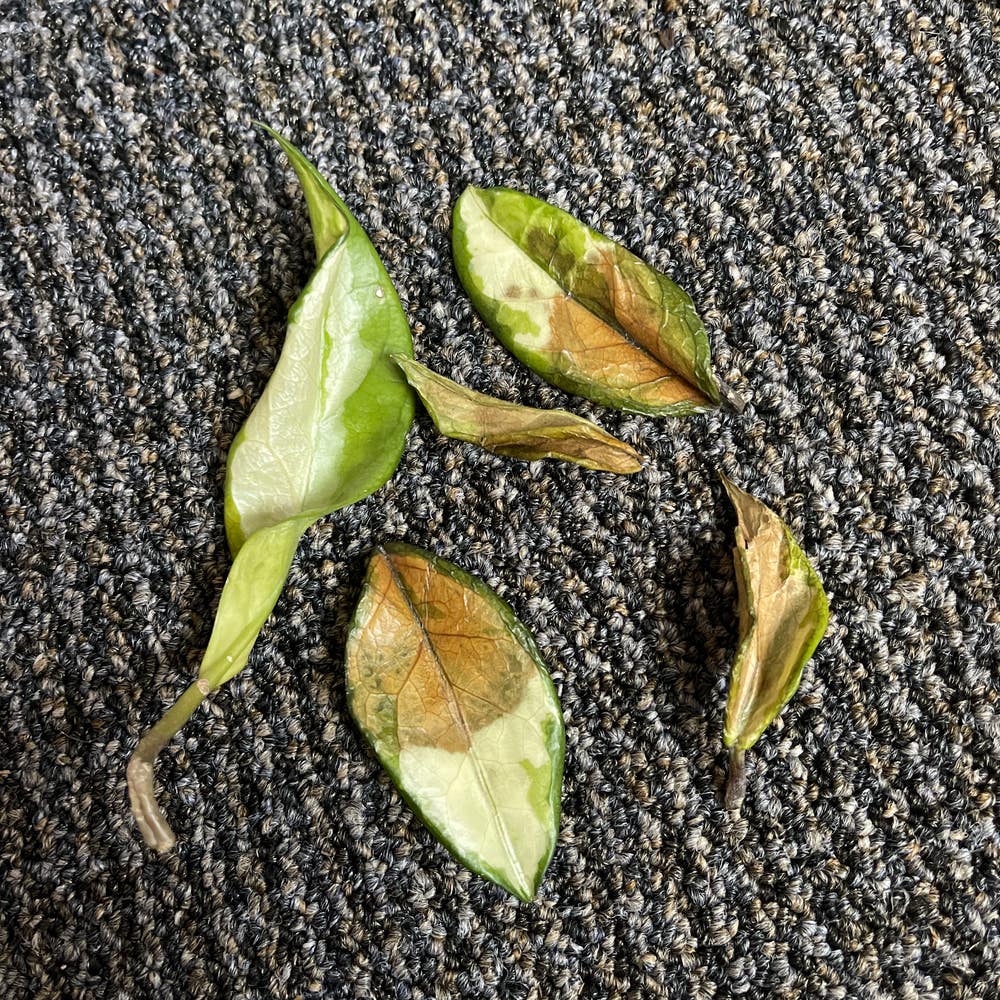
Finally, take a close look at the leaves. Yellowing or mushy leaves often indicate overwatering, while dry, crispy edges suggest underwatering.
🔥 Scorch Marks
Don’t forget to check for scorch marks on the leaves. These can indicate heat stress or excessive sunlight exposure, which can lead to wilting.
By following these steps, you can effectively diagnose the cause of your plant's wilting. This understanding will guide you in implementing the right solutions to revive your variegated wax plant.
Solutions for Wilting
🌊 Actionable Advice for Water Stress
For Overwatering
If your Variegated Wax Plant is suffering from overwatering, the first step is to let the soil dry out completely. This will help prevent root rot, a common issue caused by excess moisture.
Ensure your pot has drainage holes. Good drainage is essential for keeping the roots healthy and preventing water from pooling at the bottom.
For Underwatering
In cases of underwatering, water your plant thoroughly until you see excess water draining out of the bottom. This ensures the roots receive adequate moisture.
To avoid future issues, implement a consistent watering schedule. Regular checks will help you maintain the right moisture levels.
☀️ Actionable Advice for Heat Stress
Relocation Strategies
If your plant is wilting due to heat stress, consider relocating it to a shadier spot during peak sunlight hours. This can prevent leaf scorch and keep your plant happy.
Additionally, using a humidity tray or misting the leaves can help increase moisture levels. This is especially useful in dry environments.
🦠 Actionable Advice for Disease-Related Wilting
Addressing Fungal Issues
If you suspect fungal issues, start by removing any affected leaves. This helps improve air circulation and reduces the risk of spreading the problem.
If the issue persists, consider using a fungicide. Be sure to follow the package instructions carefully to ensure effective treatment.
By addressing these common causes of wilting, you can help your Variegated Wax Plant thrive. Next, let’s explore preventive measures to keep your plant healthy and vibrant.
Preventive Measures
Tips to Minimize Future Wilting 🌱
To keep your variegated wax plant thriving, establish a consistent watering schedule. Adjust your routine based on seasonal changes to ensure your plant gets just the right amount of moisture.
Regularly monitor environmental conditions to prevent sudden fluctuations. A stable environment is key to avoiding stress that can lead to wilting.
Environmental Adjustments ☀️
Position your plant in a spot with indirect sunlight. This simple adjustment can protect the leaves from scorching and promote healthy growth.
Consider using a humidity gauge to maintain optimal moisture levels. Keeping an eye on humidity can make a significant difference in your plant's overall health.
By implementing these preventive measures, you can create a nurturing environment for your variegated wax plant. This proactive approach will help you enjoy a vibrant, flourishing plant for years to come.
Next, let’s explore effective techniques for reviving a wilted plant.
Reviving a Wilted Plant
🌊 Techniques for Bottom Watering
Bottom watering is a gentle way to revive your variegated wax plant. Simply fill a basin with water and place the pot inside, allowing the soil to soak up moisture from the bottom.
Keep an eye on soil moisture levels to prevent over-saturation. This method encourages healthy root growth and helps avoid the stress of overwatering.
🚪 Temporary Relocation Strategies
If your plant is wilting, consider moving it to a more stable environment. A spot with consistent temperature and humidity can work wonders for recovery.
Try to avoid frequent relocations, as this can add stress to your plant. Stability is key to helping it bounce back.
✂️ Pruning Techniques for Damaged Leaves
Pruning is essential for revitalizing your plant. Use clean, sharp scissors to remove any wilted or damaged leaves, making sure to cut back to healthy tissue.
This not only improves the plant's appearance but also encourages new growth. A little care can go a long way in helping your wax plant thrive again.
Reviving a wilted plant can be a rewarding experience. With the right techniques, you'll see it flourish in no time. Next, let’s explore when it’s time to seek expert help for persistent issues.
When to Seek Help
Signs That Require Expert Assistance 🌱
If your variegated wax plant is wilting persistently despite your best care efforts, it’s time to consider seeking help. This could indicate underlying issues that you might not be equipped to handle.
Look out for signs of severe disease or pest infestation. Yellowing leaves, unusual spots, or visible pests can signal a problem that needs expert intervention.
Resources for Plant Care Support 🌍
Local nurseries can be a goldmine for expert advice. Knowledgeable staff can provide insights tailored to your specific plant issues.
Additionally, online plant care communities like Greg offer a wealth of resources and support. Engaging with fellow plant enthusiasts can help you troubleshoot and find solutions to revive your wilting plant.
In the journey of plant care, knowing when to ask for help can make all the difference. With the right support, you can turn your wilting wax plant into a thriving beauty once again.
⚠️ Safety First
This content is for general information and may contain errors, omissions, or outdated details. It is not medical, veterinary advice, or an endorsement of therapeutic claims.
Always consult a qualified healthcare professional before using any plant as food, medicine, or supplement.
Never eat any plant (or feed one to pets) without confirming its identity with at least two trusted sources.
If you suspect poisoning, call Poison Control (800) 222-1222, the Pet Poison Helpline (800) 213-6680, or your local emergency service immediately.
Spotted an error? Please report it here.
Reviving your Variegated Wax Plant from wilting is within reach, and Greg can empower you with personalized watering reminders and environmental insights 🌿 to help your plant flourish!