Why Are There Brown Spots on My Hoya Carnosa Tricolor?
Hoya carnosa 'Tricolor'
By the Greg Editorial Team
Jun 15, 2024•11 min read
This article was created with the help of AI so we can cover more plants for you. May contain errors. See one? Report it here.
Solve your Hoya's brown spot puzzle 🧩 and nurture a vibrant, spotless Tricolor with ease! 🌿
- Brown spots can signal over/underwatering, sunburn, or disease.
- Adjust care routines based on spot appearance and location.
- Consistent care prevents brown spots; prune affected leaves.
Identifying the Brown Spots
🕵️ Characteristics of Brown Spots
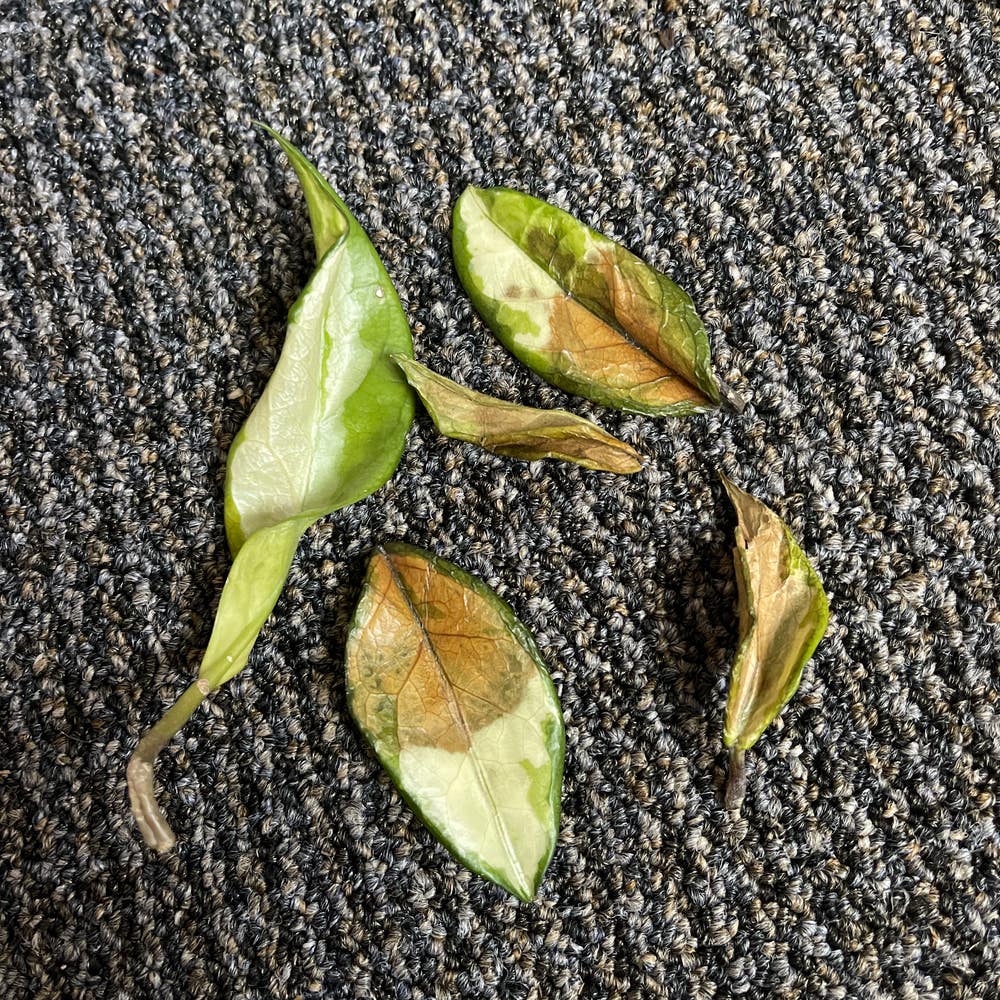
Brown spots on your Hoya Carnosa Tricolor are alarm bells. They might show up as rusty patches, indicating possible nutrient issues, or as distinct circular spots that could point to fungal or bacterial problems. Unlike the gentle yellowing of aging leaves, these spots are a cry for help.
🎯 Spot Appearance and Location
Location matters. Spots on mature leaves versus young ones can signal different issues. Size and quantity also tell a tale; a few large spots differ from numerous tiny ones. Appearance is key—dry, water-soaked, or brittle spots each whisper a different story of plant distress.
👀 Visual Indicators of Potential Issues
Look for spots or blights on leaves, which may suggest fungal infections or pest infestations. A sudden change in leaf texture or color calls for a deeper dive into environmental conditions. Remember, the devil is in the details.
🛠 Diagnostic Steps
To get to the bottom of this, inspect leaves, stems, and roots for patterns of damage. Check the soil's moisture—overwatering is a frequent offender. If you're scratching your head in confusion, consider a lab test as a last resort. It's like CSI for your plant.
🌞 If the Spots Appear in Sunny or Dry Conditions
Dry spots with scorched edges could mean too much sun, while spots with a red or yellow halo might scream fungal or bacterial infection. If you're still unsure, play detective with your watering schedule and root health to rule out over or underwatering issues.

Overwatering and Brown Spots
Overwatering is the silent assassin of Hoya Carnosa Tricolor, often leaving brown spots as its calling card. Root rot is the gruesome aftermath of excessive moisture, with the plant's roots drowning in their own home.
🚱 Recognizing Overwatering
Soggy soil is a dead giveaway; if the earth feels like a wet sponge days after watering, you're overdoing it. Yellowing leaves and limp stems are the plant's cry for help, signaling that it's time to dial back on the H2O.
📏 Adjusting Watering Habits
Let's get down to brass tacks: check the soil before watering. Stick your finger in; if the top inch feels like a desert, it's time to water. If it's damp, give it a break. Remember, your plant's not a fish—it doesn't need to swim.
🌬️ Seasonal Considerations
Plants drink less in the cooler months. Watering should be less frequent when the air is chilly, and evaporation is on a go-slow.
🌱 Pot and Soil Wisdom
Drainage is key. Use pots that let water escape, not ones that hold onto it like a grudge. And if you're using a pot that's too big, it's like throwing a small fish into a vast ocean; the soil will stay wetter for longer, upping the risk of overwatering.
🛠 Tools and Tricks
Consider a self-watering pot to keep moisture levels in check. It's like a life jacket for your plant, keeping it afloat but not submerged. And for those serial overwaterers, set reminders on your phone—it's the 21st century, let's use the tech we have.
💧 The Right Water
Use room-temperature water. Cold water can shock the roots like a horror movie jump scare. Keep it tepid, keep it friendly.
🕳️ The Drainage Dilemma
Poorly designed pots are the bane of healthy roots. If your pot's a trap with no escape for water, repot to something with drainage holes. It's like giving your plant a ticket out of Alcatraz.
🌿 Fertilizer Faux Pas
Over-fertilizing is like force-feeding; it does more harm than good. If you've been heavy-handed with the feed, take a break. Let the plant breathe and focus on getting the watering right.
Final Thoughts
Remember, moderation is the spice of life and the savior of plants. Keep the soil moist but not waterlogged, and your Hoya Carnosa Tricolor will thank you by staying spot-free.

Underwatering and Leaf Stress
💧 Spotting the Signs of Thirst
Underwatering doesn't just leave your Hoya Carnosa Tricolor high and dry; it brands it with unsightly brown spots. These blemishes often start at the tips and edges, creeping inward as the drought continues.
📖 The Soil Tells a Story
Don't wait for your plant to throw a tantrum before you water it. Stick a finger into the soil—about an inch should do. If it feels like a stale biscuit, it's time for a drink. Dry soil is a telltale sign your plant's thirstier than a cactus in the Sahara.
🗓 Crafting a Watering Schedule
Consistency is more than a buzzword; it's a lifeline for your Hoya. Establish a watering schedule that keeps the soil as evenly moist as a well-sponged cake. But remember, like people, plants have changing needs. Adjust for seasons, growth spurts, and those moody weather patterns.
⚖️ The Balancing Act
It's a fine line between parched and waterlogged. Your Hoya isn't auditioning for a role as a swamp creature; it craves balance. Ensure the pot has adequate drainage to avoid soggy feet. If you're overcompensating and turning your plant into an aquatic feature, it's time to dial it back.
🌱 Tune into Your Plant
Listen to your Hoya; it's more communicative than you think. Drooping leaves and a lackluster vibe scream for hydration. But don't go overboard—no plant enjoys a deluge. Water thoroughly yet gently, like a soft-spoken bartender who knows just when to cut you off.

Sunburn as a Cause for Brown Spots
☀️ Recognizing Sunburn Damage
Sunburn on Hoya Carnosa Tricolor leaves manifests as dry, brownish spots, often with scorched tips. These spots are particularly noticeable on the variegated portions of the leaves, where the lighter colors succumb more readily to damage.
🌿 Causes and Prevention
Excessive direct sunlight is the primary culprit. Variegated leaves are more sensitive due to their lack of chlorophyll in the lighter areas, making them less protected. To prevent sunburn, slowly acclimate your plant to brighter conditions, avoiding abrupt transitions to intense light.
💡 Optimal Lighting Conditions
Hoya Carnosa Tricolor thrives in bright, indirect light. Consider filtering direct sunlight with sheer curtains or placing the plant a few feet away from a south-facing window. Monitor your plant for signs of stress when changing its location or during seasonal light shifts.
🌡️ Temperature Considerations
Keep in mind that temperatures above 80 degrees Fahrenheit can exacerbate the risk of sunburn. Ensure your plant is not situated near heat sources like radiators, which can dry out the leaves and increase the likelihood of brown spots.
🌱 Acclimatization Strategy
If you need to move your Hoya to a brighter spot, do it gradually. Start by placing it in a bright area out of direct sun and then incrementally increase its exposure. This helps the plant build resilience to the stronger light without the shock that leads to sunburn.
Fungal Infections Leading to Brown Spots
🍄 Identifying Fungal Diseases
Fungal infections are the plant equivalent of a bad cold that just won't quit. Brown spots on your Hoya Carnosa Tricolor could be the calling card of these unwelcome guests. They come in various shapes and sizes, but typically, they're tan to black and may start small, only to expand like a bad reputation. Look for spots that could be raised or have a concentric ring pattern—these are classic signs that fungi have moved in.
🛠 Treatment Strategies
When it comes to treatment, think of it as a game of whack-a-mole. Organic options like a baking soda and soap mix might do the trick for mild cases. But if the fungi have thrown a full-blown party, you might need to crash it with copper fungicides. Always read the label like it's the last set of instructions you'll ever get—because for the fungi, it just might be.
🚫 Prevention Tactics
Prevention is about creating a no-fun zone for fungi. Start by watering the soil, not the foliage, as if you're avoiding spoilers for your favorite show. Keep your Hoya Carnosa Tricolor in well-draining soil and let the top layer dry out before giving it another drink. Air circulation is your best friend here; it's like social distancing for plants. And remember, too much humidity is a fungi fiesta—so keep it balanced.
💨 Humidity and Air Circulation
Humidity and air circulation are the yin and yang of plant health. Too much humidity without airflow, and you're basically rolling out the red carpet for fungal infections. Use a pebble tray or a humidifier to keep the air around your Hoya Carnosa Tricolor just moist enough. And keep it breezy—think gentle morning breeze, not hurricane-force winds.
Pruning Affected Foliage
⏰ When to Prune
Timing is everything when it comes to pruning your Hoya Carnosa Tricolor. Wait until you spot the tell-tale brown spots. If they're spreading like gossip in a small town, it's time to grab your shears. But don't get snip-happy; only remove leaves that are more brown than a well-done steak.
🛠 How to Prune
Sharp, clean tools are your best friends here. Think of pruning like surgery; you wouldn't want a doctor using a rusty scalpel, would you? Cut just above a leaf node, and don't leave a stub—it's not a good look, and it's an open invitation for pathogens to a house party at your plant's expense.
🧹 Cleaning Up
After you've played plant surgeon, clean up the crime scene. Fallen leaves are like a free buffet for pests and diseases, so get rid of them faster than last season's fashion. And remember, those pruned leaves are persona non grata in your compost pile—dispose of them like a top-secret document.
🚑 Pruning for Health
Pruning isn't just about triage; it's about prevention. By thinning out your Hoya, you're giving it a better airflow than a high-end HVAC system, which helps keep those pesky fungal diseases at bay. Plus, it's easier to spot any new outbreaks, like finding a typo in a tweet.
🧼 Sterilize Your Tools
Post-pruning, sterilize your tools as if they're going into quarantine. A quick alcohol swipe will do—think of it as hand sanitizer for your shears. This keeps your plant from catching something nastier than a cold from its next-door neighbor, the Ficus.
🌱 Encouraging Recovery
Once you've pruned, give your Hoya some TLC. It's been through a lot, like a toddler after a haircut. Ensure it has the right light, water, and humidity to bounce back stronger, like a well-rested superhero.
Consistent Care for Prevention
Regular care is the backbone of keeping your Hoya Carnosa Tricolor in top shape. Let's dive in.
💧 The Role of Routine
Consistency is your Hoya's best buddy. It craves a stable routine like a cat does a sunny windowsill. Nailing down a care schedule that mimics its natural habitat is crucial. This means watering it just right—not too much, not too little. During spring and summer, aim for every 1 to 2 weeks, and in the cooler months, ease up to every 2 to 4 weeks.
🌞 Stable Environment
Your Hoya's comfort zone is a balmy 65-80℉. Keep it away from drafts like it's the plague. And light? Bright, indirect sunlight is the sweet spot. Too much direct sun and your Hoya will throw a fit with brown spots. Aim for 6 to 8 hours of indirect light daily to keep those leaves blushing with pink variegation.
🌱 Soil and Repotting
Well-draining soil is non-negotiable. A mix of peat moss, perlite, orchid bark, and pumice will do the trick, keeping the pH happy between 6.0 and 7.0. And when your Hoya starts feeling cramped, give it a new home every 1 to 2 years.
🌿 Fertilization
Feed your green friend a balanced fertilizer once a month during the growing season. It's like giving your plant a little pep talk, encouraging it to grow and maybe even show off some flowers after a few years.
💨 Air Circulation and Humidity
Good air circulation keeps fungal party crashers at bay. But don't let it dry out—Hoyas like a bit of humidity. Just don't go turning your living room into a sauna.
🐜 Pest Control
Keep an eye out for uninvited guests like aphids and mealybugs. Spot them? Show them the door with some diluted neem oil or insecticidal soap.
✂️ Pruning
Snip away any sad, brown-spotted leaves. It's like giving your plant a haircut to help it look and feel its best. Plus, it prevents any issues from spreading.
Stick to these tips, and your Hoya Carnosa Tricolor will be less drama queen and more thriving green.
⚠️ Safety First
This content is for general information and may contain errors, omissions, or outdated details. It is not medical, veterinary advice, or an endorsement of therapeutic claims.
Always consult a qualified healthcare professional before using any plant as food, medicine, or supplement.
Never eat any plant (or feed one to pets) without confirming its identity with at least two trusted sources.
If you suspect poisoning, call Poison Control (800) 222-1222, the Pet Poison Helpline (800) 213-6680, or your local emergency service immediately.
Spotted an error? Please report it here.
Eradicate brown spots 🍂 on your Hoya Carnosa Tricolor with Greg's custom care plans and real-time community support for a spotless plant journey!