Should I Repot My Cathedral Window Haworthia And If So, How?
Haworthia cymbiformis
By the Greg Editorial Team
Jun 18, 2024•4 min read
This article was created with the help of AI so we can cover more plants for you. May contain errors. See one? Report it here.
Learn to spot when your Haworthia 🌿 needs repotting and master the perfect pot transition!
- Visible roots and waterlogged soil signal it's repotting time.
- Choose a pot 1-2 inches larger with good drainage.
- Post-repot care: water sparingly and monitor for distress.
Spotting the Tell-Tale Signs It's Time for a New Home
🌱 Root Tango in a Tiny Pot
Your Haworthia's roots should be comfortably underground, not making a break for it like a jailbird. Visible roots at the pot's bottom or topsoil are your cue: it's repotting o'clock.
💧 Water Woes and the Soggy Bottom Blues
If watering your plant is like pouring water down a drain, or the soil feels like a swamp, it's not just quirky—it's a cry for help. Waterlogged soil means your pot's too small to hold moisture where it counts.
🌱 The Stunted Growth Conundrum
When your plant's growth is as stagnant as a teenager refusing to leave their room, it's not laziness—it's a space issue. A Haworthia that's stopped growing is a plant in dire need of a new pot.

Picking the Perfect Pot
🏠 Size Matters: Finding the Right Fit
Selecting a pot for your Cathedral Window Haworthia is like picking a new apartment – size is key. It should be snug, but with room to grow; typically, 1-2 inches larger in diameter than the current one hits the sweet spot.
🌐 Material World: Pros and Cons
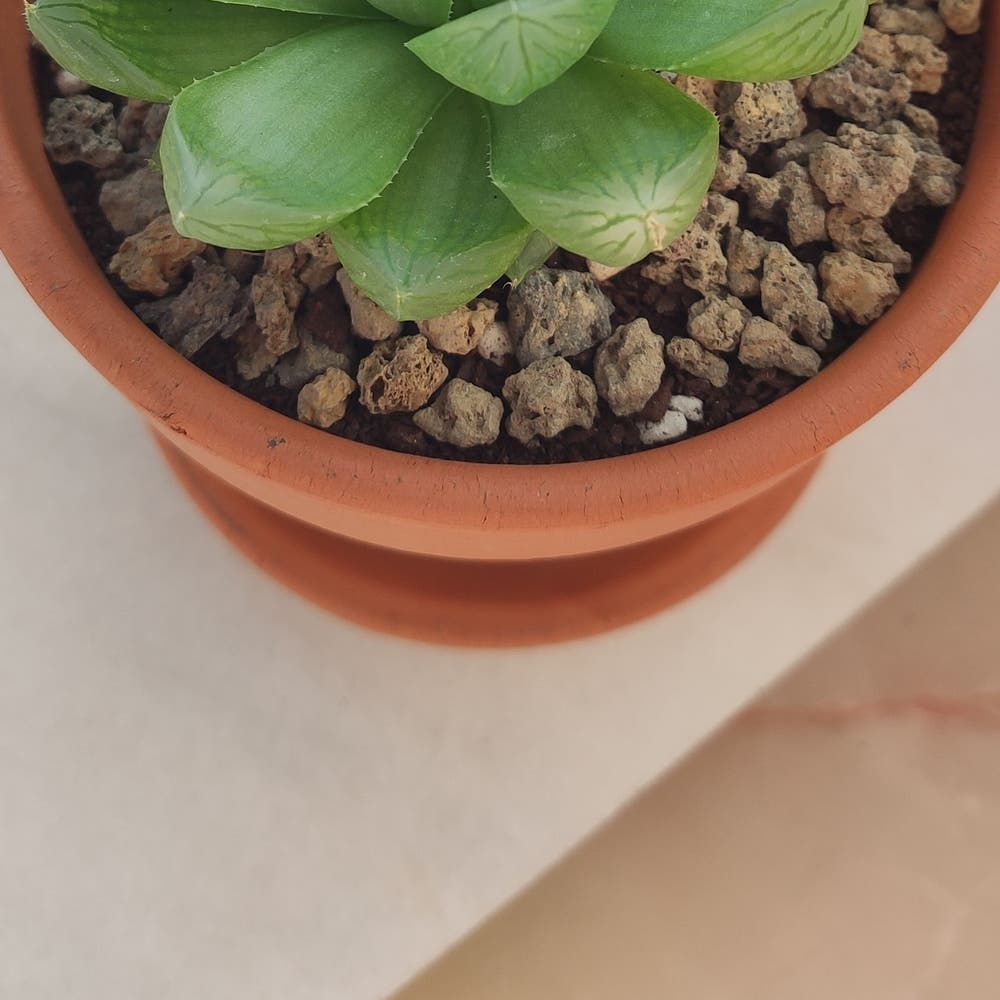
Terra cotta pots, with their porous walls, are great for evaporation, making them a go-to for the overzealous waterer. Ceramic pots are less breathable but hold style points, while plastic pots keep moisture in, ideal for those in drier climates. Choose based on your watering habits and climate conditions.
🚰 Drainage Drama: Ensuring a Happy Plant
Drainage holes aren't just a feature; they're a lifeline. Without them, you're inviting root rot to the party – and that's a guest no plant wants. Whether terra cotta, ceramic, or plastic, make sure your pot has a hole at the bottom to let excess water escape.

The Repotting Rodeo: A Step-by-Step Guide
🏡 Prepping the New Pad
Before you dive into the repotting process, ensure your new pot is ready to become the Haworthia's next abode. Start by covering the drainage holes with mesh or broken pottery shards to prevent soil from escaping. Then, fill the bottom with a layer of fresh potting mix, tailored for succulent health—think well-draining and airy.
🌱 The Gentle Uproot
It's time to coax your Haworthia out of its snug pot. Water the plant lightly the day before to simplify the process. Tilt and wiggle the pot, or use a knife to gently separate the roots from the pot's edges. Be patient; rough handling can damage the plant's fleshy roots.
🩺 Root Health Check-Up
With your Haworthia free, inspect the root ball. Snip any dead or overlong roots to promote healthy growth. This is also the moment to evict any unwelcome pests that might have set up camp. Clean tools are a must—think surgery-level sterile.
🌿 Soil Selection and Plant Placement
Select a potting mix that strikes the right balance between moisture retention and drainage. A mix of akadama and pumice or LECA, peat, pine bark, and sand works wonders. Place your plant in the new pot, ensuring it sits at the same depth as before. Fill in with your chosen soil mix, tap the pot to settle the soil, but don't compress it—roots need breathing room.

Immediate Aftercare: The First Few Weeks
💧 Watering Wisdom Post-Repot
Ease up on the aqua. Your Cathedral Window Haworthia's roots are tender after the repot shuffle, so don't drown them in enthusiasm. Wait a few days before the first watering to let the roots settle. Then, introduce water sparingly—think of it as a light drizzle rather than a downpour. Over the next few weeks, keep the soil slightly moist but never soggy. Remember, Haworthias are succulents; they store water like a camel, so less is more.
🌞 Acclimation and Observation
Your plant's not a sun worshipper post-repot. Shield it from direct sunlight to avoid a botanical sunburn. Place it in a spot with bright, indirect light where it can bask without the risk of turning crispy. Monitor your plant like it's the season finale of your favorite show. Look out for signs of distress—yellowing leaves might signal overwatering, while wilting could mean it needs a drink. Adjust care as needed, and don't forget to whisper encouragements; plants like pep talks too.
⚠️ Safety First
This content is for general information and may contain errors, omissions, or outdated details. It is not medical, veterinary advice, or an endorsement of therapeutic claims.
Always consult a qualified healthcare professional before using any plant as food, medicine, or supplement.
Never eat any plant (or feed one to pets) without confirming its identity with at least two trusted sources.
If you suspect poisoning, call Poison Control (800) 222-1222, the Pet Poison Helpline (800) 213-6680, or your local emergency service immediately.
Spotted an error? Please report it here.
Ensure your Cathedral Window Haworthia's roots 🌱 have the space they need to grow by using Greg's custom reminders for when it's time to repot and how to do it right.