🐍 How Much Should I Water My Bromeliad Medusa?
Neoregelia 'Medusa'
By the Greg Editorial Team
Jun 18, 2024•4 min read
This article was created with the help of AI so we can cover more plants for you. May contain errors. See one? Report it here.
Ensure your Bromeliad Medusa flourishes 🌿 by nailing the perfect watering rhythm—your green thumb's secret weapon!
- Look for vibrant leaves and a dry cup to know when to water.
- 🌡️💧 Adjust water with seasons, temperature, and humidity for optimal care.
- Central cup technique: pour until overflow, flush weekly to prevent stagnation.
When to Water Your Bromeliad Medusa
💧 Reading the Plant's Thirst Cues
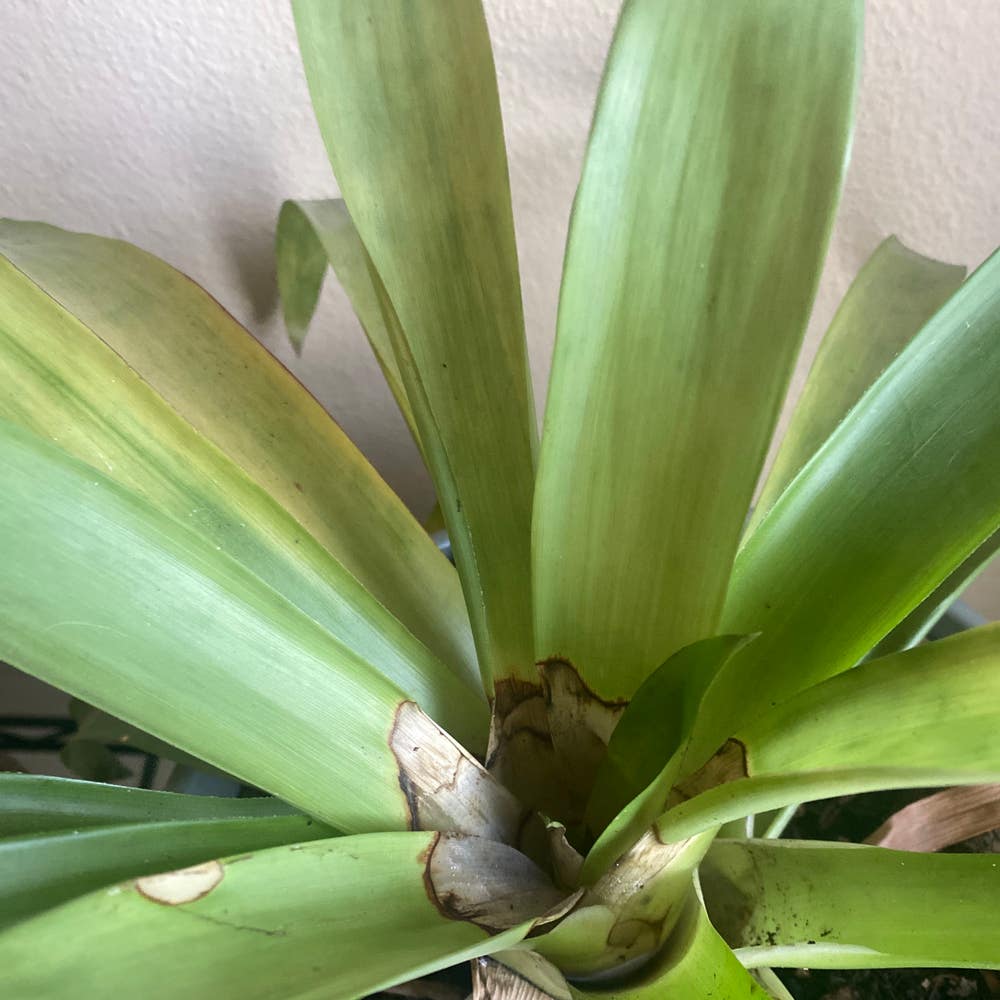
Bromeliad Medusa plants are straightforward when they need water. Look for leaves that are less vibrant and a central cup that's dry. This plant stores water in its central cup, so if it's empty, it's time to hydrate.
🚰 Understanding the plant's water storage strategy
Bromeliads have a built-in reservoir. Their overlapping leaves create a central cup that holds water for the plant to use over time. Ensure this cup is filled to keep your Medusa quenched.
🌦 Seasonal Watering Shifts
🌱 Adjusting watering frequency with the seasons
As seasons change, so should your watering habits. Increase watering in the warmer months when the plant is actively growing. In winter, dial it back; think cozy blanket, not a wet suit.
🌡 How temperature and humidity play a role
Temperature and humidity aren't just small talk for your Bromeliad Medusa; they're critical. High heat might call for more frequent watering, but high humidity means you can ease up. Keep an eye on these factors to adjust your watering schedule accordingly.

How to Water Your Bromeliad Medusa
💧 The Central Cup Technique
Filling the central cup of your Bromeliad Medusa is akin to hitting the bullseye—it's where you want your water to go. Pour room temperature distilled or rainwater directly into the cup until it overflows slightly. This ensures the plant gets enough moisture without the soil becoming waterlogged.
To prevent a science experiment gone wrong in the form of stagnant water, flush the central cup every week. This keeps your plant's personal pool fresh and free from unwanted microorganisms that could cause rot.
💦 Soil Moisture Balance
Now, let's talk dirt. Your Bromeliad's soil should feel like a well-wrung sponge—moist but not dripping. Watering the soil should be an occasional affair, only when the top inch feels like a desert. Remember, Bromeliads have a knack for drought survival; they're tougher than they look.
Drainage is your best friend here. Ensure your pot has holes at the bottom to let any excess water escape. Think of it as an emergency exit for water that overstays its welcome. No one likes soggy feet, especially not your Bromeliad Medusa.

Recognizing Watering Mishaps
💧 Signs of Overwatering
Yellow leaves might as well be flashing warning lights. They're the classic distress call of a Bromeliad Medusa that's drowning in too much TLC. If the leaves are not just yellow but also swollen, it's a surefire sign that your plant's feet are too wet.
Mushy stems are another red flag. They're the botanical equivalent of a waterlogged sponge, and they mean you need to cut back on the hydration stat. Foul-smelling soil? That's the stench of regret and overwatering.
Fungal growth on the soil is like spotting mold on bread – it's not going to get better, and it's time to change your approach. If you see any of these signs, it's time to let the soil dry out and reassess your watering routine.
💦 Signs of Underwatering
On the flip side, if your Bromeliad Medusa's leaves are as crispy as autumn leaves, it's a cry for water. Leaves that drop from the bottom up are your plant's way of saying it's parched.
Wrinkled leaves are a telltale sign that your plant has been on a water strike. It's like checking your bank account and finding it empty – a clear indication that you need to provide some liquidity.
If the soil is drier than a stand-up comedian's wit, it's time to give your plant a long, thirst-quenching drink. Remember, underwatering is like forgetting to feed your pet – neither will thank you for it.

Fine-Tuning Your Watering Routine
🌡️ Adapting to Your Home Environment
Your Bromeliad Medusa isn't just another pretty face; it's a living barometer for your home's microclimate. Customize your watering schedule to match the unique humidity, temperature, and light conditions of your indoor jungle. If your space is more Sahara than rainforest, you'll need to water more frequently. Conversely, a humid abode means easing up on the hydration.
Observing and Responding to Your Plant
Like a plant-based mood ring, your Bromeliad Medusa's leaves will tell you everything—if you're willing to listen. Perkier leaves post-watering? You've hit gold. But if the tips are browning or the plant's center is more swamp than sanctuary, it's time to course-correct. Remember, this is a dialogue, not a monologue; your plant's feedback is the best guide to perfecting that watering rhythm.
⚠️ Safety First
This content is for general information and may contain errors, omissions, or outdated details. It is not medical, veterinary advice, or an endorsement of therapeutic claims.
Always consult a qualified healthcare professional before using any plant as food, medicine, or supplement.
Never eat any plant (or feed one to pets) without confirming its identity with at least two trusted sources.
If you suspect poisoning, call Poison Control (800) 222-1222, the Pet Poison Helpline (800) 213-6680, or your local emergency service immediately.
Spotted an error? Please report it here.
Keep your Bromeliad Medusa's leaves vibrant and perky 🌿 with Greg's custom watering reminders, ensuring you never over or underwater based on your home's unique conditions.