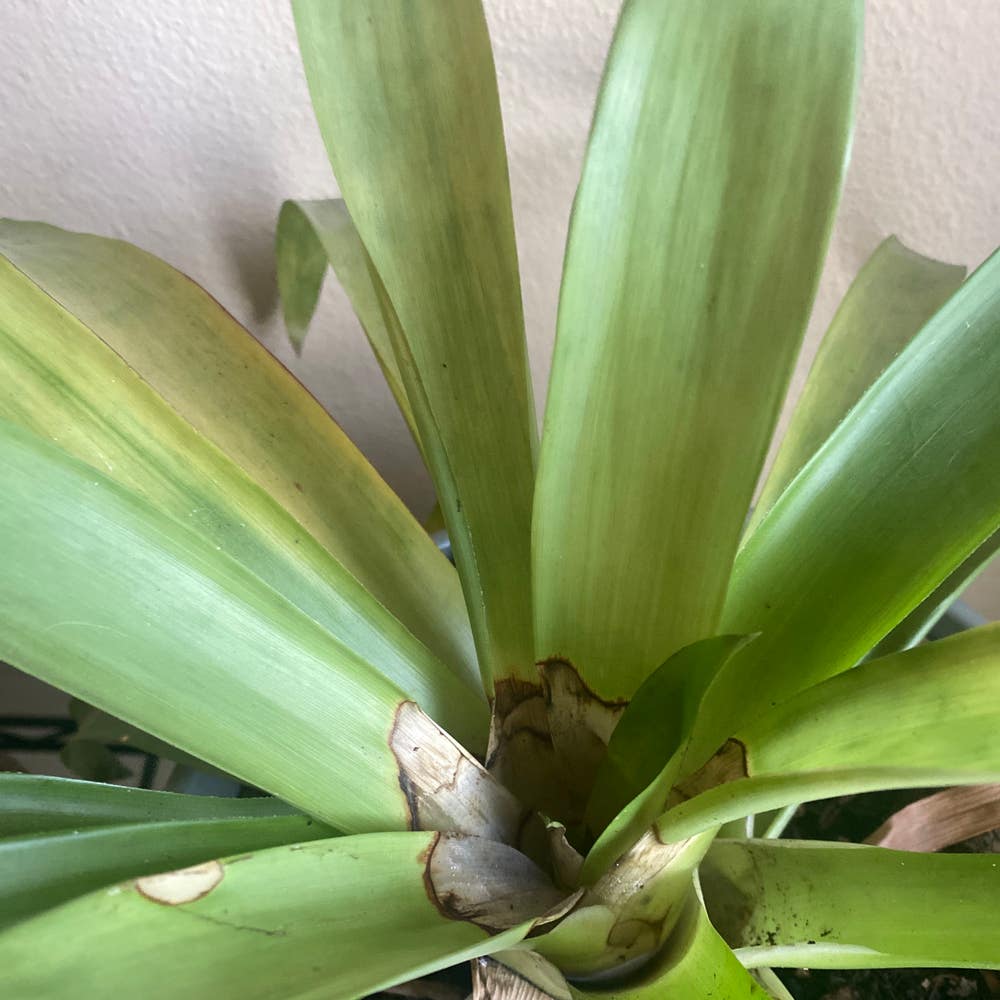
🐍 Why Is My Bromeliad Medusa Dropping Leaves?
Neoregelia 'Medusa'
By the Greg Editorial Team
Jun 18, 2024•4 min read
This article was created with the help of AI so we can cover more plants for you. May contain errors. See one? Report it here.
Halt your Bromeliad Medusa's leaf drop 🍂 and ensure its lush growth with these proven care tips!
- Overwatering? Let soil dry out to rescue your Bromeliad Medusa.
- Bright, indirect sunlight is essential; watch for stretching as a light deficiency sign.
- Temperature stability (60-80°F) and moderate humidity prevent leaf drop.
Pinpointing the Culprits Behind Leaf Drop
Leaf drop in Bromeliad Medusa can be a real head-scratcher. Let's dive into the usual suspects.
💧 Overwatering Woes
Signs of Too Much H2O
Yellowing leaves might be your first clue that you're a bit too generous with the watering can. A soggy base and a musty smell are your plant crying out for an intervention.
Rescue Steps
First, ease up on the water. Let the soil dry out a bit between drinks. If the pot's a swamp, consider repotting with fresh, well-draining soil.
☀️ Light Level Lowdown
The Dark Side of Insufficient Light
Bromeliad Medusa turning into a wallflower? It might be craving more light. Stretching or leaning are signs it's reaching for those elusive rays.
Lighting the Way
Move your plant to a spot with bright, indirect sunlight. No sunbathing, though – direct rays can be harsh on its delicate leaves.
🌡️ Temperature and Humidity Tango
Feeling the Heat (or Chill)
Fluctuating temps can make your plant's leaves drop faster than a hot potato. Consistency is key.
Climate Control
Aim for a steady 60-80°F (15-27°C) range and moderate humidity. Think tropical vibes, not desert droughts or arctic blasts.
🍽️ Feeding Finesse
Spotting Nutrient Starvation
Pale leaves can signal a cry for nutrients. It's like your plant's on a diet it never signed up for.
Fertilizer Fix
Choose a balanced, slow-release fertilizer. Follow the label for a feeding schedule that doesn't lead to a nutrient overdose.

Reviving Your Bromeliad Medusa
Leaf drop in Bromeliad Medusa can be a real head-scratcher, but with the right moves, you can turn things around.
🚑 Emergency Interventions
Quick Fixes to Halt Leaf Drop
If your Bromeliad Medusa's leaves are falling faster than confetti at a parade, act fast. First, check for overwatering—a common culprit. The soil should be moist, not soggy. If it's wetter than a rainforest floor, ease up on the H2O. Next, scope out the lighting. These plants crave bright, indirect light, so if your Medusa is lurking in the shadows, it's time to relocate it to a sunnier spot.
Temperature swings can also send your Bromeliad into a tailspin. Keep the thermostat steady—no sudden chills or heat waves. Lastly, peek at the roots for signs of rot or pests. If you spot trouble, it's triage time. Trim the damaged parts and consider a fresh pot with proper drainage to give your plant a fighting chance.
🌱 Lifestyle Changes for Your Plant
Ongoing Care Tweaks
Once the immediate threats are neutralized, it's all about the long game. Establish a watering routine that keeps the soil consistently moist—think of it as a hydration schedule, not a flood protocol. Use a moisture meter to take the guesswork out of watering, because nobody likes soggy surprises.
For lighting, find that sweet spot where your Bromeliad can bask in bright, indirect sunlight without getting scorched. It's like finding the perfect spot on the beach—enough sun for a tan but no risk of a burn.
Temperature-wise, aim for a comfortable middle ground—not too hot, not too cold. Think of your plant as a Goldilocks guest in your home. And don't forget about feeding; a balanced fertilizer can work wonders. Just don't overdo it—too much food can be just as bad as too little.
Stick to these tweaks, and your Bromeliad Medusa should bounce back, ready to flaunt its exotic charm once again.

Keeping Your Bromeliad Medusa Happy and Healthy
Regular monitoring and maintenance are key to the well-being of your Bromeliad Medusa. Sometimes, despite your best efforts, you may need to seek professional help.
🌿 The Art of Observation
Observing your Bromeliad Medusa closely can prevent many issues before they escalate. Yellowing leaves, a sign of distress, should prompt a review of watering and lighting conditions. Pests like spider mites or mealybugs necessitate immediate action—opt for a gentle insecticidal soap or neem oil treatment. Keep an eye on the thermometer; temperature stability is crucial. Regularly check for black spots on leaves, which could indicate fungal issues. Avoid water splashes on the foliage to prevent such problems.
🧐 Expert Advice
When your plant's health is declining, and you've exhausted all resources, it's time to call in the experts. A professional can offer tailored advice, often saving your plant from becoming a casualty. Remember, it's better to seek help early than to regret it later. Keep a log of your plant's health to track what works and what doesn't, making it easier to communicate with experts when needed.

⚠️ Safety First
This content is for general information and may contain errors, omissions, or outdated details. It is not medical, veterinary advice, or an endorsement of therapeutic claims.
Always consult a qualified healthcare professional before using any plant as food, medicine, or supplement.
Never eat any plant (or feed one to pets) without confirming its identity with at least two trusted sources.
If you suspect poisoning, call Poison Control (800) 222-1222, the Pet Poison Helpline (800) 213-6680, or your local emergency service immediately.
Spotted an error? Please report it here.
Prevent your Bromeliad Medusa from shedding leaves 🍂 effortlessly with Greg's personalized care reminders for optimal watering, lighting, and fertilizing.