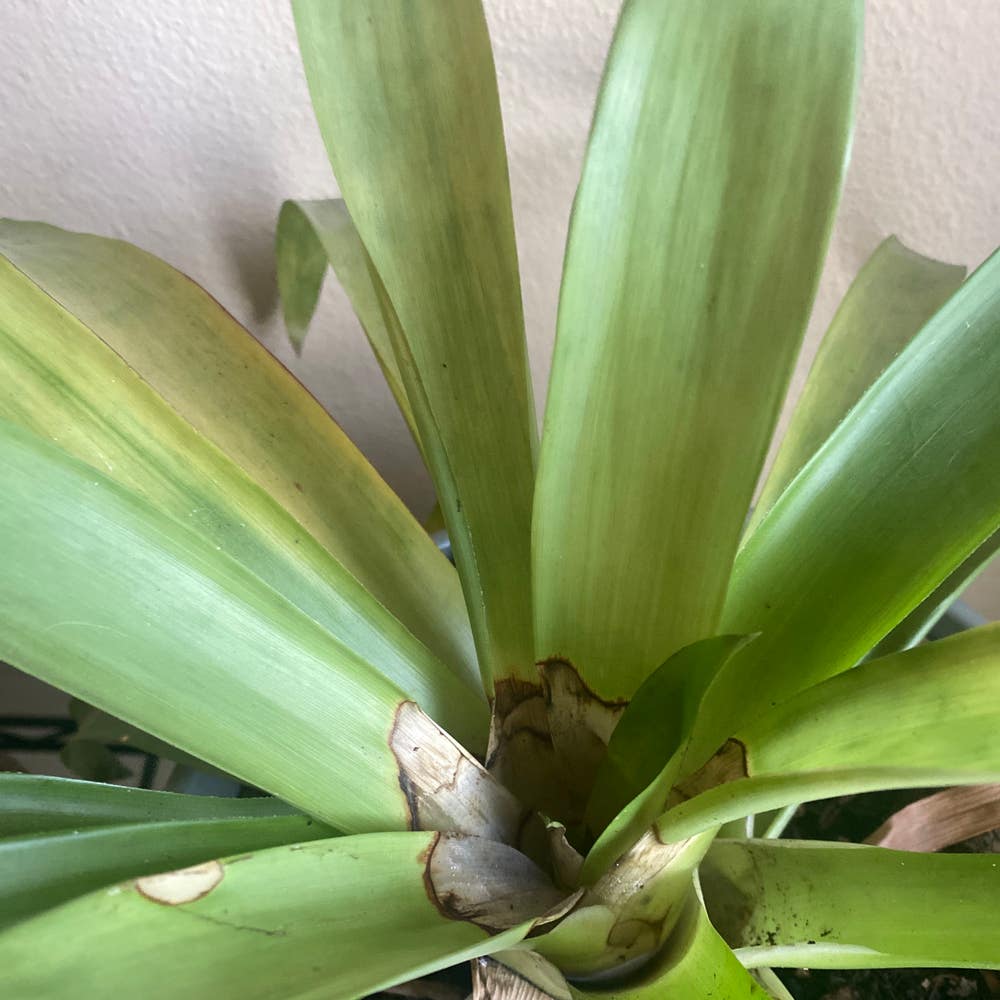
Why Are My Bromeliad Medusa Leaves Mushy? 🐍
Neoregelia 'Medusa'
By the Greg Editorial Team
Jun 18, 2024•3 min read
This article was created with the help of AI so we can cover more plants for you. May contain errors. See one? Report it here.
Rescue your Bromeliad Medusa from a mushy fate 🍂 with these essential overwatering fixes!
- Overwatering causes mushy leaves; adjust watering to soil moisture.
- Improve drainage with perlite or coarse sand to prevent root rot.
- Regular inspections help catch early signs of distress in leaves.
Spotting the Trouble: Signs Your Bromeliad Medusa is Too Wet
🌊 Overwatering Symptoms
Your Bromeliad Medusa should not resemble a swamp creature. Yellow leaves or a base as mushy as a marshmallow? You've gone overboard with the watering can. If the soil clings to your fingers like a bad habit, it's a clear sign you need to dial it back.
🚰 Drainage Woes
Check the pot after watering; if water sits at the bottom like an unwanted houseguest, you've got drainage issues. A pot without proper drainage is a one-way ticket to Soggy Town for your Bromeliad Medusa. Ensure your pot has holes that allow water to escape as if it's fleeing the scene of a crime.
🦠 The Dreaded Root Rot
Root rot is the silent assassin of the plant world. If your Bromeliad Medusa's roots are as dark and mushy as last week's fruit salad, it's time for an intervention. Don't wait for the plant to send an SOS; at the first sign of root rot, take action to prevent a complete plant meltdown.

First Aid for Mushy Leaves
💧 Cutting Back on H2O
Adjust your watering habits immediately. Your Bromeliad Medusa should only be watered when the top inch of soil is dry. Use a moisture meter or the trusty finger test to gauge the soil's moisture level. If it clings to your finger, it's not time to water yet.
🚰 Enhancing Drainage
Improve drainage to prevent water from pooling around the roots. If your pot is lacking drainage holes, it's time to drill some or get a new pot. Mix perlite or coarse sand into your potting mix to increase aeration and water flow. This will help your plant's roots breathe and recover from excess moisture.
🦠 Root Rot Reversal
If you suspect root rot, act fast. Gently remove the plant from its pot and inspect the roots. Trim away any dark, mushy roots with sterilized shears. When repotting, use a dry, well-draining soil mix and a pot with ample drainage holes. Water sparingly, as if rationing the last bottle of water in a desert. Keep an eye on your plant; if it recovers, you've successfully navigated the crisis. If not, further intervention may be necessary.

Long-Term Care Strategies to Keep Leaves Firm
💧 Watering Wisdom
To avoid overwatering your Bromeliad Medusa, let the soil dry out before the next watering. This simple step is crucial for preventing mushy leaves. Remember, your plant's thirst is not a constant; adjust your watering to its actual needs, not a set schedule.
🌱 The Perfect Potting Mix
Choose a potting mix that promotes drainage and aeration. A blend with perlite or coarse sand can be your plant's best friend, ensuring the roots remain healthy and the leaves firm. Don't skimp on soil quality—it's the foundation of your plant's well-being.
👩⚕️ Routine Plant Check-Ups
Regular inspections can catch early signs of distress. Look for changes in leaf texture or color. If the soil feels compacted, it's time to aerate. Stability in the plant's environment is key; avoid placing it where temperature or light can fluctuate wildly. Set reminders if you tend to forget these check-ups—consistency is better than cure.

⚠️ Safety First
This content is for general information and may contain errors, omissions, or outdated details. It is not medical, veterinary advice, or an endorsement of therapeutic claims.
Always consult a qualified healthcare professional before using any plant as food, medicine, or supplement.
Never eat any plant (or feed one to pets) without confirming its identity with at least two trusted sources.
If you suspect poisoning, call Poison Control (800) 222-1222, the Pet Poison Helpline (800) 213-6680, or your local emergency service immediately.
Spotted an error? Please report it here.
Prevent mushy leaves in your Bromeliad Medusa by letting Greg keep an eye on soil moisture and prompt 🚦 you with perfect watering times.