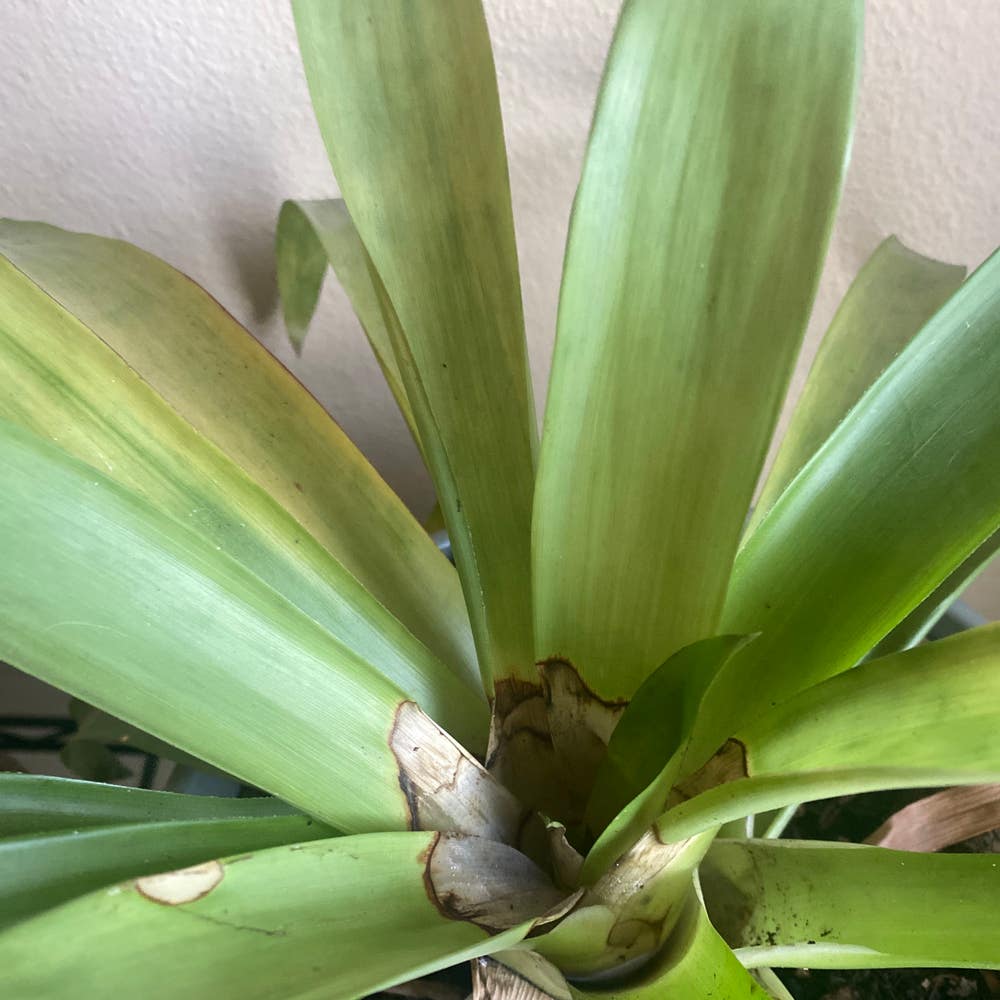
🐍 How Can You Tell If A Bromeliad Medusa Is Dying?
Neoregelia 'Medusa'
By the Greg Editorial Team
Jun 18, 2024•4 min read
This article was created with the help of AI so we can cover more plants for you. May contain errors. See one? Report it here.
Save your Bromeliad Medusa from a wilted end by spotting early distress signals! 🌿🔍
- Wilting or discoloration signals watering, light, or humidity issues.
- Stunted growth hints at root problems or insufficient lighting.
- Root health is crucial: mushy roots mean rot, dry roots mean thirst.
Spotting Trouble: Telltale Signs Your Bromeliad Medusa Needs Help
🍂 Wilting, Browning, or Yellowing Leaves
Wilting leaves on your Bromeliad Medusa are the plant's SOS signal. They're telling you they could be drowning in water or gasping for a drink. Brown leaves? They're often a symptom of a sunburn or a cry for more humidity. Yellowing leaves can be a sign of overwatering, but don't jump to conclusions—check for soggy soil first.
🌱 Stunted or Abnormal Growth
If your Bromeliad Medusa's growth is more stunted than a bonsai tree, it's time to investigate. Abnormal growth patterns are subtle hints that your plant might be struggling with root issues or lacking in light. Keep an eye out for small or misshapen leaves—they're not just quirky, they're a red flag.
💧 Water and Root Woes
Roots should be the foundation of your plant's health, not its downfall. Signs of distress include roots that are mushier than overcooked noodles—classic root rot. On the flip side, roots that are as dry as a desert spell out dehydration. Balance is key; your Bromeliad Medusa craves consistency when it comes to watering.

Navigating the Common Pitfalls: Specific Issues and Fixes
💧 Inconsistent Watering Woes
Inconsistent watering can turn your Bromeliad Medusa into a sad shadow of its former self. Leaves may start to droop or develop unsightly spots.
- Check soil moisture regularly, an inch below the surface, and water only if it's dry.
- Ensure pots have drainage holes to prevent waterlogged soil.
🌞 Light and Temperature Tangles
Your Bromeliad Medusa's leaves can tell tales of light and temperature distress. Discoloration or slowed growth are red flags.
- Adjust the plant's position to avoid direct sunlight that can scorch leaves.
- Keep away from drafts and heat sources to maintain a stable temperature.
💦 The Perils of Over and Under-Watering
Over-watering invites root rot, while under-watering leaves your plant thirstier than a marathon runner.
- Aim for soil that's moist, not soggy or bone-dry.
- Adapt your watering schedule to the seasons—less in winter, more in summer.
🐜 Pests: Unwanted Guests
Pests are the party crashers no one wants. Look for tiny bugs or webbing under leaves.
- Quarantine new plants to prevent pest spread.
- If pests are spotted, it's time for prompt treatment and possibly a magnifying glass for those hard-to-see critters.

Special Care for Specific Issues
🌞 Battling Leaf Scorch and Mold
Leaf scorch in Bromeliad Medusa is like a sunburn—painful and preventable. Direct sunlight is the nemesis here. Keep your Medusa in bright, indirect light; think east-or west-facing windows for that sweet spot of illumination. If the leaves are crisping up, it's time to play musical chairs with your plant's location.
Mold is a sneakier beast. It thrives in the damp and the dark, turning your Medusa's home into a fungal fiesta. Air circulation is your ally. Get that air moving! And if you spot the white powdery signs of mold, it's time for a fungicide. But remember, the goal is to avoid the mold rave altogether—keep conditions clean, and your watering can on a tight leash.
💧 Root Rot: The Silent Killer
Root rot is the plant equivalent of a heart attack—silent, deadly, and a total mood killer. Over-watering is often the culprit, creating a swampy hell for your Medusa's roots. If the roots are looking more brownie than root, it's surgery time. Trim the soggy offenders and repot in fresh, well-draining soil.
But prevention is the name of the game. Keep the soil moist, not wet, and make sure your pot's got holes. Think of it as giving your plant a breathable outfit rather than a wetsuit. And if you're misting, do it with the grace of a cloud, not a monsoon. Remember, your Medusa's roots are for gripping, not sipping—keep the central well hydrated, but don't let it become a swimming pool.

⚠️ Safety First
This content is for general information and may contain errors, omissions, or outdated details. It is not medical, veterinary advice, or an endorsement of therapeutic claims.
Always consult a qualified healthcare professional before using any plant as food, medicine, or supplement.
Never eat any plant (or feed one to pets) without confirming its identity with at least two trusted sources.
If you suspect poisoning, call Poison Control (800) 222-1222, the Pet Poison Helpline (800) 213-6680, or your local emergency service immediately.
Spotted an error? Please report it here.
Avoid the guesswork in nurturing your Bromeliad Medusa and sidestep the common pitfalls of plant care with Greg's tailored care plan 🌱.