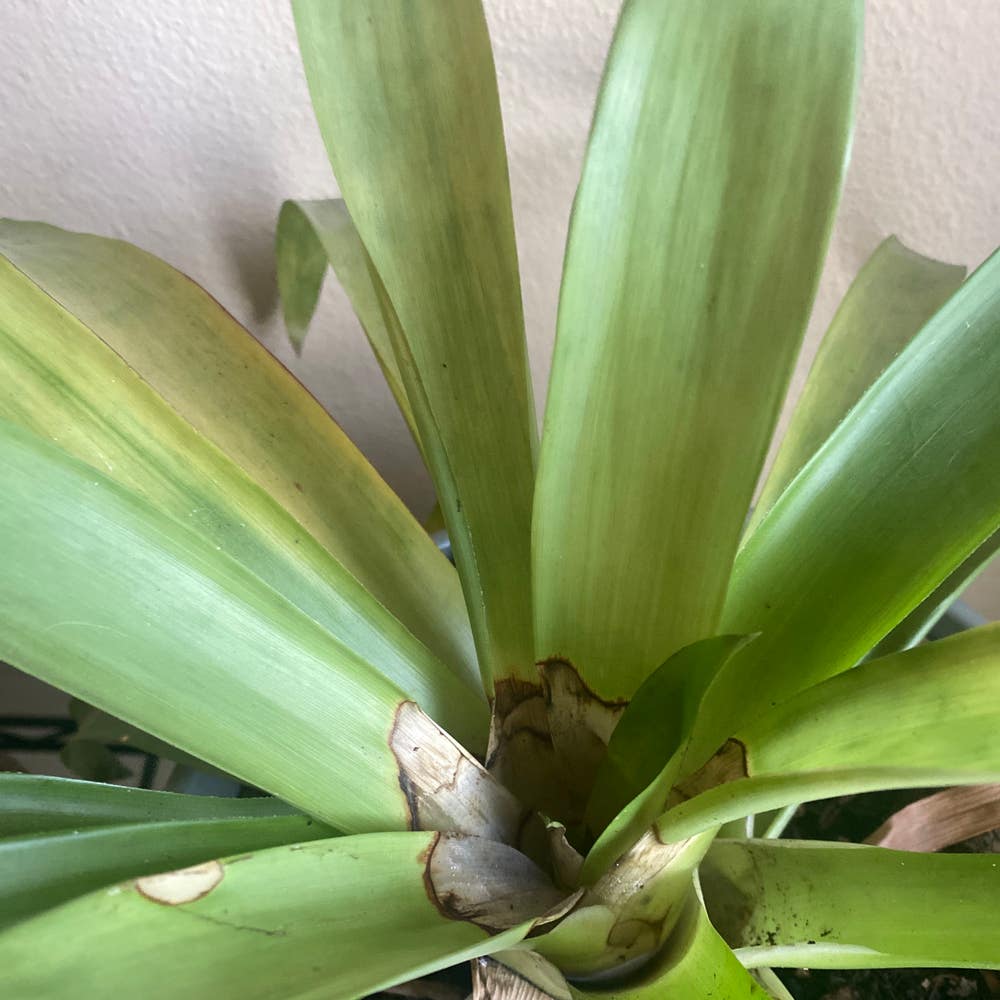
Black Spots on My Bromeliad Medusa Leaves
Neoregelia 'Medusa'
By the Greg Editorial Team
Jun 18, 2024•4 min read
This article was created with the help of AI so we can cover more plants for you. May contain errors. See one? Report it here.
Banish black spots 🕵️♂️ and keep your Bromeliad Medusa thriving with this essential care guide.
- Fungal vs. bacterial: pinpoint spots or larger blotches reveal the cause.
- Companion symptoms: browning tips, limp leaves, and spot texture matter.
- Prevention is key: balance moisture, ensure airflow, and inspect regularly.
Spotting the Trouble: Identifying Black Spots on Your Bromeliad
🕵️♂️ Visual Clues: What Do Black Spots Look Like?
Black spots on Bromeliad Medusa leaves are the plant's version of an SOS. Size and shape matter. Small, pinpoint spots often suggest a fungal issue, while larger, irregular blotches could scream bacterial invasion. Color-wise, they're typically a dark, ominous black, but may also sport a red or yellow halo, hinting at a more serious condition.
🕵️♂️ Companion Symptoms: What Else to Look For
Don't just stop at spots. Companion symptoms include browning tips or limp leaves, which could indicate your Bromeliad is under stress. Texture is also a tell; dry, brittle spots often point to environmental damage, whereas soft, mushy ones signal disease. And if the spots look like they've taken a swim—glossy and water-soaked—it's likely a bacterial issue.
🕵️♂️ Inspecting Your Plant: Where to Check for Black Spots
Time to play plant detective. Start your investigation by checking both sides of the leaves, as black spots love to lurk underneath. Focus on areas near the soil and work your way up. Pay attention to the undersides of leaves and the base of the plant, prime real estate for fungal and bacterial parties. Document any suspicious spots—keeping track can help you nip potential problems in the bud.

Getting to the Root of It: Causes of Black Spots
🍄 Fungal Foes: Common Culprits Behind the Spots
Fungi are notorious for crashing the Bromeliad party, leaving behind black spots as mementos. Anthracnose starts its dirty work with yellow spots that eventually turn black. It's like a bad guest that slowly trashes your place.
🦠 Bacterial Baddies: When Microbes Attack
Bacteria slip in through the tiniest of wounds, creating spots that look water-soaked or ringed with red or yellow. They're the ninjas of the plant world, often undetected until the damage is done. Foul smell? That's bacteria, throwing a rager at your plant's expense.
🩹 Accidental Injuries: Physical Damage and Its Effects
Physical damage can masquerade as disease, but it's just your plant showing battle scars. A clumsy cat or a too-enthusiastic cleaning can leave flat black spots. Unlike spots from pathogens, these don’t spread; they're static, a reminder to handle your Bromeliad with care.

The Fix: Treating Black Spots on Bromeliad Medusa
🍄 Fungal Infections: Choosing the Right Antifungal
When your Bromeliad Medusa is under siege by fungal foes, it's time to arm yourself with the right antifungal. Copper or sulfur-based fungicides are your organic go-tos, while systemic options like tebuconazole pack a punch for stubborn infections. Always follow the label directions—these aren't just suggestions, they're the battle plan.
🦠 Bacterial Infections: The Pruning and Cleaning Protocol
Bacterial infections require swift and sterile action. Prune affected areas with sanitized scissors—think of it as surgery for your plant. Post-op, clean your tools with the diligence of a surgeon to prevent spreading the infection. For the aftermath, bactericides are your bouncers, showing those unwanted microbes the door.
🩹 Healing Wounds: Caring for Physically Damaged Leaves
Physical damage can leave your Bromeliad Medusa vulnerable. If you spot a wound, it's time for some plant first aid. Trim away the damaged tissue to prevent further issues. Then, ensure the plant's environment promotes healing—good air circulation and dry conditions are your allies in recovery.

Keeping Spots at Bay: Prevention Strategies
💧 Water Wisdom: Balancing Moisture for Bromeliad Health
Watering your Bromeliad Medusa is less about sticking to a schedule and more about reading the room—or pot, in this case. Check the soil before you water; if the top inch feels dry, it's time to quench your plant's thirst. Early morning watering is ideal, allowing leaves to dry out during the day and reducing the risk of fungal parties.
💨 Airflow and Light: Creating an Ideal Environment
Airflow is like your plant's personal trainer—it keeps things tight and right. Avoid cramming your Bromeliad into a corner where air stagnates. A gentle fan can work wonders, but keep it subtle; drafts are as welcome as a hiccup during a speech. Light should be bright but filtered; direct sun is a no-go unless you're aiming for a plant tan.
🔍 Routine Checks: Regular Monitoring for Early Detection
Inspect your Bromeliad Medusa regularly, like a plant detective on the case. Look out for early signs of distress and act swiftly. Consistency in your care routine is key, but stay adaptable to seasonal changes. Remember, vigilance is the guardian of plant health—keep your eyes peeled and your care sharp.
⚠️ Safety First
This content is for general information and may contain errors, omissions, or outdated details. It is not medical, veterinary advice, or an endorsement of therapeutic claims.
Always consult a qualified healthcare professional before using any plant as food, medicine, or supplement.
Never eat any plant (or feed one to pets) without confirming its identity with at least two trusted sources.
If you suspect poisoning, call Poison Control (800) 222-1222, the Pet Poison Helpline (800) 213-6680, or your local emergency service immediately.
Spotted an error? Please report it here.
Banish black spots on your Bromeliad Medusa with vigilant 🛡️ care from Greg's tailored watering and environmental monitoring for plant health triumphs.