🐍 Why Are My Bromeliad Medusa Leaves Curling?
Neoregelia 'Medusa'
By the Greg Editorial Team
Jun 18, 2024•5 min read
This article was created with the help of AI so we can cover more plants for you. May contain errors. See one? Report it here.
Unravel the mystery behind your Bromeliad Medusa's curling leaves and revive its whimsy! 🌀
- Curling leaves signal stress; know the difference between natural and SOS curls.
- Balance water, light, and temperature to prevent and fix leaf curling.
- Watch for pests and diseases like aphids and powdery mildew; early detection is key.
Spotting the Signs of Stress
🚩 Telltale Symptoms of Leaf Curling
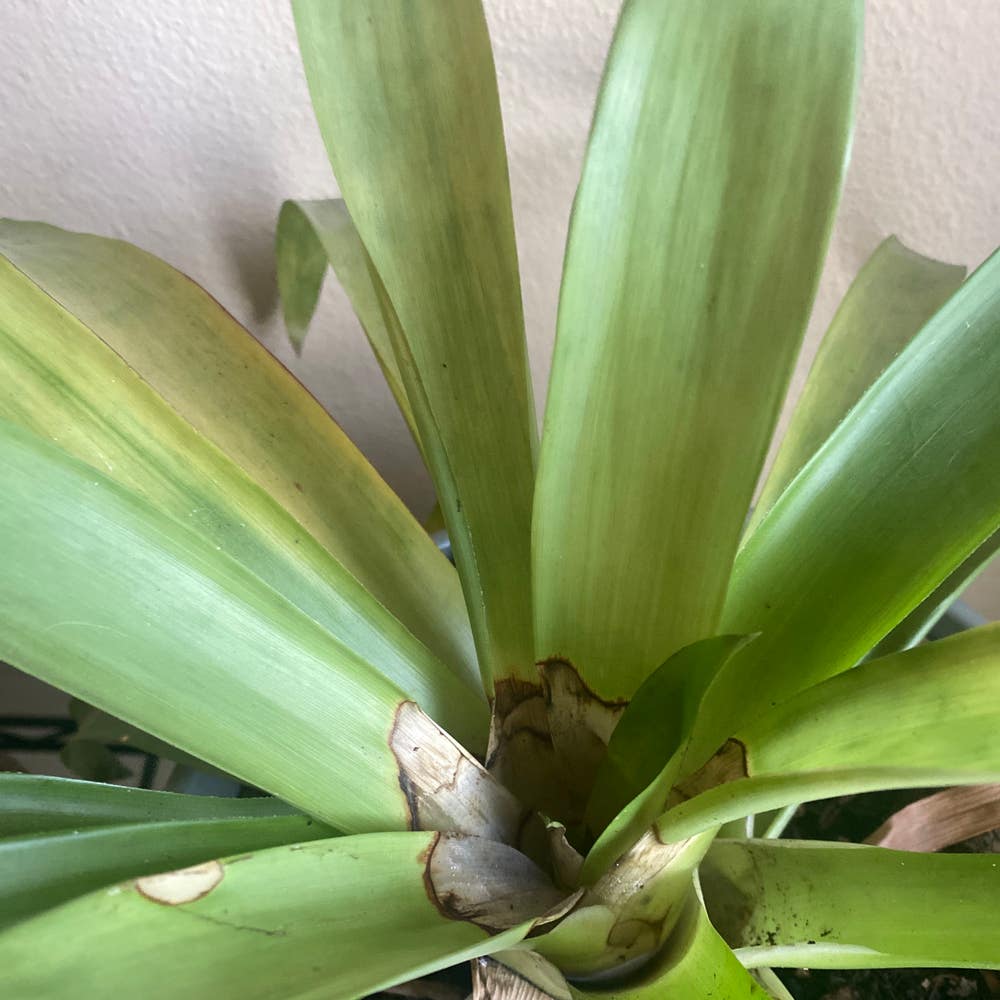
Curling leaves in Bromeliad Medusa are not just a style choice; they're a cry for help. Twisting or curling down is your plant's version of waving a red flag. It's not being quirky; it's stressed. Other distress signals include discoloration, such as yellow or brown spots, and a change in leaf texture, potentially feeling brittle or limp.
🌿 Beyond the Curl: Other Signs of Distress in Bromeliad Medusa
Keep an eye out for stunted growth or leaves that seem out of character for your Bromeliad. If the leaves are uniformly affected and the curling is consistent, it's a sign that your plant is not just being dramatic—it's time to take action.
🕰 When to Worry
Understanding the difference between a natural curl and an SOS curl is crucial. If the leaves are uniformly affected and the curling is consistent, it's time to investigate. Look for leaves that are excessively curled, appear brittle, or are losing their characteristic shape—these are signs of dehydration or overwatering. Leaves that are flattening or wilting, especially with dry tips, are your Bromeliad's way of gasping for a drink.

The Usual Suspects: Common Causes of Leaf Curling
💧 Thirsty Roots or Drowning Sorrows?
Watering woes: a common cause of leaf curling in Bromeliad Medusa. Too much water leads to a soggy existence for roots, often resulting in leaves that are limp and yellow. Conversely, underwatering leaves the soil bone-dry and roots gasping for moisture, causing leaves to curl inward in a desperate conservation effort.
🌡️ It's Getting Hot in Here
Heat stress can leave your Bromeliad Medusa with leaves curling tighter than a roll of quarters. Optimal temperature is key; too high, and the leaves curl to reduce exposure, too low, and they curl to conserve heat. Keep your plant in a comfortable range, avoiding the extremes of a midday desert or a frosty tundra.
🌞 Light: Finding the Sweet Spot
Lighting is a delicate dance for Bromeliad Medusa. Too much direct sunlight and the leaves curl away from the harsh rays, while insufficient light has them reaching and curling in odd ways. Strive for a balanced light environment where your Bromeliad can bask without baking or pining for the sun.

Uninvited Guests: Pests and Diseases
🐜 Pests That Make Leaves Curl
Aphids, spider mites, and thrips are the usual suspects when it comes to pests causing your Bromeliad Medusa's leaves to curl. These tiny vampires suck the sap right out of the leaves, leaving them deformed and curled.
- Check the undersides of leaves for these pests; they're notorious for hiding there.
- Spider mites are particularly sneaky, spinning fine webs as a telltale sign of their presence.
🦠 Diseases That Cramp Your Plant's Style
Fungal and bacterial infections can turn your Bromeliad Medusa's leaves into a botanical horror show. Powdery mildew cloaks leaves in a ghostly film, while bacterial spots can lead to leaf curling and blight.
- Be on the lookout for yellow halos or black spots, the drama queens of fungal infections.
- Soft, mushy areas on your plant? That's the fungus making itself at home.
Remember, regular plant check-ups are your best defense. Catch these party crashers early, and your Bromeliad Medusa will thank you.

Turning the Tables: Fixing and Preventing Leaf Curl
🌊 Adjusting Your Care Routine
💧 Watering Wisdom
Overwatering is a no-go; it's the fast track to root rot. Underwatering makes your Bromeliad Medusa just as miserable. Check the soil's top inch—if it's dry, it's time to water. Use filtered, distilled, or rainwater to avoid mineral buildup.
🌞 Light Level Lore
Too much sun scorches leaves, causing them to curl as a cry for help. Not enough, and they'll reach for the light in a desperate stretch. Find that Goldilocks zone of bright, indirect light and watch your Bromeliad thrive.
🌡️ Temperature Tips
Bromeliads despise the cold as much as a beach bum in a snowstorm. Keep the temperature consistent, ideally above 50°F. Avoid drafts and heat sources; think of your plant as a guest at a party—it wants to be comfortable, not shivering in a corner or sweating on the dance floor.
🦠 Keeping the Baddies at Bay
🐜 Pest Patrol
Pests are party crashers, and they love Bromeliads. Spider mites and mealybugs are the usual suspects. They're sneaky, so keep an eagle eye out for webbing or a cottony substance. Catch them early, and show them the door with a good insecticidal soap or neem oil.
🛡️ Disease Defense
If your plant's leaves are curling, yellowing, or browning, don't just stand there—prune them! It's like cutting off a zombie bite before it spreads. And if you suspect root rot, it's time for an emergency transplant. Fresh soil, no rotten roots, and your Bromeliad gets a second chance at life.
Regular check-ups are the secret sauce to a healthy plant. Catching issues early is like finding a leak before your living room turns into a swimming pool. Keep the humidity above 40%, but don't let your Bromeliad swim in water. Remember, balance is key—too much or too little of anything, and you're asking for trouble.
⚠️ Safety First
This content is for general information and may contain errors, omissions, or outdated details. It is not medical, veterinary advice, or an endorsement of therapeutic claims.
Always consult a qualified healthcare professional before using any plant as food, medicine, or supplement.
Never eat any plant (or feed one to pets) without confirming its identity with at least two trusted sources.
If you suspect poisoning, call Poison Control (800) 222-1222, the Pet Poison Helpline (800) 213-6680, or your local emergency service immediately.
Spotted an error? Please report it here.
Keep your Bromeliad Medusa thriving 🌿 with Greg's personalized care plans, ensuring those curls are just for show and not a cry for help!