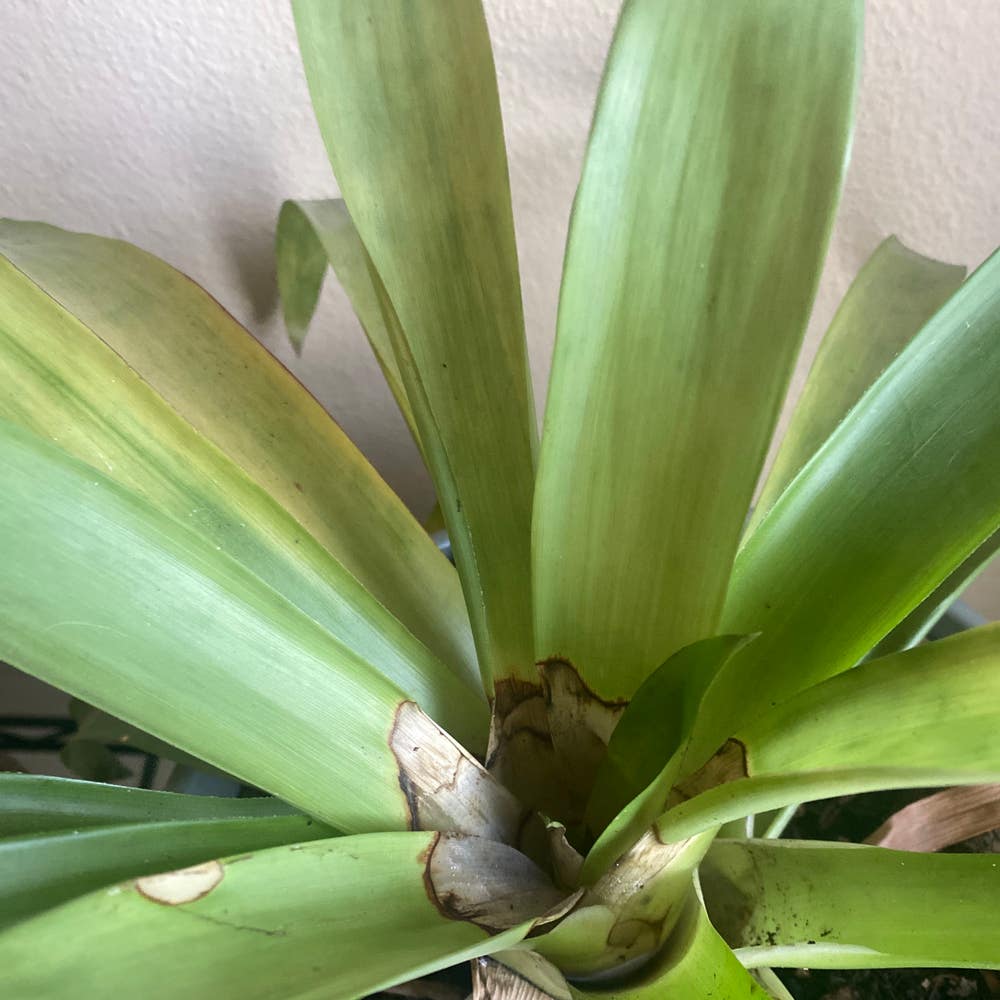
🐍 Why Are My Bromeliad Medusa Leaves Droopy?
Neoregelia 'Medusa'
By the Greg Editorial Team
Jun 18, 2024•5 min read
This article was created with the help of AI so we can cover more plants for you. May contain errors. See one? Report it here.
Discover how to perk up your Bromeliad Medusa and prevent droopiness for good! 🌿✨
- Droopy leaves signal stress, like over/underwatering, poor light, or incorrect humidity.
- 🌡️ Consistent 65°F-80°F and 40%-70% humidity are ideal for Bromeliad Medusa.
- Seasonal care adjustments—watering and light—keep leaves perky year-round.
Spotting the Trouble: Signs Your Bromeliad Medusa is Unhappy
🍂 Telltale Signs of Droopiness
Droopy leaves are the Bromeliad Medusa's cry for help, a stark contrast to their usual rigid elegance. If the vibrant green starts to fade, it's a sign that your plant is under stress.
🚩 When to Worry
It's natural for leaves to have some movement, but persistent droopiness is a red flag. Leaves that don't perk up after watering are signaling a deeper issue. When the leaves feel soft or mushy, it's time to take immediate action. Conversely, if the leaves are crispy to the touch, your Bromeliad Medusa is likely begging for a drink.
👀 Visual Cues
Look for leaves that are less firm than usual, indicating they're not at their best. Yellow or brown hues are distress signals, suggesting over-watering or a lack of nutrients.
Getting to the Root: Causes of Droopiness
Environmental factors like temperature swings and low humidity can also cause leaves to droop. Ensure your Bromeliad Medusa is in a consistent environment, away from drafts, and consider using tools like a hygrometer to keep track of humidity levels.

The Thirst Quench: Watering Woes and Wins
💧 Too Little, Too Late: The Perils of Underwatering
Underwatering your Bromeliad Medusa is like forgetting to charge your phone—eventually, it powers down. Wilting leaves are the plant's way of saying, "I need a recharge." If the soil is as dry as yesterday's toast, it's time to water. But don't drown your sorrows (or your plant); a gentle, thorough soak will do.
💦 Drowning in Love: Overwatering Mishaps
Overwatering is the helicopter parent of plant care—too much hovering can smother. Yellow leaves signal you're overdoing the affection. If the soil feels like a soggy bathmat, back off on the water. Let the soil dry out to the consistency of a day-old bagel before watering again. Remember, plants need tough love too.

Let There Be Light: Finding the Sweet Spot
🌞 Too Much Sun, Too Little Shine
Navigating the light needs of your Bromeliad Medusa is like tuning a vintage radio—precision is key. Too much sun scorches leaves, leaving them as unsightly as a bad haircut. On the flip side, too little light has your plant stretching out like it's trying to snag the last cookie from the jar, resulting in weak, elongated leaves. Aim for that sweet spot of bright, indirect light, where your plant can soak up the rays without the risk of a sunburn.
💡 The Ideal Glow for Growth
The perfect lighting conditions for your Bromeliad Medusa are as crucial as the right thread count for a good night's sleep—comfort is everything. An east-or west-facing window draped with a sheer curtain provides the ideal glow for growth, ensuring leaves stay sturdy and upright. If your plant's leaves start to resemble a lackluster mop, consider a slight shift closer to the light source. But remember, like a good neighbor, keep the harsh sun at bay.

The Balancing Act: Creating the Perfect Environment
🌿 The Right Humidity for Your Tropical Beauty
Bromeliad Medusa thrives in humidity levels that mimic its natural habitat. Aim for a range between 40% and 70%. Too dry, and the leaves lose their vigor, curling inward as if trying to conserve every drop of moisture. Too moist, and you're practically inviting fungal guests to a party at your plant's expense.
🌡️ Keeping Humidity on Point
Use a humidity monitor to keep tabs on the environment. If you're falling short, pebble trays or a room humidifier can boost moisture levels. On the flip side, if your indoor rainforest is overdoing it, dehumidifiers or increased air circulation can help. Remember, it's about creating a steady, tropical microclimate, not a weather rollercoaster.
🌡️ Temperature Tips
Consistency is key when it comes to temperature. Bromeliad Medusa likes it warm, ideally between 65°F and 80°F. Temperatures below this can cause the plant to sulk, while higher temps might stress it out. Avoid placing your plant near drafty windows or heat sources, which can create fluctuating conditions.
🌡️ Avoiding Temperature Extremes
Keep an eye on the thermostat and be mindful of seasonal changes. In the cooler months, ensure your plant isn't shivering by a cold window. During the scorching days of summer, shield it from the wrath of the afternoon sun. It's not just about hitting the right numbers; it's about avoiding the seesaw of temperature swings that can leave your Bromeliad Medusa feeling out of sorts.
Prevention is Key: Long-Term Care for Upright Leaves
💧 Crafting the Perfect Watering Schedule
Watering your Bromeliad Medusa isn't a set-it-and-forget-it deal. Consistency is crucial, but so is flexibility. Tailor your watering to the plant's needs, which can change with the seasons. In the heat of summer, your plant's thirst will spike—so up your watering game. As winter approaches, ease off the hydration.
Keep a log of watering dates and the plant's response. This isn't busywork; it's detective work that pays off with a perky plant. And remember, the top inch of soil is your truth-teller; if it's dry, it's time to water.
🌞 Monitoring and Adjusting Light Year-Round
Your Bromeliad Medusa's light needs are like a moving target. Too much direct sunlight and you're on a one-way trip to Scorch City. Too little, and you're in Droopsville. Aim for bright, indirect light—the kind that makes the leaves glow without the crispy edges.
Be vigilant as seasons change. Rotate your plant regularly to ensure even growth. And don't be afraid to play musical chairs with your plant's location; finding the perfect spot is a game of trial and error. Keep an eye out for elongated stems or faded leaves, both signs that your lighting strategy needs a tweak.
⚠️ Safety First
This content is for general information and may contain errors, omissions, or outdated details. It is not medical, veterinary advice, or an endorsement of therapeutic claims.
Always consult a qualified healthcare professional before using any plant as food, medicine, or supplement.
Never eat any plant (or feed one to pets) without confirming its identity with at least two trusted sources.
If you suspect poisoning, call Poison Control (800) 222-1222, the Pet Poison Helpline (800) 213-6680, or your local emergency service immediately.
Spotted an error? Please report it here.
Ensure your Bromeliad Medusa thrives with perfectly-tuned 🌿 care from Greg, balancing watering, light, and humidity for leaves that stand tall and proud.