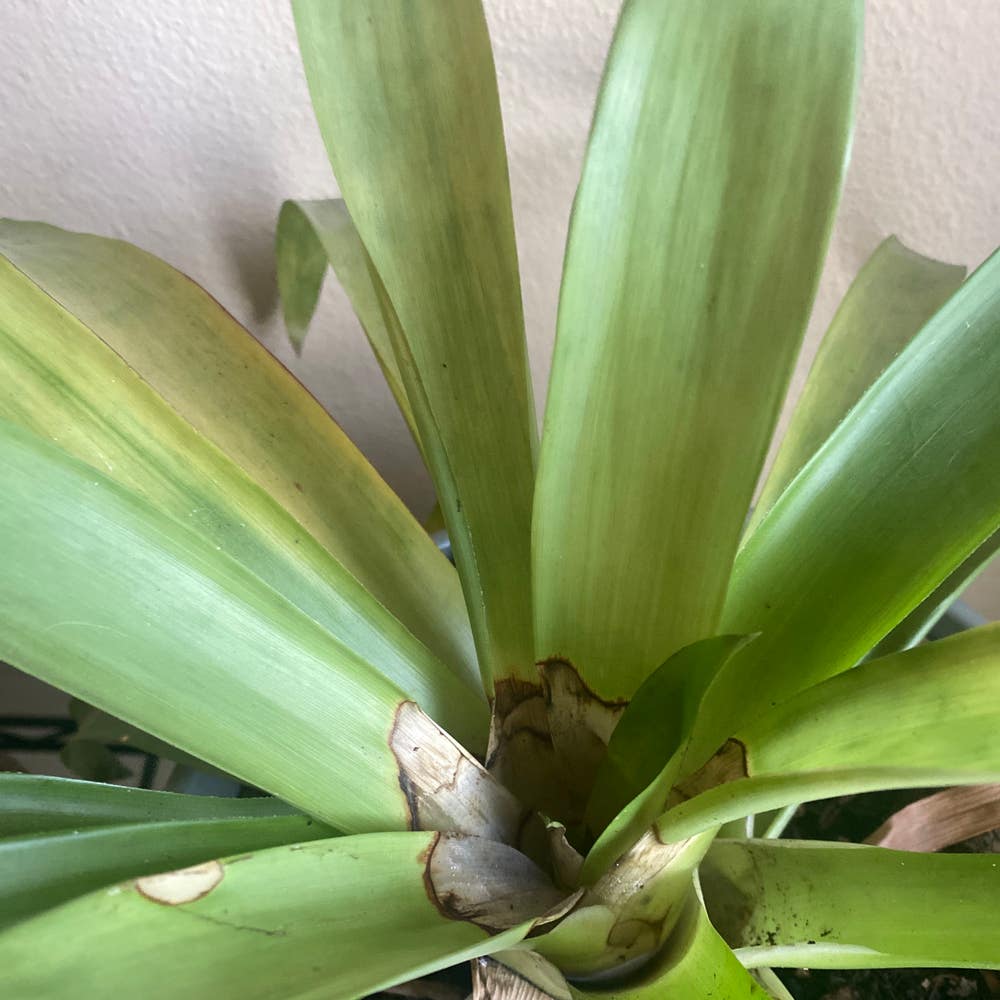
🐍 Why Are My Bromeliad Medusa Leaves Turning Yellow?
Neoregelia 'Medusa'
By the Greg Editorial Team
Jun 18, 2024•3 min read
This article was created with the help of AI so we can cover more plants for you. May contain errors. See one? Report it here.
Unravel the mystery behind your Bromeliad Medusa's yellow leaves and revive its quirky allure 🌿🔍!
- 🚨 Yellow leaves signal trouble; early pale hue indicates issues.
- 💧🌞 Balance water, light, and temperature to maintain leaf color.
- 🌱 Nutrient-rich fertilizer revives plants; ensure proper drainage.
Spotting Trouble: Yellow Leaves on Bromeliad Medusa
🚨 When Yellow Flags Fly: Identifying the Problem
Yellowing leaves on your Bromeliad Medusa are like a warning light on your car's dashboard. Early signs include a pale hue on the normally vibrant leaves. As the issue progresses, the yellowing can become more widespread, signaling it's time to investigate further.
🕵️ Root of the Issue: Checking Below the Soil
Healthy roots are firm and white or tan, while unhealthy ones are often dark and mushy. To check, gently remove your Bromeliad from its pot and inspect the root system. If the roots are in bad shape, it's a clear sign of distress, possibly from overwatering or root rot.

The Usual Suspects: Pinpointing Causes of Yellow Leaves
💦 Too Much Splash: The Perils of Overwatering
Soggy soil is a red flag for overwatering your Bromeliad Medusa. Leaves may become soft, translucent, or curl at the edges. Overhydration suffocates roots, leading to root rot and yellowing leaves.
🏜️ Thirsty Roots: The Dilemma of Underwatering
On the flip side, if the soil feels like a dry wasteland, you've got an underwatering issue. Look for crispy leaves and stunted growth, signaling your Bromeliad Medusa is as parched as a cactus in the Sahara.
🌞 Light and Heat: Finding the Sweet Spot
Too much light scorches leaves, causing them to bleach out. Yet, insufficient light can lead to stretching and tall growth. Aim for a bright, indirect light setting to keep your Bromeliad Medusa's leaves vibrant and green.
🍽️ Hungry for Nutrients: Feeding Your Bromeliad Right
Yellow leaves might be crying out for nutrients. A balanced diet is key; watch for signs of nutritional deficiencies. Ensure your Bromeliad Medusa isn't starving for essential elements like nitrogen, potassium, and magnesium.

Turning Over a New Leaf: Solutions for Yellowing
💧 Water Wisdom: Quenching Thirst the Right Way
Watering your Bromeliad Medusa is less about the quantity and more about the rhythm.
- Establish a consistent routine; think of it as the plant's heartbeat.
- Ensure proper drainage; soggy soil is a silent killer of bromeliad cheer.
🌞 Light and Temperature Harmony: Creating the Ideal Environment
Light and temperature can make or break your Bromeliad Medusa's mood.
- Adjust light exposure to avoid the leafy equivalent of a sunburn.
- Regulate temperature to keep the leaves from throwing a yellow tantrum.
🍽️ Nutrient Boost: Reviving Your Bromeliad
Nutrients are the secret sauce to a Bromeliad Medusa's green glow.
- Select a fertilizer mix that's like a gourmet meal for your plant.
- Fertilize with a light hand; overfeeding is as bad as starving.

⚠️ Safety First
This content is for general information and may contain errors, omissions, or outdated details. It is not medical, veterinary advice, or an endorsement of therapeutic claims.
Always consult a qualified healthcare professional before using any plant as food, medicine, or supplement.
Never eat any plant (or feed one to pets) without confirming its identity with at least two trusted sources.
If you suspect poisoning, call Poison Control (800) 222-1222, the Pet Poison Helpline (800) 213-6680, or your local emergency service immediately.
Spotted an error? Please report it here.
Banish yellow leaves and ensure your Bromeliad Medusa thrives with Greg's tailored watering and light schedules 🌟, keeping your greenery perfectly pampered.