🐍 Why Are There Brown Spots on My Bromeliad Medusa?
Neoregelia 'Medusa'
By the Greg Editorial Team
Jun 18, 2024•3 min read
This article was created with the help of AI so we can cover more plants for you. May contain errors. See one? Report it here.
Banish brown spots 🍂 on your Bromeliad Medusa with these expert care tips for pristine leaves! 🌿
- Sunburn and infections cause distinct brown spots; crispy versus soft with halos.
- Adjust light and water to prevent spots; indirect sunlight and proper watering are key.
- Regular check-ups help catch early signs; use distilled or rainwater to avoid mineral spots.
Spotting the Trouble: Identifying Brown Spots
🕵️ What Brown Spots Look Like
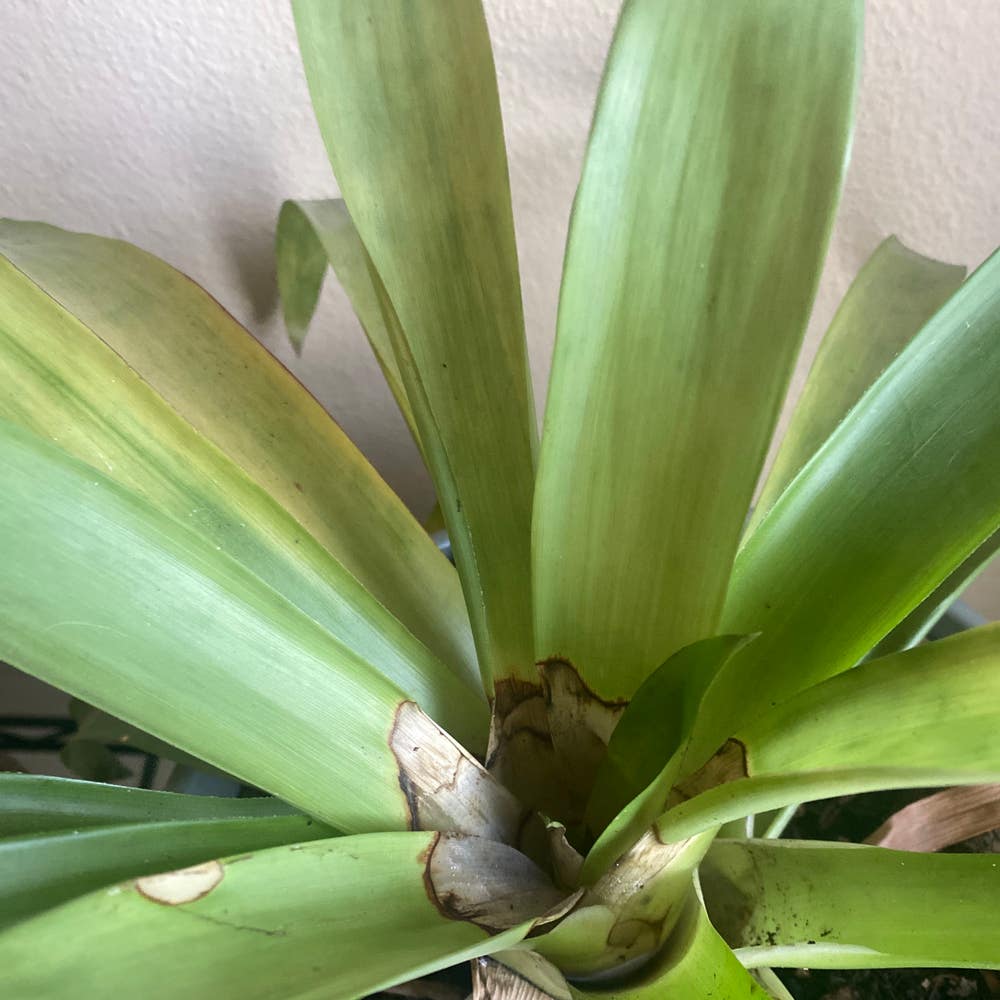
Brown spots on Bromeliad Medusa can be sneaky. They range from subtle tan specks to bold, dark brown patches. Some spots are dry and crispy, others soggy like they've been soaked. Their appearance gives clues to their cause, whether it's a cry for less sun or a sign of infection.
🕵️ Common Culprits Behind the Spots
Sunburn often leaves a mark, with spots appearing bleached and crispy. Overwatering leads to soggy, dark spots begging for a break. Pests leave a crime scene of streaks and specks. Fungal infections are like unwanted guests, showing up with spots surrounded by yellow halos or rings. Each type of spot is a breadcrumb leading to the root of the problem.

Getting to the Root: Pinpointing the Cause
☀️ Sunburn vs. Infections
Sunburn on Bromeliad Medusa can be deceptive. Dry, crispy spots, particularly on leaves most exposed to light, scream too much sun. Conversely, infections play dirty. Look for soft, dark areas, sometimes with a yellow halo or concentric rings. These spots don't play fair and often bring friends, spreading if not stopped.
💧 Water Woes
Watering habits can make or break your Bromeliad Medusa. Overwatering is a common faux pas, leading to spots that feel as soggy as a wet sponge. Poor water quality? It's like feeding your plant junk food. Meanwhile, underwatering leaves your plant as parched as a desert, with dry spots to show for it. Keep the soil's moisture consistent, not too wet, not too dry – it's a balancing act.

The Fix: Treating Brown Spots on Bromeliad Medusa
⛅️ Adjusting Your Light Strategy
Indirect sunlight is the sweet spot for Bromeliad Medusa. If your plant's leaves are emblazoned with brown spots, it might be crying out for some shade. Move it away from direct sun rays, or use sheer curtains to filter the light. Remember, it's about providing a cozy glow, not a full-on solar blast.
🛡️ Battling Infections
When it comes to infections, think of fungicides and bactericides as your plant's personal knights in shining armor. Apply them weekly or as directed, but don't go overboard—overuse can harm more than help. If you're dealing with a fungal rave on your plant, consider a baking soda and soap mix before escalating to the heavy artillery like copper fungicides.
🚰 Water Quality and Care
Your Bromeliad Medusa isn't a fish; it doesn't need to swim. Overwatering is a no-go. Check the soil before watering—dry? Proceed. Wet? Hold your horses. And let's talk water quality—rainwater or distilled water is the VIP drink of choice. Tap water can be a cocktail of chemicals that leave your plant with a hangover, in the form of unsightly spots.

Keeping Spots at Bay: Prevention Strategies
💡 Perfect Placement
Location is key to preventing brown spots on your Bromeliad Medusa. Strike a balance with lighting; bright, indirect light is the sweet spot. Direct sunlight can lead to a crispy, unhappy plant, while too little light can cause it to become leggy and weak. Keep it out of the harsh midday sun to avoid those unsightly brown burns.
🕵️ Regular Plant Check-ups
Vigilance is your plant's best friend. Regularly inspect your Bromeliad Medusa for early signs of distress. Look for changes in leaf color or texture. Ensure the central well isn't a breeding ground for rot by keeping it clean and only moderately moist. Water quality matters too; use distilled or rainwater to prevent mineral build-up. Remember, a happy plant is a spotless plant.
⚠️ Safety First
This content is for general information and may contain errors, omissions, or outdated details. It is not medical, veterinary advice, or an endorsement of therapeutic claims.
Always consult a qualified healthcare professional before using any plant as food, medicine, or supplement.
Never eat any plant (or feed one to pets) without confirming its identity with at least two trusted sources.
If you suspect poisoning, call Poison Control (800) 222-1222, the Pet Poison Helpline (800) 213-6680, or your local emergency service immediately.
Spotted an error? Please report it here.
Banish brown spots on your Bromeliad Medusa with Greg's 🌱 tailored environment tips and precise watering reminders for a healthier, happier plant.