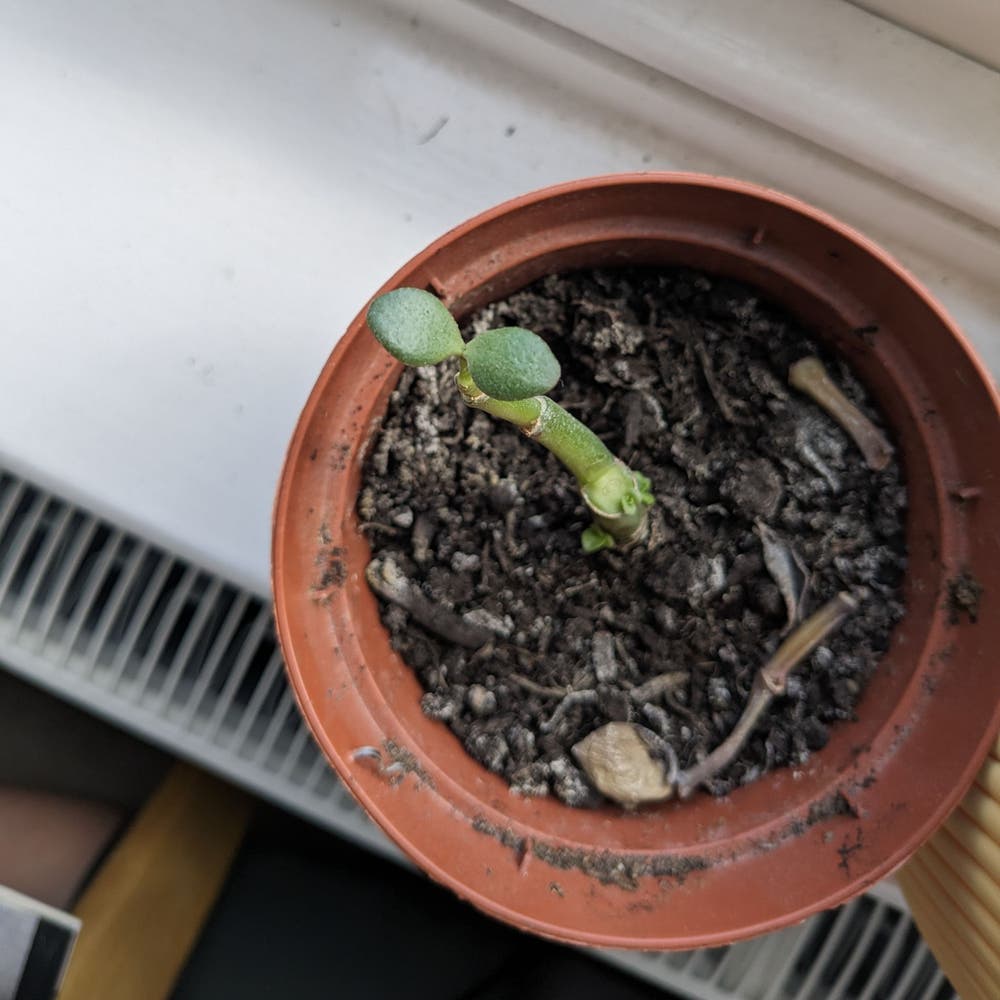
Why Is My Crassula ovata 'Obliqua' Dropping Leaves?
Crassula ovata 'Obliqua'
By the Greg Editorial Team
Jun 18, 2024•4 min read
This article was created with the help of AI so we can cover more plants for you. May contain errors. See one? Report it here.
Prevent leaf loss and keep your Crassula thriving 🌿 with these essential care insights!
- Over/underwatering causes leaf drop: Check soil moisture regularly.
- 🌡️ Keep temperatures 18-24ºC and avoid direct heat sources.
- 🌞 Bright, indirect light and rotate for even exposure.
When Watering Goes Wrong
🌊 Overwatering Woes
Overwatering is like throwing a pool party for your Crassula ovata 'Obliqua' and forgetting to tell it to come up for air. The signs are there: yellowing leaves, a wilting demeanor despite wet soil, and roots that are more mush than mighty. It's a classic case of too much love leading to a droopy plant.
Remember, your plant's roots need to breathe, and without proper drainage, you're essentially suffocating them. If the soil feels more like a swamp than a desert, it's time to rethink your watering strategy.
🏜️ The Thirsty Plant
Underwatering, on the other hand, will have your plant looking more deflated than a balloon after a birthday party. Leaves drop, yellow, or turn into a crispy brown mess. It's a sad sight, like watching a plant wave a white flag in surrender.
To avoid this, regular checks are non-negotiable. If the soil is drier than a stand-up comedian's wit, it's time to hydrate. But don't just pour water like there's no tomorrow; moderation is the game's name. A soil moisture meter can be your best friend here, ensuring you're hitting that sweet spot between parched and drowned.

Temperature and Light: Finding the Sweet Spot
🌡️ Too Hot to Handle
Crassula ovata 'Obliqua' thrives in a Goldilocks climate—not too hot, not too cold. Heat stress manifests as sunburned spots or a leathery texture on the leaves. Ideal temperatures hover between 18-24ºC (64-75ºF) during the day, dipping slightly at night to a comfortable 15-20ºC (59-68ºF). Keep your plant away from direct heat sources like radiators, which can cause more harm than a misplaced cactus in an igloo.
💡 Light Levels and Leaf Loss
Light is to plants what a good WiFi signal is to streaming: essential. Your Crassula needs bright, indirect light—imagine the perfect selfie lighting, but for your plant. Direct sunlight is the equivalent of a spotlight on a stage-frightened actor, leading to leaf scorch. On the flip side, too little light turns your plant into a recluse, with weak growth and a tendency to drop leaves. Rotate your plant regularly to ensure even exposure, avoiding the drama of a one-sided growth spurt.

Unwanted Guests: Pests and Problems
🐜 Common Culprits
Pests love a juicy Crassula ovata 'Obliqua' as much as plant enthusiasts do. Spider mites, mealybugs, and fungus gnats see your succulent as an all-you-can-eat buffet. These tiny terrorists can cause leaves to yellow, develop spots, or drop off entirely. Vigilance is key; regular inspections can catch these critters before they wreak havoc.
🛡️ Fight Back Against Pests
To combat these pests, start with neem oil or insecticidal soap. These treatments are like showing the door to those uninvited guests. Remember, a clean plant is a fortress. Keep the foliage dry and improve air circulation to discourage pest parties. And don't forget, prevention is better than cure; a healthy Crassula is less appealing to pests.

Turning Over a New Leaf: Solutions and Prevention
💧 Watering Wisdom
Watering your Crassula ovata 'Obliqua' is less about frequency and more about consistency. Check the soil before watering; it should feel dry an inch below the surface. If it's damp, hold off on the H2O. Overwatering leads to a soggy mess, while underwatering turns your plant into a crispy critter. Adopt a rhythm that's steady, adjusting for seasonal changes—less in winter, a touch more in summer.
🌡️ Creating a Comfort Zone
Adjust the thermostat of your plant's life by keeping the environment stable. Avoid temperature extremes; think room temperature, not a sauna or icebox. Rotate your plant for even light exposure; it's like ensuring everyone gets a turn at the window seat. And remember, air circulation is your friend. It's the difference between a breezy day in the park and a stuffy elevator ride. Keep pests at bay with targeted treatments, because when it comes to bugs, precision is key—no need for a full-scale chemical warfare.
⚠️ Safety First
This content is for general information and may contain errors, omissions, or outdated details. It is not medical, veterinary advice, or an endorsement of therapeutic claims.
Always consult a qualified healthcare professional before using any plant as food, medicine, or supplement.
Never eat any plant (or feed one to pets) without confirming its identity with at least two trusted sources.
If you suspect poisoning, call Poison Control (800) 222-1222, the Pet Poison Helpline (800) 213-6680, or your local emergency service immediately.
Spotted an error? Please report it here.
Ensure your Crassula ovata 'Obliqua' stays lush and healthy 🍃 with Greg's personalized care reminders for watering, temperature checks, and pest control.