🐜 What Are The Bugs on My Starfish Snake Plant?
Dracaena angolensis 'Boncel'
By the Greg Editorial Team
Jun 18, 2024•12 min read
This article was created with the help of AI so we can cover more plants for you. May contain errors. See one? Report it here.
Protect your Starfish Snake Plant from pesky invaders 🐛 with our essential pest control guide! 🌟
- Spider mites and scales - identify by leaf damage and treat with neem oil or predators.
- Fungus gnats, mealybugs, thrips, aphids - use sticky traps, alcohol, or beneficial insects.
- Prevent infestations with regular inspections, proper watering, and integrated pest management.
Identifying and Treating Spider Mites
🕷️ Spot the Critters
Tiny silvery dots or stippling on your Starfish Snake Plant's leaves? You've got company, and it's not the good kind. Spider mites are minuscule, but their damage is anything but. Look for delicate webs, especially under leaves or in stem corners. These pests come in a palette of white, brown, and red, but all share a taste for your plant's vital juices.
🚨 Immediate Action
Isolate your plant faster than a contagious sneeze. Spider mites are the ultimate freeloaders, hitching rides on breezes and spreading like gossip. Prune the infested areas, and remember, cleanliness is next to mite-less-ness. Wipe down those leaves, and while you're at it, give your hands a good scrub too.
🚿 Shower Power
Give your plant a shower. No, seriously. A gentle blast of water dislodges these eight-legged nuisances. Focus on the underside of leaves where they love to congregate. It's like a mite eviction party, and you're the bouncer.
🦟 Natural Predators
Introduce predatory mites, the unsung heroes in this saga. They're like the spider mite's natural nemesis, and they're hungry for action. Phytoseiulus persimilis is one such ally. Avoid chemical warfare that harms these beneficial bugs; go for rosemary oil instead.
🌿 Neem Oil: The Green Gun
Neem oil is your eco-friendly weapon of choice. It's a natural pesticide that doubles as a leaf shine, and it won't harm your pets or the good insects. Mix, spray, wipe, and repeat every week. Spider mites hate it more than you hate finding them.
🏠 Persistent Pests
If you've done all this and those mites are still throwing a house party, it's time to cut your losses. Toss the plant before it turns into a mite metropolis. It's tough love, but your other plants will thank you.
🌬️ Prevention: Dust to Dust
Spider mites are dust lovers. Keep your plant's leaves clean to avoid turning them into a mite motel. Proper watering wards off these thirsty critters. Remember, a happy plant is a pest-resistant plant.
🔁 Repeat Offenders
These pests breed like they're trying to populate a tiny mite city. Repeat treatments are a must. They're quick to adapt, so mix up your methods to keep them guessing. It's like a strategy game, but with higher stakes and more watering cans.

Combating Scale Insects
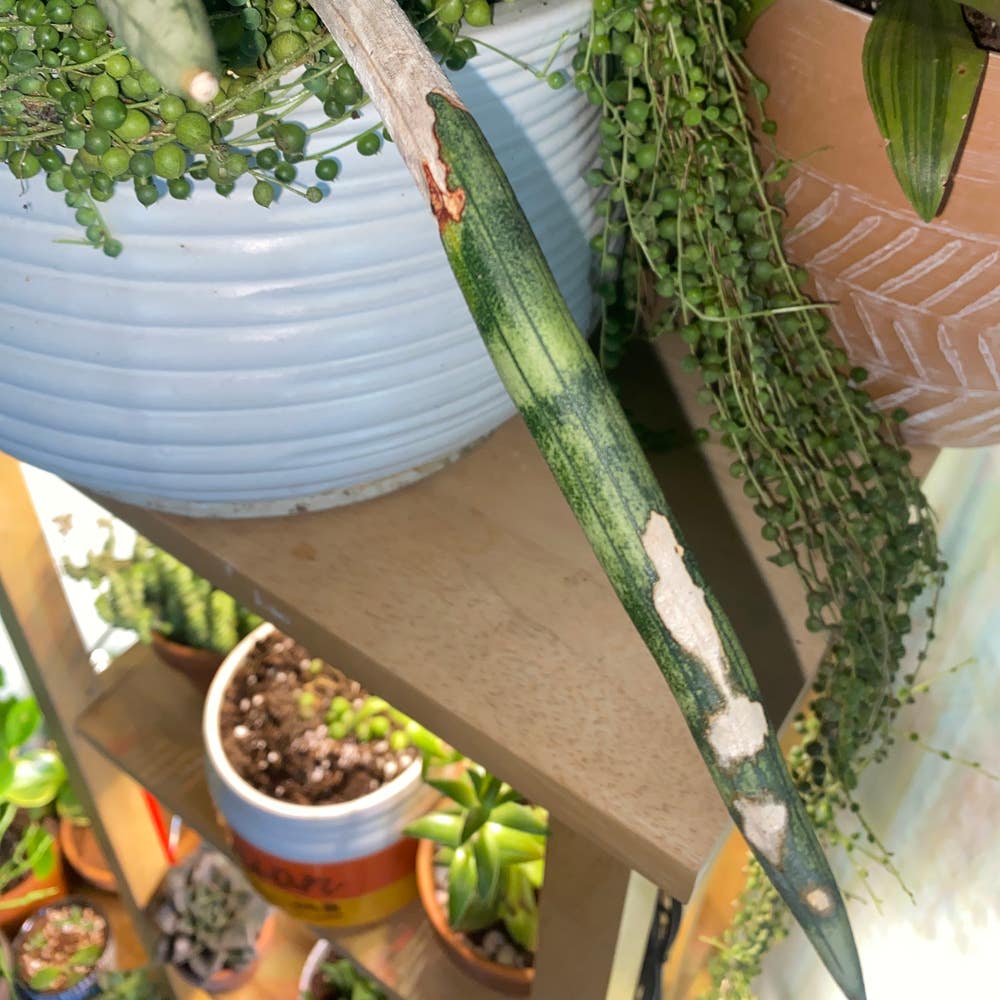
Scale insects can transform your Starfish Snake Plant from a spiky marvel into a sticky mess. Recognizing the problem is step one: look for brown or yellowish bumps on leaves, a telltale sign of these sap-sucking pests.
🚨 Signs of Scale Infestation
If your plant's leaves are yellowing or you spot a shiny, sticky substance known as honeydew, prepare for battle. These are clear indicators that scale insects have made themselves at home.
🛠️ Recommended Removal Techniques
👋 Immediate Action
Handpick these critters if they're few, using tweezers for precision. For a more widespread invasion, dabbing alcohol with a cotton ball can break their armor-like shell, leading to their demise.
🧼 Insecticidal Soaps and Oils
Insecticidal soaps are your next line of defense, disrupting the insects' cell membranes. Horticultural oils work wonders too, smothering the life out of scales at any stage.
💊 Systemic Treatments
When the going gets tough, systemic insecticides like pyriproxyfen or neem oil can be game-changers. They infiltrate the plant's system, turning it into a no-go zone for scales.
🐞 Biological Warfare
Unleash natural predators like ladybugs or lacewing larvae into the fray. They're nature's hitmen when it comes to soft-bodied scales.
✂️ Pruning and Isolation
Don't hesitate to prune heavily infested areas. Isolating your plant might seem harsh, but it's necessary to prevent a full-blown scale apocalypse.
🏃♂️ Persistence Pays Off
Remember, eradicating scales is a marathon, not a sprint. Multiple treatments over several months might be needed, so keep at it. Your plant's life is at stake.
💭 Final Considerations
If your plant looks more like a scale insect hotel than a Starfish Snake Plant, it might be time to weigh the costs and benefits of treatment versus starting anew. Sometimes, the best defense is a good offense, and in this case, that might mean a fresh plant.

Managing Fungus Gnats and Fruit Flies
Identifying the presence of fungus gnats is the first step in tackling an infestation. These pests are often confused with fruit flies due to their small size and attraction to plants. However, fungus gnats are usually found around the soil of houseplants, not fruit.
🐜 Spotting the Pests
Fungus gnats are small and dark, with a fondness for hovering over the soil. If you see these little nuisances skittering across the soil surface rather than taking to the air, you've got gnats, not fruit flies.
🪰 Effective Strategies
Yellow sticky traps are your new best friends. They'll snag the adults and cut down on the numbers. Letting the soil dry out between waterings is another simple yet effective tactic; these gnats adore moisture. For a more aggressive approach, beneficial nematodes or predatory mites can be introduced to the soil to target the larvae.
🌱 Soil Treatments
A hydrogen peroxide solution can be a plant-safe way to exterminate larvae and eggs. Remember, it's all about breaking the life cycle to keep these pests from bouncing back.
🏡 Outdoor Considerations
Check around your home for damp spots. Fungus gnats might be throwing a party outside and inviting themselves in. Eliminating these breeding grounds can reduce indoor infestations.
💡 Pro Tip
Don't bother with the apple cider vinegar traps; they're more of a fruit fly gig. Fungus gnats aren't keen on the acrobatics required to navigate into those traps. Stick with the methods that target their habits and life cycle for the best results.

Eradicating Mealybugs
Recognizing a mealybug infestation early can save your Starfish Snake Plant from significant harm. These pests, resembling tiny cotton clusters, target the nooks of your plant, secreting sticky honeydew and causing leaf yellowing.
🕵️ Spotting the Culprits
Look for white, powdery insects in leaf axils and stem junctions. Mealybugs love to hide, so inspect regularly.
🚨 Immediate Action
Upon detection, isolate the plant to prevent spreading. Use a cotton swab soaked in rubbing alcohol to wipe them out on contact.
🦠 Biological Warfare
Introduce natural predators like ladybugs or lacewings. They're not just charming; they're voracious mealybug eaters.
🧼 Insecticidal Soap and Oils
Apply insecticidal soap or horticultural oil. Follow the label closely—precision is key.
🛡️ Persistent Infestations
For stubborn cases, consider systemic insecticides. Remember, it's a last resort, not a go-to.
👀 Regular Monitoring
Stay vigilant with weekly inspections. Catching these fluffy fiends early makes all the difference.
Thrips: Identification and Control
🕵️ Spotting the Culprits
Thrips are tiny terrors that wreak havoc on your Starfish Snake Plant. Look for silvery trails and speckled leaves, a telltale sign of their sap-sucking spree. Adults are slender and dark, often with fringed wings, while the larvae are creamy-yellow and minuscule. They're masters of hide-and-seek, so inspect closely.
⚔️ Battle Tactics
Combatting thrips requires a multi-pronged approach. Start with a blast of water to knock them off their leafy lairs. Follow up with insecticidal soaps or neem oil, ensuring thorough coverage. These buggers are stubborn, so consistency is key.
☢️ Going Nuclear
When thrips laugh in the face of your initial efforts, it's time to bring out the big guns. Rubbing alcohol can be a potent spot treatment. For severe infestations, systemic insecticides might be necessary, but use them as a last resort and follow safety guidelines to the letter.
🚫 Preventative Measures
Prevention is better than cure. Keep your plant's environment uninviting for thrips by maintaining high humidity and avoiding dry soil. Regularly check for early signs of an invasion, especially if your plant has had a summer outdoors or if you've introduced new green companions to your home.
🛡️ Integrated Defense
Don't forget the power of nature's hitmen. Introduce predators like lacewings or pirate bugs to keep thrip populations in check. Remember, these allies are sensitive to chemicals, so hold off on the sprays if you're recruiting these bugs.
FAQ Snapshot
- Will my plant bounce back? New growth can be healthy with treatment, but damaged areas won't recover.
- Can thrips spread plant to plant? Absolutely, they're not picky guests.
- Where do thrips lay eggs? Sneakily, just below the leaf surface.
- Do they prefer a sauna or a desert? Thrips thrive in the heat, so keep it moist and cool.
Aphids: The Silent Invaders
Aphids are stealthy pests that can wreak havoc on your Starfish Snake Plant. They're tiny, but their impact is huge, sucking the life out of your plant's new growth.
🕵️ Spotting Aphids
Check the undersides of leaves and stems; that's where these critters love to hide. They're pear-shaped and can be green, black, or red, with two distinctive tubes (cornicles) on their rear.
🛡️ Effective Treatments
Horticultural soaps and neem oil are your go-to organic solutions. They're effective and less harmful to beneficial insects than broad-spectrum pesticides. For a DIY approach, consider a homemade garlic spray.
🚫 Preventing Damage
Regular inspections are crucial. Catching aphids early means less damage and easier control. Introduce natural predators like lady beetles and lacewings to keep aphid populations in check.
Remember, aphids can spread plant viruses, so controlling them isn't just about aesthetics—it's about your plant's health. Don't let these silent invaders turn your Starfish Snake Plant into their next meal.
Inspection and Early Detection
Regular vigilance is your first line of defense against pests. Just like you wouldn't skip a dental check-up, don't neglect plant inspections. Here's how to catch those critters early:
👀 Weekly Check-Ups
Visual Inspection: Make it a ritual, like Sunday brunch. Scan for chewed leaves, odd discoloration, or wilting. Spider mites, for instance, are fans of drought; double your scrutiny when the air's drier than a stand-up comedian's wit.
💧 The Watering Can Cue
Post-watering is prime time for pest spotting. Pests like to play hide and seek in the soil; watering can flush them out. Be on the lookout for uninvited guests making a break for it.
✂️ Prune Patrol
Dead leaves are pest magnets. Trim regularly. It's like cutting off the supply line to an invading army—no resources, no reinforcements.
🚫 Quarantine New Recruits
New plants can be Trojan horses for pests. Isolate them before they join the main squad. Think of it as a plant version of a background check.
🛠 Tools of the Trade
Keep your gear clean. Pots and tools can harbor stowaways. It's like leaving your door unlocked in a sketchy neighborhood—don't invite trouble.
🌞 Light and Water: The Balancing Act
Too much water and dim lighting are the equivalent of a pest rave. Keep conditions optimal to avoid sending out party invites.
✋ The Touch Test
Get hands-on. Gently feel the leaves and stems. Sometimes pests are more felt than seen, like a subtle plot twist in a thriller novel.
📸 Photo Finish
Snap pictures. They're worth a thousand words and can help experts diagnose issues. Plus, you get to document your plant's life like a proud parent.
Remember, early detection is not just about avoiding damage; it's about preserving the sanctity of your green sanctuary. Keep your eyes peeled and your plants will thank you.
Integrated Pest Management Strategies
In the battle against pests, Integrated Pest Management (IPM) is the green general's strategy of choice. It's about outsmarting the enemy with a mix of tactics that keep your Starfish Snake Plant thriving without resorting to the nuclear option of harsh chemicals.
🕵️♂️ Understanding IPM
IPM isn't about a single knockout punch; it's a multi-pronged approach. You're the coach, and your team includes cultural, biological, and sometimes chemical players, each with a role to play.
🌱 Cultural Controls
Start with the basics: proper growing conditions. Like giving your plant the right soil and enough light, it's like setting up a home security system; you're making the environment less inviting for pests.
🐞 Biological Warfare
Next, draft some natural predators into your lineup. Ladybugs and lacewings aren't just pretty faces; they're voracious eaters of aphids and mites. It's like having your own pest control agents on the payroll, working 24/7.
💣 Chemical Controls
When you do need to bring in chemicals, think of them as a precision strike rather than carpet bombing. Spot treatments with less toxic options can be effective without the collateral damage.
👀 Regular Monitoring
Keep a close eye on your plant. Regular inspections are like neighborhood watch programs; they help catch problems before they turn into a full-blown invasion.
♻️ Sustainability is Key
Remember, IPM is a sustainable approach. It's about balance and prevention, not just eradication. It's the difference between having a healthy garden and a toxic one.
Conclusion
By employing IPM, you're not just protecting your Starfish Snake Plant; you're also looking out for Mother Earth. Now that's what I call a win-win.
Preventative Measures for a Healthy Plant
In the battle against pests, 🛡️ prevention reigns supreme. Here's how to fortify your Starfish Snake Plant against unwanted critters.
🧼 Plant Hygiene
Cleanliness is next to pestlessness. Regularly remove dead leaves and debris. Wipe down leaves with a damp cloth to keep them dust-free and discourage pest parties.
🌱 Optimal Growing Conditions
Strong plants are less appealing to pests. Ensure your plant gets the right amount of light and water. Overwatering invites trouble—keep it moderate.
🚫 Quarantine New Plants
Newcomers could bring hitchhikers. Isolate them for a few weeks to prevent a pest invasion.
✂️ Pruning and Maintenance
Pruning isn't just a beauty routine; it's a health check. Remove infested or dead parts promptly to halt the spread of pests.
👀 Inspection Routines
Make plant inspection a habit. Catching pests early means less drama later. Use a magnifying glass if you have to—be your plant's private eye.
🌱 Soil and Pot Hygiene
Start with sterile potting mix and clean pots. It's like giving your plant a clean slate. And remember, reusing soil is a no-no—it's the equivalent of recycling a toothbrush.
💨 Air Circulation
Good air flow is like a breath of fresh air for your plant. It helps prevent fungal issues and keeps pests from settling down.
💧 Water Wisely
Watering is an art. Too much and you drown the roots, too little and your plant thirsts. Find that sweet spot and stick to it.
🌿 Fertilize with Care
Feed your plant, but don't overdo it. Pests love a lush new growth as much as you do.
🐞 Integrated Pest Management (IPM)
Embrace IPM strategies. Introduce natural predators like ladybugs if you're feeling adventurous. It's like having a bouncer for your plant club.
Remember, a healthy plant is your best defense. Treat your Starfish Snake Plant right, and it'll be less of a bug magnet.
⚠️ Safety First
This content is for general information and may contain errors, omissions, or outdated details. It is not medical, veterinary advice, or an endorsement of therapeutic claims.
Always consult a qualified healthcare professional before using any plant as food, medicine, or supplement.
Never eat any plant (or feed one to pets) without confirming its identity with at least two trusted sources.
If you suspect poisoning, call Poison Control (800) 222-1222, the Pet Poison Helpline (800) 213-6680, or your local emergency service immediately.
Spotted an error? Please report it here.
Eradicate those pesky plant bugs with precision 🎯 by using Greg to schedule regular inspections and tailored treatment reminders for your Starfish Snake Plant!