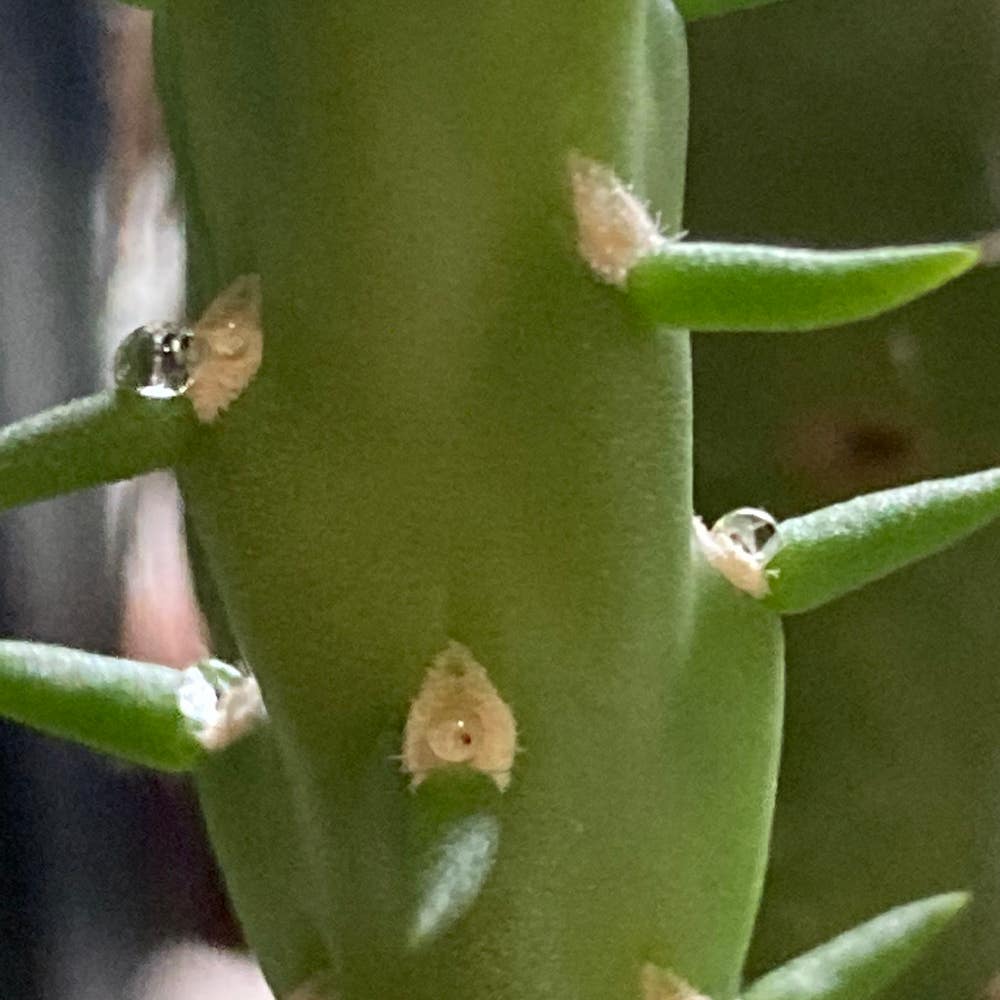
🌵 Why Are There Brown Spots on My Sonoran Jumping Cholla?
Cylindropuntia fulgida
By the Greg Editorial Team
Mar 13, 2024•5 min read
This article was created with the help of AI so we can cover more plants for you. May contain errors. See one? Report it here.
- Brown spots signal stress from environmental factors, disease, or injury.
- Patterns, spread, severity help diagnose the health issue.
- Prevent with wise watering and managed light exposure.
Spotting the Trouble: Identifying Brown Spots
🕵️ Visual Inspection: What to Look For
When your Sonoran Jumping Cholla starts looking like a dalmatian, it's time for a visual inspection. Brown spots can range from a subtle tan to a glaring dark brown. Texture is a telltale sign; dry, crispy spots often point to environmental stress, while wet, mushy ones scream overwatering or disease. Look for spots with distinct edges or a yellow halo—these aren't just blemishes, they're distress signals.
🗺 Patterns and Spread: Mapping the Spots
Patterns are like a plant's SOS—uniform spots might just be old age, but a random distribution is a red flag. Map the spread of these spots. Are they taking center stage on the leaf or hogging the edges? This intel is crucial for the plant's FBI profile. Keep an eye out for changes; if they're multiplying like bunnies, it's time to intervene.
⚠️ When to Worry: Severity of Brown Spots
Not all brown spots warrant a plant panic. Small, isolated ones might be no biggie, but if your cholla is more spot than plant, brace yourself. Severity is measured by the spot's size and the speed at which they're throwing a party across your plant. If they're bringing friends—like a yellowish halo or funky texture—it's serious. Act fast, or your cactus could go from prickly to poorly.
The Usual Suspects: Common Causes of Brown Spots
🍄 Fungal Foes: Signs of Infection
Fungal infections are notorious for causing brown spots on Sonoran Jumping Cholla. Look for halos or concentric rings around the spots, a clear sign of fungal shenanigans. Anthracnose and rust are the usual suspects, with anthracnose causing irregular spots and rust presenting as raised pustules.
☀️ Sun Scorch: Symptoms of Overexposure
Too much sun can lead to leaf scorch, leaving brown patches that scream overexposure. These spots are like the plant's version of a bad sunburn, uneven and directly linked to the cactus's sunbathing routine. Prevent this by acclimating your plant to full sun gradually and avoiding water on the leaves during sunny times.
🩹 Bruises and Breaks: Physical Damage Indicators
Physical damage can manifest as brown spots, the plant equivalent of bruises. These injuries can occur from a careless bump, an overenthusiastic pet, or even a hailstorm. Unlike the cryptic signs of disease, physical damage is straightforward and usually localized to the site of impact.
The Plant Doctor Is In: Diagnosing the Cause
🔍 Cross-Checking Symptoms with Causes
Brown spots on your Sonoran Jumping Cholla aren't just a cosmetic issue; they're a cry for help. Start by matching symptoms to common culprits. Is it a uniform color change or are there concentric rings? Do the spots have a yellow halo? These details are clues pointing to fungal infections or physical injuries.
🌱 Home Tests and Observations
Get hands-on with some DIY diagnostics. Isolate the plant to prevent potential spread. Check for pests under leaves and in crevices. Gently probe the soil for moisture levels—overwatering is a frequent faux pas. Observe changes after altering care routines, like watering schedules or light exposure. It's like playing detective, minus the trench coat.
🚑 When to Call in a Professional
If your plant's still throwing a fit after your best efforts, it's time to tag in the experts. Snap some clear photos and jot down your observations. Local extension services or a plant pathologist can run diagnostic tests. It's like getting a second opinion, but from someone who won't sugarcoat the diagnosis. Remember, accurate identification is the first step to recovery.
Brown Spot ER: Treatment Options
🍄 Fungicide to the Rescue: Treating Infections
Fungicides are the first line of defense against fungal infections causing brown spots. Copper-based options are the old reliables, but don't get overzealous—stick to the label's script. If you're leaning towards a greener approach, neem oil might be your ally. Remember, it's not a one-and-done deal; keep vigilant for new spots and be ready to reapply.
🌞 Shade and Shelter: Correcting Sun Damage
Too much sun can scorch your Cholla, leaving behind those unsightly brown spots. The fix? Shade. Use a canopy or shade cloth to protect your plant during the peak sun hours. Think of it as sunscreen for your cactus. Adjusting light exposure is crucial, so monitor your plant's tan lines closely.
🩹 TLC for Wounds: Caring for Physical Injuries
Physical injuries can also manifest as brown spots. Here's where tender loving care comes into play. Prune away the damaged bits with sterilized scissors—think surgical precision. This not only stops the spread but also encourages new, healthy growth. And remember, a little wound dressing goes a long way; keep the area clean to prevent infection.
Future-Proofing Your Cholla: Prevention Tactics
💧 Water Wisely: Avoiding Overhead Irrigation
Overhead irrigation is a no-go for your Sonoran Jumping Cholla. It's like giving your cactus a cold shower; unnecessary and uncomfortable. Instead, water at the base to keep moisture off the foliage and prevent those unsightly brown spots from forming. Remember, the goal is to mimic the natural desert rainfall, where the water comes from below, not above.
🌞 Sunbathing Rules: Managing Light Exposure
Chollas love the sun, but they don't want to live in a tanning bed. Partial shade can be a lifesaver during the scorching midday hours. If your cactus is outdoors, position it so it gets some relief from the intense afternoon sun. Indoors, a bright spot with indirect light will keep your Cholla happy without the risk of sunburn.
👩⚕️ Regular Checkups: Keeping an Eye on Plant Health
Like a car, your Cholla needs regular checkups. Keep an eye out for early signs of distress. Yellowing stems? Could be overwatering. Leaning more than usual? It might be craving more light. By staying vigilant and adjusting care as needed, you can prevent minor issues from becoming full-blown brown spot epidemics.
⚠️ Safety First
This content is for general information and may contain errors, omissions, or outdated details. It is not medical, veterinary advice, or an endorsement of therapeutic claims.
Always consult a qualified healthcare professional before using any plant as food, medicine, or supplement.
Never eat any plant (or feed one to pets) without confirming its identity with at least two trusted sources.
If you suspect poisoning, call Poison Control (800) 222-1222, the Pet Poison Helpline (800) 213-6680, or your local emergency service immediately.
Spotted an error? Please report it here.
Prevent brown spots 🍂 on your Sonoran Jumping Cholla with Greg's tailored care reminders and proactive health monitoring for a spotless plant future.