🦁 Lion's Tail Agave Leaves
Agave attenuata
By the Greg Editorial Team
Dec 16, 2023•5 min read
This article was created with the help of AI so we can cover more plants for you. May contain errors. See one? Report it here.
- Black spots signal distress; differentiate from sunburn, over-fertilization, pests.
- Fungal and bacterial causes; immediate isolation and pruning recommended.
- Prevent with proper watering, sunlight, and air circulation.
Recognizing Black Spots on Your Agave
🕵️ Identifying Black Spots
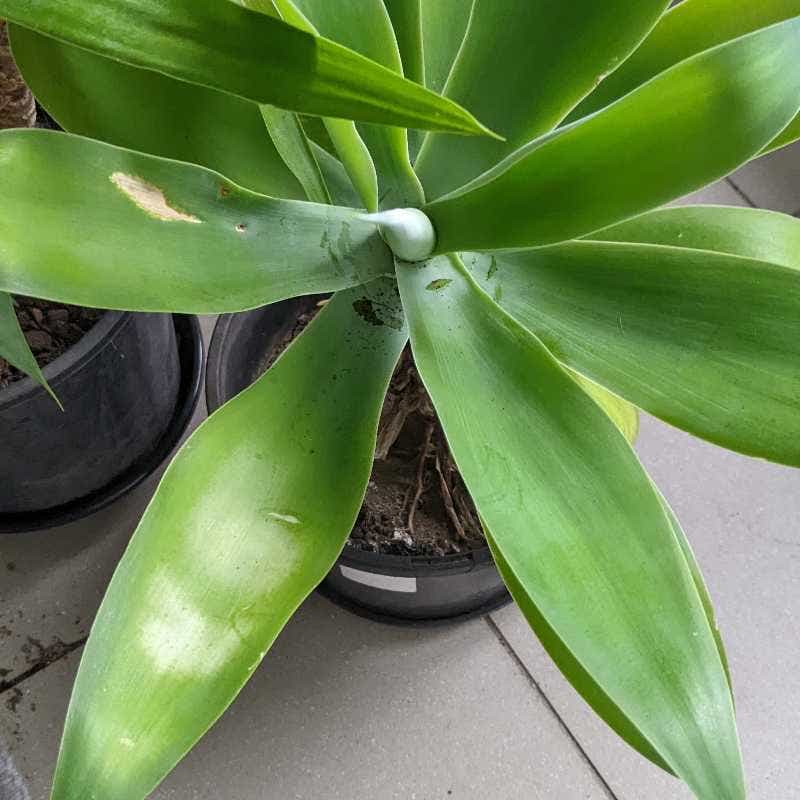
Black spots on Lion's Tail Agave leaves are not a fashion statement. They're warning signs. These spots tend to be circular or irregular in shape, often with a yellowish halo. Unlike the chic variegation some plants flaunt, these spots signal distress.
🎨 Differentiating From Other Leaf Blemishes
Sunburn may cause browning, but it's uniform and doesn't sport halos. Over-fertilization? That's more of a widespread yellowing than a polka-dot pattern. And pests? They leave behind more than just spots—think chewed edges and sticky residues.
🍄 The Fungal Possibility
If your agave's sporting blotchy, brown-to-black spots, you might be dealing with a fungal foe. Unlike the dry, crispy browning from too much sun, these spots feel like a bad tattoo job on the otherwise smooth skin of your plant's leaves.
🌿 Environmental Stressors
Not all black spots are a biological blitzkrieg. Sometimes, it's just the plant throwing a tantrum over poor conditions—too much water, or not enough love (a.k.a. proper soil and sunlight).
🐜 Pest Patrol
Keep an eye out for tiny critters. If you spot any, it's not a petting zoo—it's an infestation. These uninvited guests can cause black spots as they munch on and damage the plant tissue.
💡 Quick Tip
Before you panic, remember: not all spots are a death sentence. Some are just the plant's quirky way of saying, "I've seen better days."
Investigating the Causes of Black Spots
🍄 Fungal Infections vs. Environmental Stress
Fungal infections are the usual suspects when it comes to black spots on Lion's Tail Agave. Look for small, dark lesions often encircled by a yellow halo, indicative of leaf spot or anthracnose. These fungi thrive in moist conditions, so overwatering is like rolling out the red carpet for them. On the flip side, environmental stress—too much sun, low humidity, or temperature swings—can also manifest as black spots. Think of these as the plant's distress flares, signaling that it's not happy with its current digs.
🐜 The Pests' Party
Pests can be clandestine contributors to the black spot saga. They might not leave a calling card, but their damage invites fungal gatecrashers. Sap-sucking insects like aphids or mites stress the plant and create entry points for pathogens. If you spot any tiny critters having a rave on your Agave, it's time to crash it.
🦠 Bacterial Infections: Uninvited Guests
Bacterial infections, like the dreaded Pseudomonas leaf spot, are another cause of black spots. These microscopic party crashers love a wet, stagnant environment. Overwatering and poor air circulation are practically an open invitation for bacteria to settle in.
🔍 Detective Work: Spot the Clues
To pinpoint the culprit, play plant detective. Water-soaked lesions with a yellow halo suggest bacterial villains, while pinhead-sized black spots expanding to yellow-ringed blights are fungal fingerprints. And don't overlook the environmental clues; a plant getting more sun than a lifeguard's chair or shivering in the cold could be sending out SOS spots.
🚨 Immediate Actions
Upon sighting black spots, isolate your Agave to prevent any potential spread. Next, prune affected areas with sterilized shears—think surgical precision. Dispose of the infected foliage like it's radioactive waste; don't let it loiter in the compost. Then, assess your plant care routine and make sure you're not loving your Agave to death with too much water or too little sun.
Effective Treatment Strategies
Upon spotting black spots on your Lion's Tail Agave, it's time to channel your inner plant doctor—stat. Here's how to stop the spotty onslaught.
🚑 Immediate Action
Isolate the patient. Black spots can be contagious, and you don't want an epidemic on your hands. Next, whip out your scissors—sterilized, please—and prune the affected areas. Think of it as removing a bad haircut; you're doing the plant a favor.
💣 Antifungal Warfare
Time for the big guns. Choose a fungicide, organic or chemical, but let's not pretend we don't all have a soft spot for neem oil. It's like the plant world's version of a soothing balm. If you're feeling crafty, mix up a baking soda concoction—think one tablespoon per gallon of water, with a splash of soap or oil to make it stick.
🐜 Pest Control Tactics
Pests love a good plant party. Show them the exit with targeted treatments. Identify your foe—be it aphids, spider mites, or something else—and pick a pest control method that's as precise as a cat's pounce.
🌿 Environmental Fine-Tuning
Lastly, let's tweak those living conditions. More sunlight, please, and let's not drown the roots. Overwatering is the equivalent of giving your plant a bath with its socks on—unpleasant and unnecessary. Adjust watering according to the season, and remember, good air circulation is like a breath of fresh air—it's vital.
Remember, it's not just about saving your plant; it's about setting the stage to avoid a repeat performance.
Preventing Future Occurrences
💧 Best Practices for Watering and Sunlight Exposure
Watering your Lion's Tail Agave should be a thoughtful affair. Overwatering is the fast track to fungal paradise, so keep it on the drier side. Stick to a schedule that respects the plant's love for arid conditions. When it comes to sunlight, think bright but not scorching. Full sun is the Agave's jam, but in the peak of summer, a little afternoon shade won't hurt.
💨 Air Circulation and Plant Hygiene
Let's talk airflow. Good circulation is like a breath of fresh air for your Agave, warding off those clingy fungal spores. Position your plant where it can bask in a gentle breeze, naturally or with a fan's help. As for hygiene, cleanliness is a must. Remove debris and fallen leaves to prevent fungal frat parties. And when you water, aim for the base—keep those leaves as dry as a witty comeback.
⚠️ Safety First
This content is for general information and may contain errors, omissions, or outdated details. It is not medical, veterinary advice, or an endorsement of therapeutic claims.
Always consult a qualified healthcare professional before using any plant as food, medicine, or supplement.
Never eat any plant (or feed one to pets) without confirming its identity with at least two trusted sources.
If you suspect poisoning, call Poison Control (800) 222-1222, the Pet Poison Helpline (800) 213-6680, or your local emergency service immediately.
Spotted an error? Please report it here.
Prevent black spots and keep your Lion's Tail Agave thriving 🌵 with Greg's personalized care reminders and expert community advice.