🌵 Why Are My Sonoran Jumping Cholla Leaves Falling Over?
Cylindropuntia fulgida
By the Greg Editorial Team
Mar 13, 2024•5 min read
This article was created with the help of AI so we can cover more plants for you. May contain errors. See one? Report it here.
- Excessive drooping indicates distress; differentiate from natural shedding.
- Adjust water and light to prevent underwatering, overwatering, and sunburn.
- Combat pests and diseases with treatments and preventive measures.
Spotting the Signs: When Your Cholla's Leaves Take a Tumble
🌵 Identifying the Symptoms of Falling Leaves in Sonoran Jumping Cholla
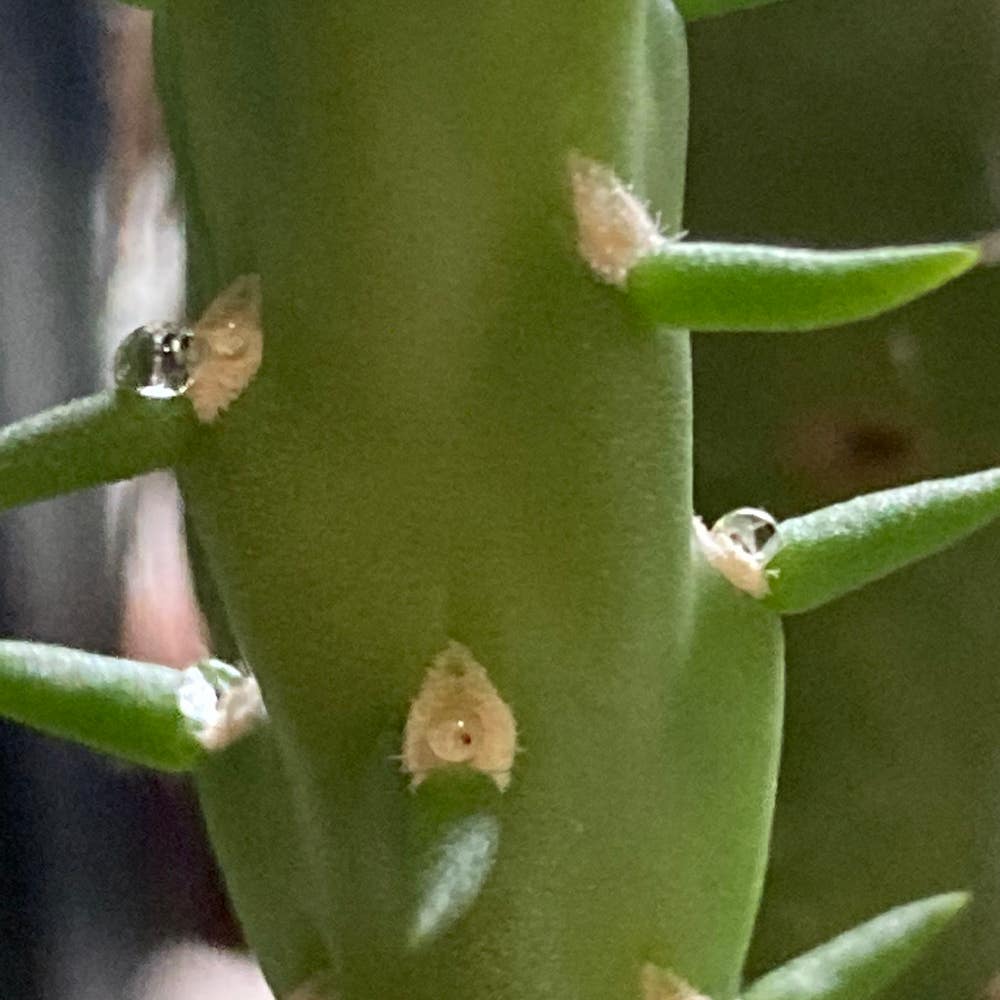
Mature leaves hanging low are your Cholla's way of saying, "Hey, I'm struggling here!" While young leaves might lean as they grow, that's just them stretching their legs. Excessive drooping in the older ones? That's a distress signal you can't ignore.
🍂 Recognizing the Difference Between Natural Shedding and Problematic Leaf Drop
Natural shedding is as predictable as your morning coffee routine. But when your Cholla starts dropping leaves like it's in a race to get bare, it's time to take action. A healthy Cholla should replace its leaves at a steady pace, so if it's losing them faster than a gambler loses chips, there's a problem. Keep an eye out for brown spots or a general look of defeat in the leaves—they shouldn't resemble overcooked vegetables. If your Cholla's shedding more than it's growing, you've got a botanical puzzle to solve.
Thirsty or Drowning? Watering Woes and Their Fixes
🚰 Signs of Water Stress in Leaves
Underwatering symptoms include leaves that are more wrinkled than a linen shirt at a summer wedding. They droop, they're dry, and they're subtly telling you they need a drink. If the soil is pulling away from the pot like a bad breakup, it's time to water.
Overwatering, on the other hand, turns leaves yellow, like a traffic light cautioning you to slow down with the watering can. Leaves may feel mushy, and the soil will be as wet as a soaked sponge. If your plant is shedding leaves faster than a dog in summer, you're likely loving it a little too much with water.
🚰 How to Adjust Your Watering Schedule for Success
First, check the soil before you water. If it's dry an inch down, it's thirsty. If it's damp, give it a break.
Create a rhythm, not a strict schedule. Water deeply but less frequently to encourage robust root growth. Adjust for the weather—more when it's hot, less when it's cool.
Monitor your plant's response after watering. A quick perk-up means you're on the right track. If the soil feels like a swamp, it's time to cut back.
Remember, a consistent watering routine is more like a dance than a march—be responsive to your plant's needs and the environment's cues.
Battling the Elements: Environmental Factors Affecting Your Cholla
🌞 Sunburn and Shade: Finding the Light Balance
Recognizing the signs of too much or too little light is crucial for your Sonoran Jumping Cholla. A sunburned cactus will have discolored, damaged patches, while a light-starved one stretches out awkwardly, seeking more rays.
To prevent leaf loss, adjust the plant's exposure. If the sun is too intense, use a shade cloth to diffuse the light. In darker spaces, consider supplemental lighting like grow lights to mimic the sun.
🌡️ Temperature Tantrums: Keeping Your Cholla Comfy
Understanding temperature stress is key. Your Sonoran Jumping Cholla prefers it hot, but not too hot—think desert, not Death Valley.
For maintaining an ideal temperature range, keep your Cholla in a spot that reflects its natural habitat. That means warm days, ideally between 70°F to 90°F (21°C to 32°C), and cooler nights to mimic the desert chill. Avoid drastic temperature swings to keep your Cholla from throwing a fit.
Unwanted Guests: Dealing with Pests and Diseases
🐛 Identifying the Culprits
Pests and diseases can turn your Sonoran Jumping Cholla's life upside down. Aphids and mealybugs are like the uninvited guests who overstay their welcome, sucking the vitality out of leaves. Look for signs like wilted leaves or a sticky residue, the telltale calling card of these sap-suckers. Fungal foes, on the other hand, leave their mark with black or brown spots, often encircled by a yellow halo of despair.
💉 Effective Treatments
When these pests and diseases crash the party, it's time to fight back. Start with insecticidal soap or neem oil, targeting the affected areas with the precision of a sniper. For fungal infections, consider a copper fungicide or Mycostop—but choose the eco-friendly options. They're like sending in the SEAL team instead of dropping the bomb.
🚫 Preventive Measures
Prevention beats cure every time. Keep your Cholla's environment as inhospitable to pests and diseases as a desert to a fish. Ensure good airflow and dry leaves—think of it as setting up a no-party zone. Regularly prune to remove any suspect leaves; it's like keeping your garden's immune system in tip-top shape.
🐞 Natural Allies
Sometimes, the best defense is a good offense. Unleash beneficial insects like ladybugs to patrol your plant, keeping the aphid population in check. It's the circle of life, and it works.
👀 Proactive Monitoring
Keep a vigilant eye on your Cholla like a hawk. Regular inspections can catch problems early, allowing you to nip them in the bud before they escalate into a full-blown leaf-drop crisis. Remember, the best offense is a good defense—so stay on guard.
⚠️ Safety First
This content is for general information and may contain errors, omissions, or outdated details. It is not medical, veterinary advice, or an endorsement of therapeutic claims.
Always consult a qualified healthcare professional before using any plant as food, medicine, or supplement.
Never eat any plant (or feed one to pets) without confirming its identity with at least two trusted sources.
If you suspect poisoning, call Poison Control (800) 222-1222, the Pet Poison Helpline (800) 213-6680, or your local emergency service immediately.
Spotted an error? Please report it here.
Combat your Cholla's droop and prevent 🛡️ future falls by leveraging Greg's custom care reminders and environmental tips for a perky and healthy plant!