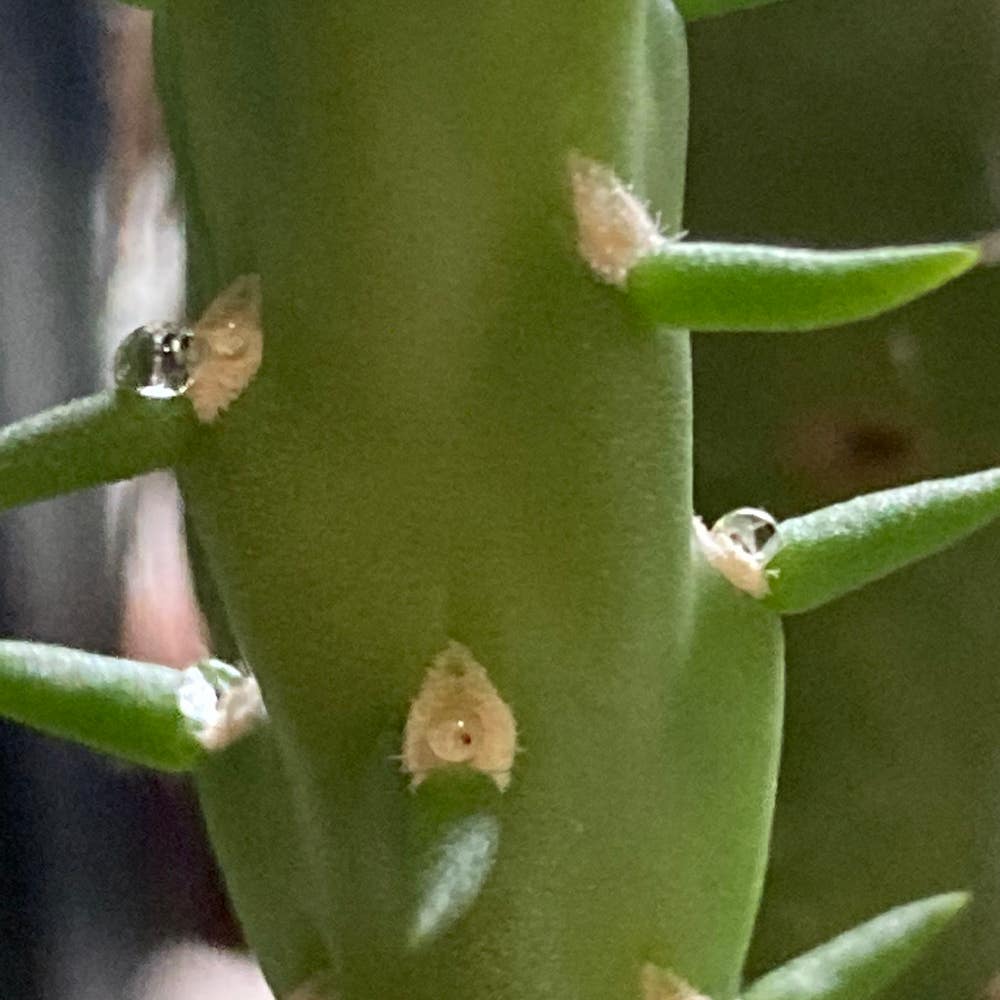
🌵 Why Are My Sonoran Jumping Cholla Leaves Dropping?
Cylindropuntia fulgida
By the Greg Editorial Team
Mar 13, 2024•3 min read
This article was created with the help of AI so we can cover more plants for you. May contain errors. See one? Report it here.
- Underwatering? Look for dropping, shriveled leaves; water when soil's dry.
- Overwatering signs are yellowing leaves, mushy roots; let soil dry out.
- Protect from extremes with windbreaks, shade, and pest control measures.
When Thirst Turns to Trouble: Underwatering Woes
🏜️ Spotting the Signs of Thirst
If your Sonoran Jumping Cholla is dropping leaves, it's waving a red flag for attention. Shriveled leaves and bone-dry soil are the tell-tale signs of a cactus crying out for water. The plant's normally plump and happy demeanor will give way to a sad, deflated look. It's not being dramatic; it's dehydrated.
🚰 Quenching the Thirst
To prevent your Cholla from becoming a casualty of thirst, water deeply but only when the soil is dry to the touch. Think of it as a timely intervention rather than a daily routine. Ensure the pot has adequate drainage to avoid waterlogging the roots. Adjust your watering habits to the plant's needs, which can vary with the seasons. Remember, it's about giving your Cholla a gulp, not a bath.
Drowning in Excess: The Overwatering Ordeal
🍄 Recognizing Root Rot
Root rot in your Sonoran Jumping Cholla is a silent assassin. Look for yellowing leaves that drop off with a dramatic flair. If the roots are a mushy, discolored mess, you've got a case of overwatering on your hands. The plant's stems may also appear soft and lifeless, a clear sign of distress. Don't be fooled by a green facade; the real trouble is beneath the soil.
🚑 Rescuing the Roots
Caught your Cholla swimming in excess water? Immediate action is required. Start by reducing watering and let the soil dry out. If root rot is confirmed, repot your plant with fresh, well-draining soil. Opt for a mix that's as averse to water as a cat is to a bath. Ensure your pot has proper drainage to avoid future aquatic mishaps. Remember, your Cholla's roots need to breathe, not take a perpetual soak.
Battling the Elements: Environmental Stress Factors
🌡️ Too Hot to Handle or Too Cold to Hold
Extreme temperatures can wreak havoc on the Sonoran Jumping Cholla, leading to leaf drop. These cacti prefer stability, but when the mercury soars or plummets, they react poorly. Heat stress can cause leaves to wilt and crisp, while cold stress can make them droop and fall off.
🛡️ Shielding from the Storm
To protect your Sonoran Jumping Cholla from environmental stress, strategic placement is key. Use windbreaks or structures to provide filtered shade, mitigating the impact of intense sunlight and gusty winds. Indoors, keep your cactus away from drafty windows and direct heat sources to maintain a consistent temperature.
Unwanted Guests: Tackling Pest Infestations
🐛 Catching the Culprits
Pests are leaf drop provocateurs in Sonoran Jumping Cholla. Mealybugs, spider mites, and scale insects are the usual suspects. They leave clues like sticky residue or discolored foliage. Inspect the nooks and crannies of your Cholla, especially the undersides of leaves, for these tiny invaders.
🚫 Evicting Pests
When pests crash the party, it's time to take action. Start with a gentle water spray to dislodge the freeloaders. If they're stubborn, escalate to insecticidal soap or a targeted miticide. Remember, the label is your roadmap—follow it. To keep pests from RSVPing to your Cholla's leaf drop event again, maintain a clean plant environment and consider recruiting natural predators like ladybugs.
⚠️ Safety First
This content is for general information and may contain errors, omissions, or outdated details. It is not medical, veterinary advice, or an endorsement of therapeutic claims.
Always consult a qualified healthcare professional before using any plant as food, medicine, or supplement.
Never eat any plant (or feed one to pets) without confirming its identity with at least two trusted sources.
If you suspect poisoning, call Poison Control (800) 222-1222, the Pet Poison Helpline (800) 213-6680, or your local emergency service immediately.
Spotted an error? Please report it here.
Ensure your Sonoran Jumping Cholla stays leaf-drop free 🌵 with Greg's personalized care reminders and pest management tips, keeping your cacti perfectly quenched and happy.