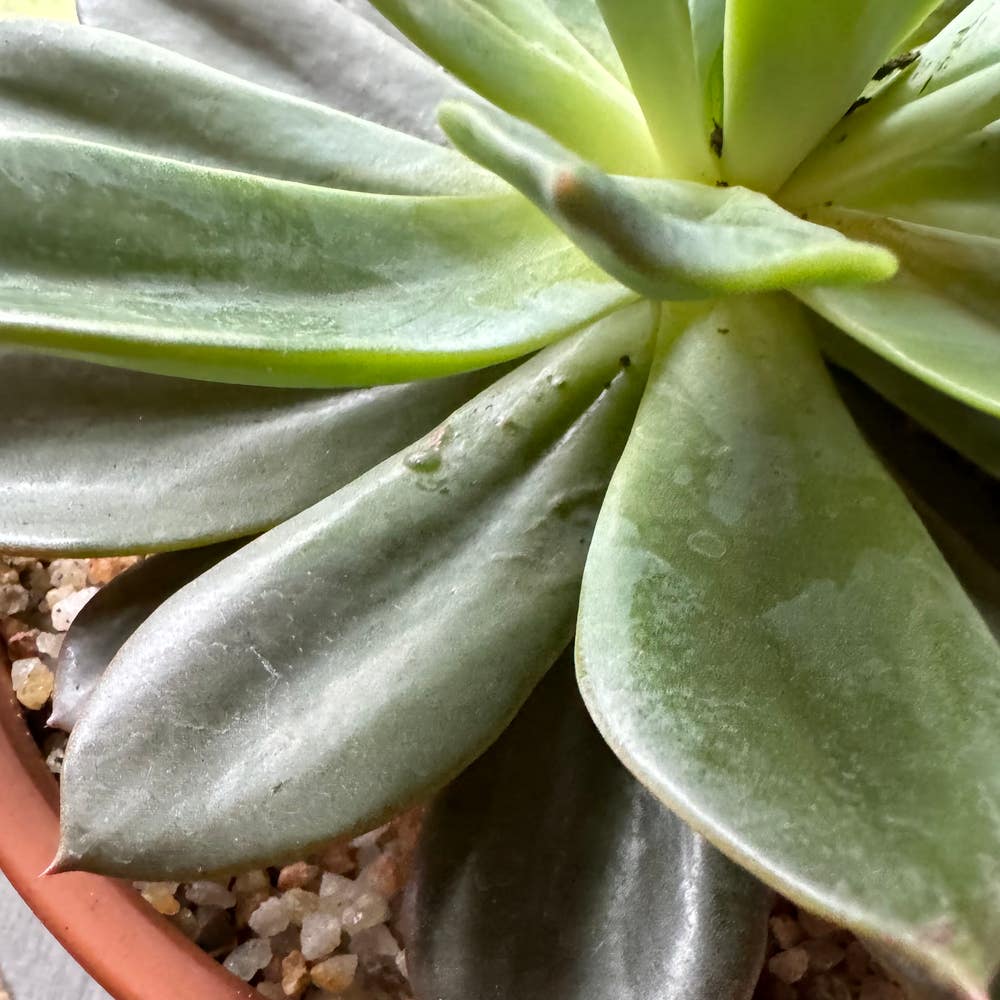
Propagating Echeveria 'Blue Prince': The Ultimate Guide
Echeveria 'Blue Prince'
By the Greg Editorial Team
Jun 18, 2024•5 min read
This article was created with the help of AI so we can cover more plants for you. May contain errors. See one? Report it here.
Propagate your 'Blue Prince' 🌱 and reign over a succulent kingdom with this fail-proof guide!
- Three methods to propagate: offsets, leaf, and stem cuttings.
- 🌱 Patience is key: callusing and rooting take weeks.
- Bright, indirect sunlight and well-draining soil for success.
Getting Started with Propagation
🌱 Choosing Your Propagation Method
Diving right in, you've got three choices for propagating your Echeveria 'Blue Prince': offsets, leaf cuttings, or stem cuttings. Offsets are like the plant's own kids, popping out from the parent and ready to go solo. Leaf cuttings are the DIY project of the plant world, where a single leaf can start a whole new life. And stem cuttings? They're the express lane, turning a snippet of stem into a full-blown plant in less time than it takes some of us to decide what to binge-watch next.
🛠️ Preparing Your Tools and Space
Before you play plant surgeon, you'll need a sterilized sharp knife or pair of scissors, a clean workspace, and pots with well-draining soil. Think of rooting hormone as the secret sauce that can give your cuttings a head start. And patience—though not a physical tool—is essential. You're not just growing plants; you're cultivating your inner zen garden.

Offsets Division: A Natural Expansion
🌱 Identifying and Separating Offsets
In the succulent world, offsets are the equivalent of a plant's kids hanging around the base, eager to strike out on their own. For Echeveria 'Blue Prince', you'll want to look for these mini-me versions that have a few roots and resemble a downsized copy of the parent. It's like finding a treasure at the foot of a green giant. When it's time to separate, think surgical precision with a clean, sharp tool—no yanking or tearing. A gentle twist might be necessary, but treat them like the delicate living gems they are.
🏡 Planting and Initial Care
Once you've got your offsets, it's time to play house. Pot them up in a container that's just right—not too big, not too small, Goldilocks-style. Go for a well-draining soil mix because succulents hate soggy bottoms more than a bad baking disaster. When planting, let the offset's base catch some rays in indirect sunlight, avoiding the harshness of direct beams. Watering should be minimal, just enough to quench their thirst without drowning them. It's a fine balance, but get it right, and you'll have offsets that grow up to make you proud. Keep pests at bay; they're the uninvited guests at this garden party.

Leaf Cuttings: Grow a Prince from a Single Leaf
🌱 The Art of Snipping the Perfect Leaf
To kick off your propagation quest, select a plump, glossy leaf from your Echeveria 'Blue Prince'. Ensure the leaf is healthy; avoid any that are discolored or damaged. Using a sharp tool, make a clean cut near the stem. It's like performing surgery on your succulent—precision is key.
🕰 Callusing and Rooting: Patience Pays Off
After the snip, it's time for the leaf to develop a callus. Leave it be for a few days; think of it as a plant band-aid forming over the wound. This step is non-negotiable—skipping it invites rot. Once callused, place the leaf on well-draining soil and wait. Rooting is a slow dance, with results showing up typically within a few weeks to a month. Keep the soil slightly moist and provide bright, indirect light. Your patience will be rewarded with tiny roots, and eventually, a new 'Blue Prince' will emerge.

Stem Cuttings: A Quick Path to New Plants
🌱 Making the Cut: Harvesting Stems for Propagation
To kick off stem propagation, select a stem that's healthy and free from any damage. Length matters; aim for a 4-6 inch piece with a robust appearance. Snip just above a leaf node using disinfected shears. This is your ticket to a new Echeveria 'Blue Prince'.
🌱 Rooting and Potting: Establishing a Strong Foundation
Now, let's get those stems to sprout roots. Callusing is your first step; let the cut end dry out for a few days to prevent rot. Next, dip the end in rooting hormone for an extra boost and stick it into a well-draining soil mix. Patience is your best friend here; roots take time. Once you've got a good root system, it's time to pot your new prince in its permanent home. Keep the soil moist but not soggy, and introduce it to bright, indirect light. Watch as your cutting transforms into a regal succulent.
Aftercare: Ensuring Propagation Success
💡 The Right Environment for Growth
Creating the ideal environment is crucial for the newly propagated Echeveria 'Blue Prince'. They need bright, indirect sunlight to maintain their vibrant color without getting scorched. Temperature and humidity should be monitored; these succulents prefer it not too hot, not too cold, just like Goldilocks' porridge. A thermometer and hygrometer can be your best friends here.
🚰 Transplanting and Long-Term Care
When it's time to transplant, look for firm, white roots—a sure sign your Echeveria is ready for a bigger stage. Choose a pot that's just the right size with proper drainage holes to prevent waterlogging. Fill it with a well-draining succulent mix. After potting, wait a week before watering to let the roots settle. Then, water lightly to avoid sogginess. Keep an eye out for pests and diseases; they're the party crashers no one invited. Trim away any dead or yellowing leaves to keep your Echeveria looking its best. Remember, overwatering is the nemesis of healthy roots, so check the soil's moisture before giving it a drink.
⚠️ Safety First
This content is for general information and may contain errors, omissions, or outdated details. It is not medical, veterinary advice, or an endorsement of therapeutic claims.
Always consult a qualified healthcare professional before using any plant as food, medicine, or supplement.
Never eat any plant (or feed one to pets) without confirming its identity with at least two trusted sources.
If you suspect poisoning, call Poison Control (800) 222-1222, the Pet Poison Helpline (800) 213-6680, or your local emergency service immediately.
Spotted an error? Please report it here.
Propagate your Echeveria 'Blue Prince' to perfection by letting Greg remind you 🌱 when it's time for each step, from callusing to potting, ensuring your succulents flourish.