Why Are My Echeveria 'Blue Prince' Leaves Falling Over?
Echeveria 'Blue Prince'
By the Greg Editorial Team
Jun 18, 2024•5 min read
This article was created with the help of AI so we can cover more plants for you. May contain errors. See one? Report it here.
Revive your royal 'Blue Prince' 🌱 from droopy despair to succulent splendor with these essential care tips!
- Leaf droopiness signals distress, not natural shedding in 'Blue Prince'.
- Overwatering and poor light cause leaves to fall over; adjust care.
- Pests and diseases contribute; use insecticidal soap and improve drainage.
Spotting the Trouble: Signs Your 'Blue Prince' is Unhappy
When your Echeveria 'Blue Prince' starts looking less like a regal heir and more like a fallen monarch, it's time to take note. Leaf droopiness is a red flag that your succulent is in distress, a far cry from the natural leaf shedding that occurs with older, lower leaves.
🚩 Tell-tale Signs of Distress in Echeveria 'Blue Prince'
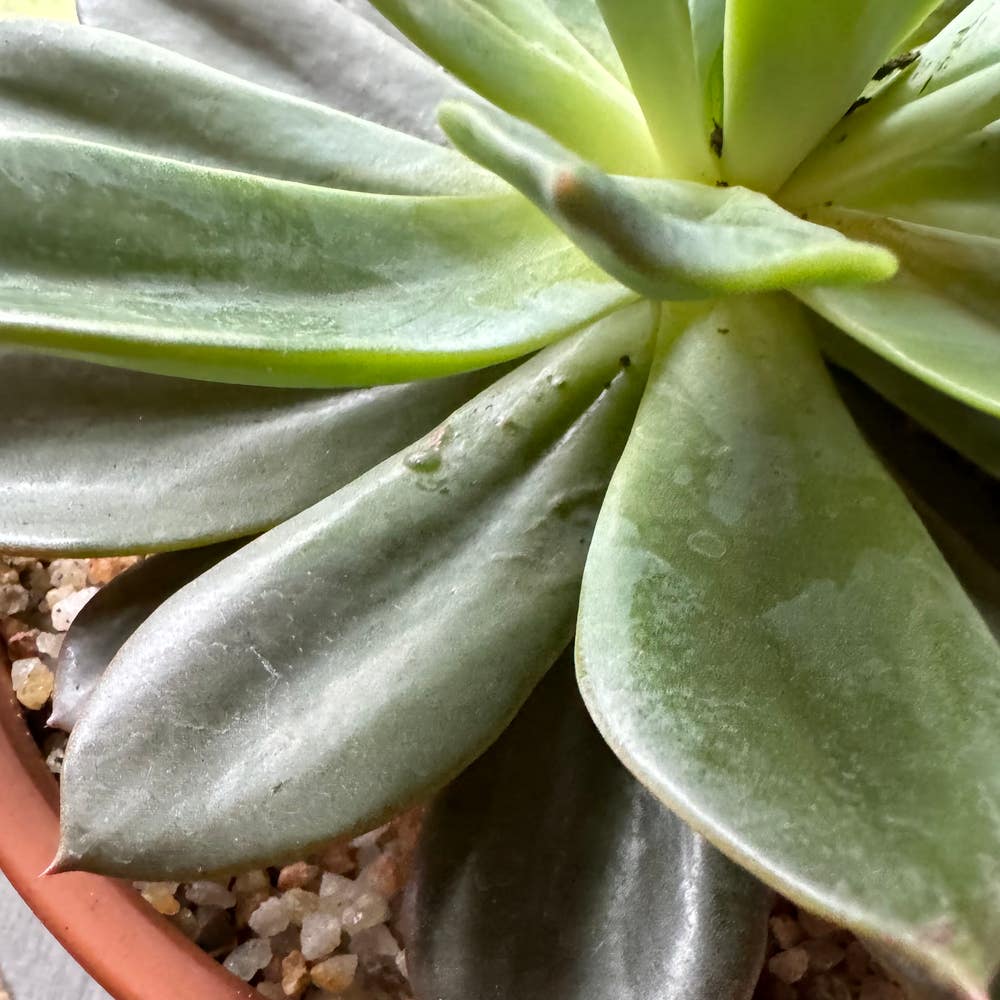
Discoloration and wilting are the plant's SOS signals. If the leaves are more limp than a wet noodle, you've got a problem. A healthy 'Blue Prince' should have leaves that are firm and perky, not drooping in despair.
🍂 How Drooping Leaves Differ from Natural Leaf Shedding
Natural leaf shedding is like a dignified exit, with older leaves making their graceful departure. However, when your 'Blue Prince' starts dropping leaves like a clumsy waiter, especially the newer ones, it's a cry for help. Sudden leaf loss is not a plant's idea of a normal life cycle—it's a sign that your green buddy is in trouble.

Water Woes: The Overwatering Connection
💧 Linking Limp Leaves to Too Much H2O
Overwatering is a common misstep that can leave your Echeveria 'Blue Prince' looking less regal and more, well, deflated. When leaves start drooping, it's a sign they're getting more water than they can handle. Imagine your succulent's roots trying to breathe underwater – not a pretty picture, right?
🍄 Root Rot Revelation: Unearthing the Hidden Cause of Droopiness
Root rot is the sneaky culprit behind those limp leaves. It's a fungal invasion that thrives in soggy soil, turning robust roots into mush. If your plant's base feels like a squishy sponge, it's time to take action. This isn't just a bad hair day for your plant; it's an emergency.
💦 The Dry Spell Solution: Balancing Moisture for Bounce-Back
To get your 'Blue Prince' back on its throne, you'll need to dial back the watering. Let the soil dry out between drinks – your succulent prefers a desert vibe to a tropical one. If root rot has set in, trim the affected roots and repot in fresh, well-draining soil. Think of it as a spa retreat for your plant's roots, minus the cucumber water.

Light: The Make or Break Factor
🌱 Stretching out for the Sun: How Low Light Leads to Leafy Letdowns
Low light conditions can lead to your Echeveria 'Blue Prince' stretching out, leaves reaching for any available sunlight. This etiolation results in weak, elongated stems and a general lack of vigor. Without sufficient light, the succulent's leaves may begin to droop, signaling a plea for more lumens.
🌞 Sunbathing Strategies: Finding the Light Sweet Spot
Bright, indirect sunlight is the ideal condition for your 'Blue Prince'. To prevent the leaves from falling over, place the plant in a location where it can soak up the sun without the risk of scorching. This might mean a spot near a window with sheer curtains or a position that gets filtered morning light with shade in the harsh afternoon.
Assessing Light Exposure
Evaluate your home's lighting conditions, considering factors like window size and nearby structures. Rotate the plant regularly to ensure even exposure. If natural light is insufficient, consider using grow lights, but monitor your plant's response to avoid light stress.
Seasonal Light Adjustments
Be aware of the seasonal shifts in light intensity. What's perfect in spring could be overwhelming in summer. Use a light meter app or observe the plant's response to adjust its position throughout the year, ensuring it receives the optimal amount of light without the damage of overexposure.
Remember, the right light is like a plant's best friend—it encourages healthy growth and keeps those leaves standing proud.

Fending Off Foes: Pests and Diseases
🐛 Uninvited Guests: Identifying Pests that Prey on 'Blue Prince'
Mealybugs, spider mites, and fungus gnats are the usual suspects when your 'Blue Prince' starts to look less than regal. These pests are like the worst kind of party crashers, draining the life out of your succulent's leaves and leaving them limp. Check for white cottony substances, fine webs, or tiny flies around your plant – these are telltale signs of infestation.
🤒 Sickly Succulents: Recognizing Diseases that Cause Collapse
It's not just bugs you have to worry about. Fungal diseases like root and crown rot can sneak up on you, thriving in the damp underworld of your 'Blue Prince'. Yellowing leaves or a blackened base are your plant crying out for help. It's a silent alarm for overly moist soil and poor drainage.
🛡️ The Defense Plan: Treatment and Prevention Tactics
Early intervention is your best bet. If you spot pests, hit them with insecticidal soap or neem oil – your first line of defense. For diseases, improve drainage and dial back on watering. Remember, a healthy plant is less appealing to pests and more resistant to disease. So, keep your 'Blue Prince' in fighting form with the right light, water, and nutrients. And if you're out of options, sometimes you just have to pull the plug to save the rest of your plant gang.
⚠️ Safety First
This content is for general information and may contain errors, omissions, or outdated details. It is not medical, veterinary advice, or an endorsement of therapeutic claims.
Always consult a qualified healthcare professional before using any plant as food, medicine, or supplement.
Never eat any plant (or feed one to pets) without confirming its identity with at least two trusted sources.
If you suspect poisoning, call Poison Control (800) 222-1222, the Pet Poison Helpline (800) 213-6680, or your local emergency service immediately.
Spotted an error? Please report it here.
Prevent your Echeveria 'Blue Prince' from drooping by using Greg to monitor 🌱 watering schedules, ensuring your succulent gets just the right amount of hydration without the guesswork.